
 Image 1 of 4
 Image 2 of 4
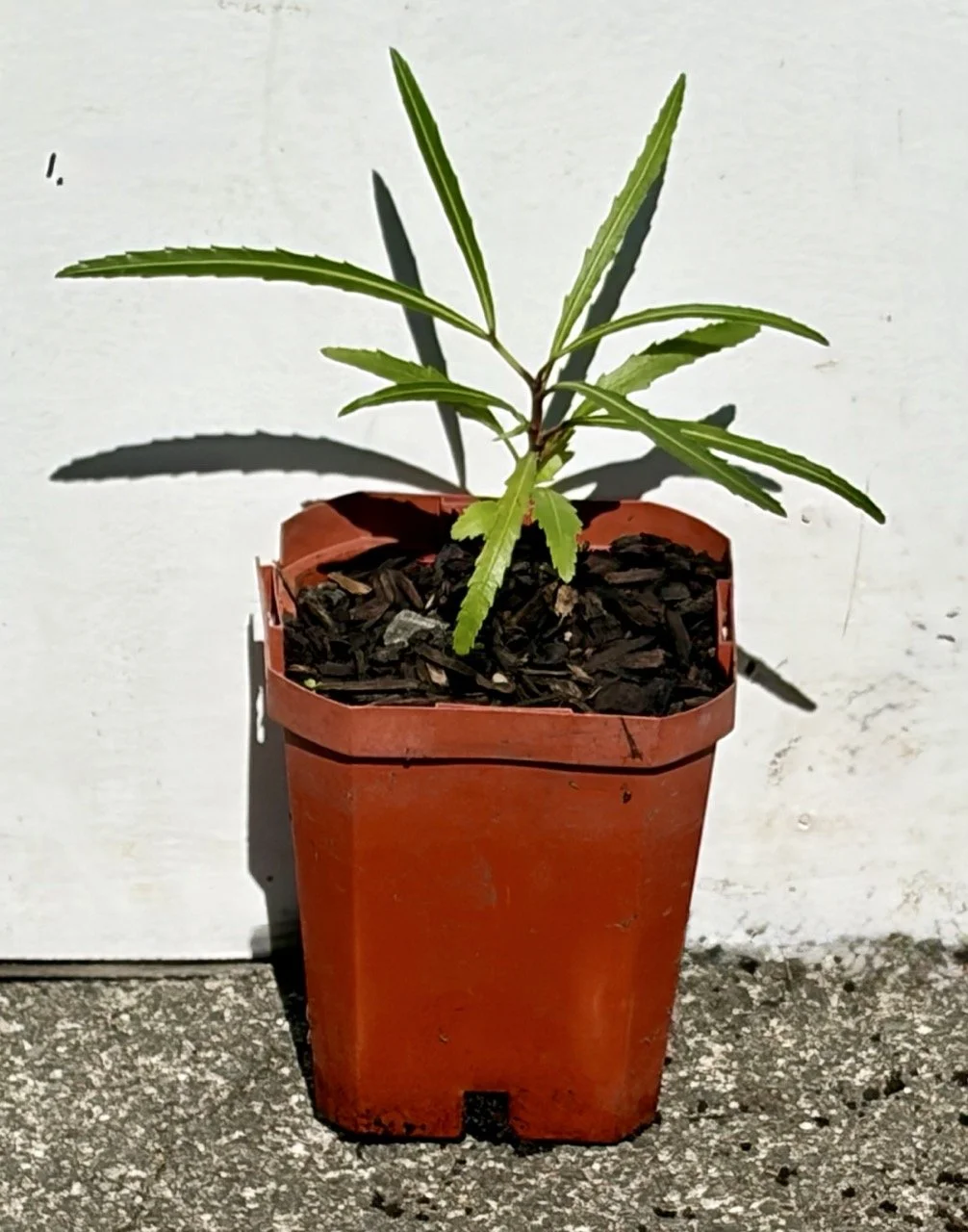 Image 3 of 4
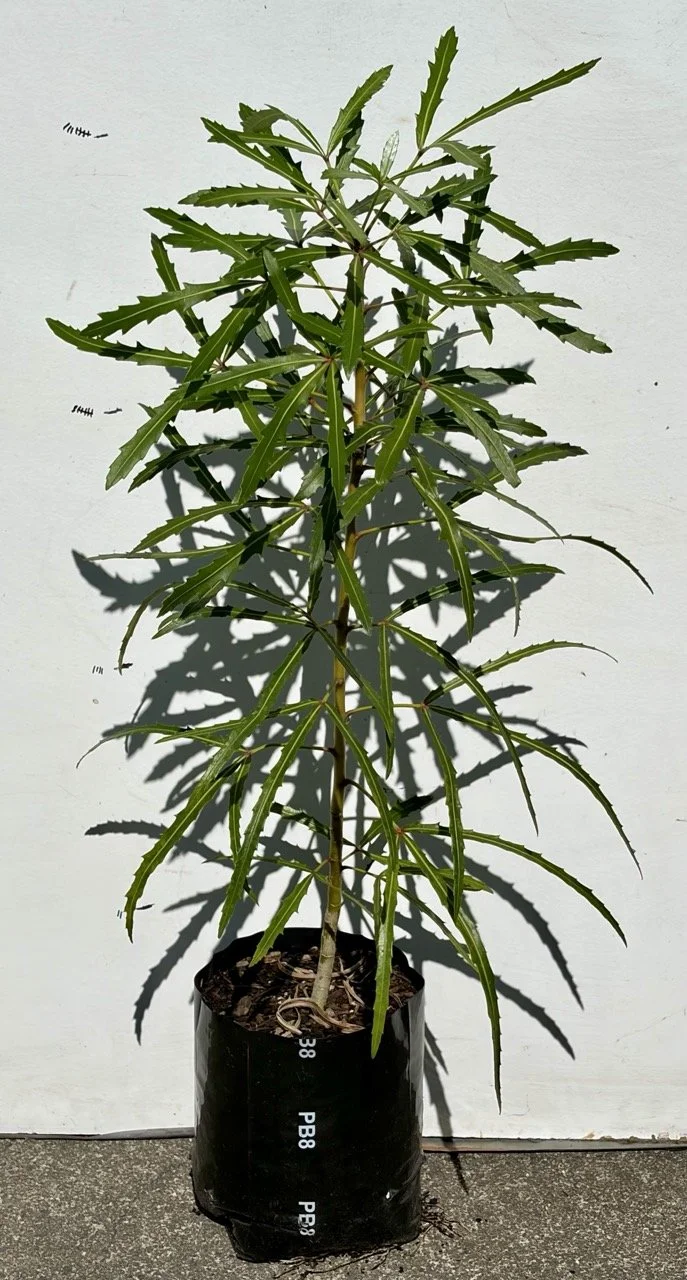 Image 4 of 4
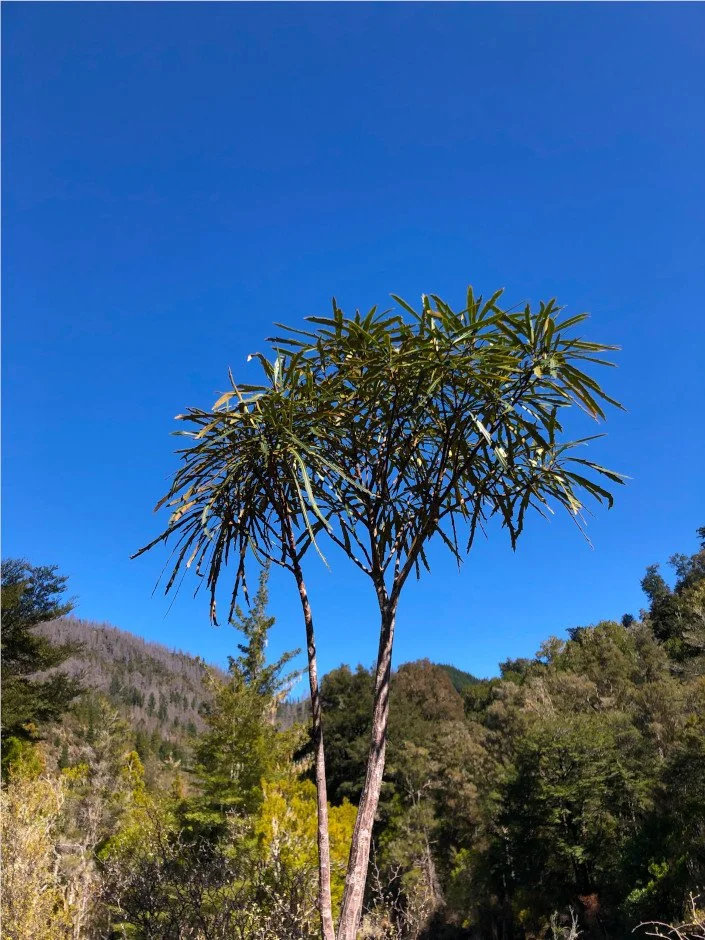
An unusual naturally occurring Pseudopanax believed to represent a hybrid between Horoeka/Lancewood (Pseudopanax crassifolius) and Houpara/Coastal Five-finger (Pseudopanax lessonii). These plants are particularly distinctive for their narrow, strongly toothed juvenile foliage, predominantly divided into three leaflets, creating an architectural form quite different from either typical parent.
🌱 Plant Facts
• Probable parentage: Pseudopanax crassifolius × Pseudopanax lessonii
• Common names: Horoeka × Houpara, Lancewood × Coastal Five-finger
• Origin: Naturally occurring volunteer seedlings
• Foliage: Predominantly three long, narrow leaflets with prominent midribs and strongly toothed margins
• Variation: Occasional four- and five-leaflet leaves have been observed
• Growth habit: Upright juvenile plants, with mature form expected to become increasingly branched with age
• Height: Potentially several metres at maturity
• Width: Variable and likely to become more apparent as individual plants mature
These seedlings have appeared naturally and have been observed and collected over several years. As they are not a selected or cloned cultivar, natural variation should be expected between individual plants.
🌍 Natural Origin
• Naturally occurring volunteer seedlings
• Display characteristics intermediate between Horoeka and Houpara
• Combines the narrow, strongly toothed juvenile foliage associated with Horoeka with the divided or compound foliage characteristic of Houpara
• Individual plants may develop differently as they mature
🌿 Growing Environment
• Full sun to partial shade
• Hardy and adaptable
• Reasonably free-draining soils preferred
• Young plants benefit from some shelter while establishing
• Increasingly tolerant of exposed conditions with age
These plants have so far proven robust and adaptable. Their long-term mature form is still being observed, and changes in foliage and branching should be expected as the plants develop.
🌾 Uses
• Unusual native specimen plant
• Native gardens
• Mixed native borders
• Revegetation-style plantings
• Architectural planting
• Collectors of unusual New Zealand flora
• Feature planting
🪴 Cultivation Notes (Live Plant)
Best planted in reasonably well-drained soil in full sun to partial shade. Young plants benefit from some protection while establishing, after which they should become increasingly hardy.
The strongly divided juvenile foliage provides excellent architectural interest, particularly when planted amongst contrasting native foliage. Because these plants originate from naturally occurring seedlings rather than a selected cultivar, each specimen should be regarded as an individual. Leaflet number, foliage shape, branching habit, and eventual mature form may vary.
⚠️ Please Note – Probable Natural Hybrid
These plants have arisen naturally, and their identification as Pseudopanax crassifolius × Pseudopanax lessonii is based on their observed morphology and the known ability of these species to hybridise.
Parentage has not been genetically confirmed. They are therefore offered as a probable natural hybrid rather than as a genetically verified cross.
Most plants currently produce three-leaflet foliage, although occasional four- and five-leaflet leaves have been observed. Appearance and leaflet number may change as individual plants mature.
📏 Approximate product size:
• PB3/4 (5–20 cm, 350 ml)
• PB3 (20–70 cm, 1.5 L)
• PB8 (50 cm+, 3.5 L)
• PB18 (1 m+, 8.5 L)
• PB40 (2 m+, 18.5 L)
⏱️ Timeframe:
We ship Monday – Wednesday for South Island customers and Monday/Tuesday for Rural and North Island customers. Orders placed outside these days will be fulfilled the following week.
📦 Local pick ups and/or deliveries will be made by arrangement.
🌱 We’ll donate $1 per plant sold to national conservation efforts, helping to protect and restore New Zealand’s natural heritage.
An unusual naturally occurring Pseudopanax believed to represent a hybrid between Horoeka/Lancewood (Pseudopanax crassifolius) and Houpara/Coastal Five-finger (Pseudopanax lessonii). These plants are particularly distinctive for their narrow, strongly toothed juvenile foliage, predominantly divided into three leaflets, creating an architectural form quite different from either typical parent.
🌱 Plant Facts
• Probable parentage: Pseudopanax crassifolius × Pseudopanax lessonii
• Common names: Horoeka × Houpara, Lancewood × Coastal Five-finger
• Origin: Naturally occurring volunteer seedlings
• Foliage: Predominantly three long, narrow leaflets with prominent midribs and strongly toothed margins
• Variation: Occasional four- and five-leaflet leaves have been observed
• Growth habit: Upright juvenile plants, with mature form expected to become increasingly branched with age
• Height: Potentially several metres at maturity
• Width: Variable and likely to become more apparent as individual plants mature
These seedlings have appeared naturally and have been observed and collected over several years. As they are not a selected or cloned cultivar, natural variation should be expected between individual plants.
🌍 Natural Origin
• Naturally occurring volunteer seedlings
• Display characteristics intermediate between Horoeka and Houpara
• Combines the narrow, strongly toothed juvenile foliage associated with Horoeka with the divided or compound foliage characteristic of Houpara
• Individual plants may develop differently as they mature
🌿 Growing Environment
• Full sun to partial shade
• Hardy and adaptable
• Reasonably free-draining soils preferred
• Young plants benefit from some shelter while establishing
• Increasingly tolerant of exposed conditions with age
These plants have so far proven robust and adaptable. Their long-term mature form is still being observed, and changes in foliage and branching should be expected as the plants develop.
🌾 Uses
• Unusual native specimen plant
• Native gardens
• Mixed native borders
• Revegetation-style plantings
• Architectural planting
• Collectors of unusual New Zealand flora
• Feature planting
🪴 Cultivation Notes (Live Plant)
Best planted in reasonably well-drained soil in full sun to partial shade. Young plants benefit from some protection while establishing, after which they should become increasingly hardy.
The strongly divided juvenile foliage provides excellent architectural interest, particularly when planted amongst contrasting native foliage. Because these plants originate from naturally occurring seedlings rather than a selected cultivar, each specimen should be regarded as an individual. Leaflet number, foliage shape, branching habit, and eventual mature form may vary.
⚠️ Please Note – Probable Natural Hybrid
These plants have arisen naturally, and their identification as Pseudopanax crassifolius × Pseudopanax lessonii is based on their observed morphology and the known ability of these species to hybridise.
Parentage has not been genetically confirmed. They are therefore offered as a probable natural hybrid rather than as a genetically verified cross.
Most plants currently produce three-leaflet foliage, although occasional four- and five-leaflet leaves have been observed. Appearance and leaflet number may change as individual plants mature.
📏 Approximate product size:
• PB3/4 (5–20 cm, 350 ml)
• PB3 (20–70 cm, 1.5 L)
• PB8 (50 cm+, 3.5 L)
• PB18 (1 m+, 8.5 L)
• PB40 (2 m+, 18.5 L)
⏱️ Timeframe:
We ship Monday – Wednesday for South Island customers and Monday/Tuesday for Rural and North Island customers. Orders placed outside these days will be fulfilled the following week.
📦 Local pick ups and/or deliveries will be made by arrangement.
🌱 We’ll donate $1 per plant sold to national conservation efforts, helping to protect and restore New Zealand’s natural heritage.