
 Image 1 of 4
 Image 2 of 4
 Image 3 of 4
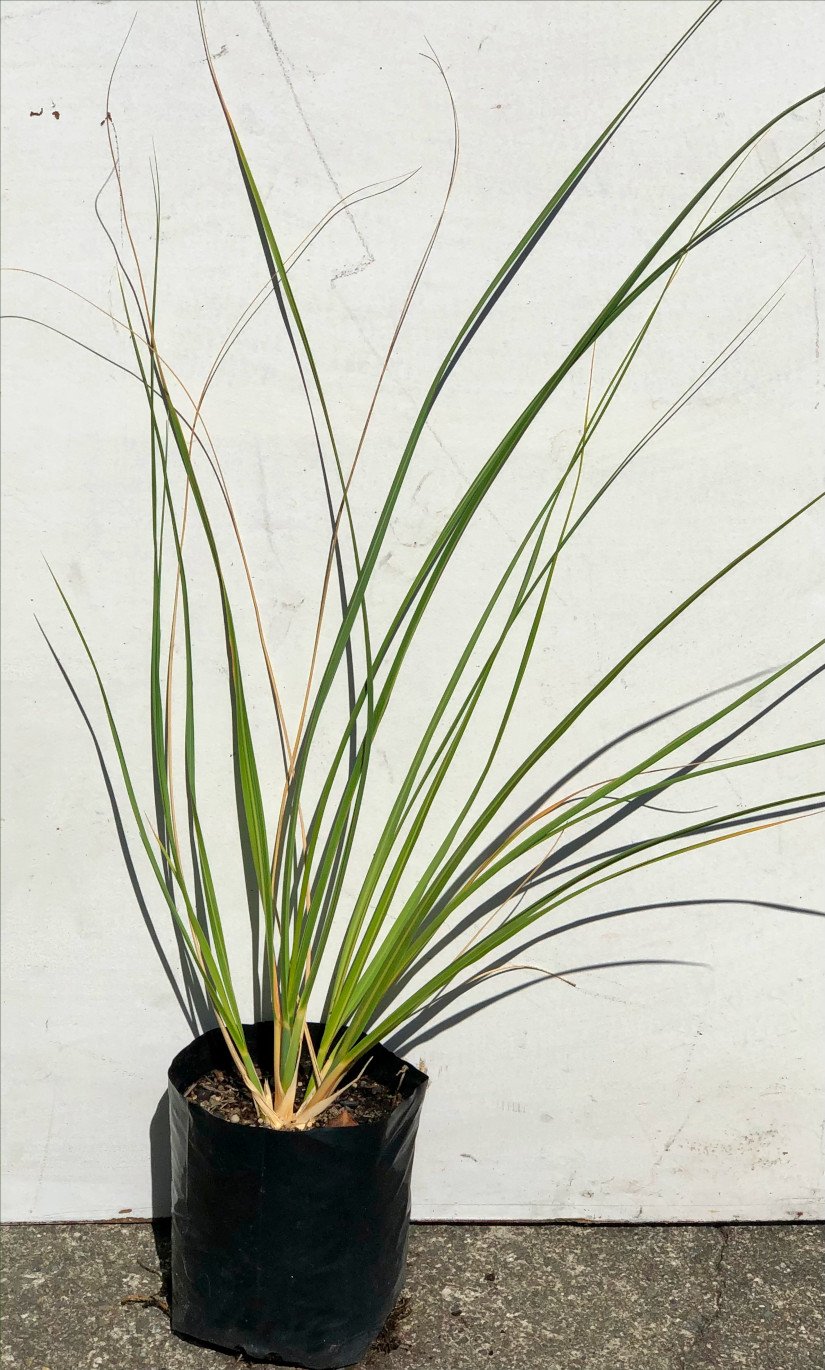 Image 4 of 4
A classic and highly attractive New Zealand native tussock grass, recognised for its lush green form and elegant cream-coloured plumes. This fast-growing toetoe is widely used in native landscaping, regeneration projects, and shelter plantings where scale, resilience, and movement are desired.
🌱 Plant Facts
Growth habit: Fast-growing, clump-forming tussock
Foliage: Dense, upright green leaves
Flowers: Tall, showy cream plumes
Height: Up to 3m
Flowering: September – November
Fruiting: October – March
🌍 Natural Habitat
Abundant from coastal to subalpine environments
Common along stream banks, river beds, lake margins, and other wet places
Also found in sand dunes, particularly around the Foveaux Strait
🌿 Growing Environment
Drought resistant
Salt resistant
Wetland tolerant
Wind tolerant
Thrives in exposed and open sites, making it ideal for large-scale and low-maintenance plantings.
📍 Endemic Distribution
Confined mainly to the South Island
Possibly present in parts of the North Island east of Cape Palliser
Naturalised in Tasmania
🌾 Uses
Riparian and wetland plantings
Pioneer species for regeneration
Shelterbelts and windbreaks
Roadsides and large native landscapes
🪴 Cultivation Notes (Live Plant)
A robust and adaptable tussock that establishes quickly and requires minimal maintenance once settled. Best planted with room to develop its full form and height. Its strong vertical structure and seasonal plumes provide excellent visual impact and functional shelter in restoration and landscape settings.
📏 Approximate product size:
• PB3/4 (5cm – 20cm, 350ml)
• PB3 (20cm – 50cm, 1.5L)
• PB8 (50cm+, 3.5L)
⏱️ Timeframe:
We ship Monday – Wednesday for South Island customers and Monday/Tuesday for Rural and North Island customers. Orders placed outside these days will be fulfilled the following week.
📦 Local pick ups and/or deliveries will be made by arrangement.
🌱 We’ll donate $1 per plant sold to national conservation efforts, helping to protect and restore New Zealand’s natural heritage
A classic and highly attractive New Zealand native tussock grass, recognised for its lush green form and elegant cream-coloured plumes. This fast-growing toetoe is widely used in native landscaping, regeneration projects, and shelter plantings where scale, resilience, and movement are desired.
🌱 Plant Facts
Growth habit: Fast-growing, clump-forming tussock
Foliage: Dense, upright green leaves
Flowers: Tall, showy cream plumes
Height: Up to 3m
Flowering: September – November
Fruiting: October – March
🌍 Natural Habitat
Abundant from coastal to subalpine environments
Common along stream banks, river beds, lake margins, and other wet places
Also found in sand dunes, particularly around the Foveaux Strait
🌿 Growing Environment
Drought resistant
Salt resistant
Wetland tolerant
Wind tolerant
Thrives in exposed and open sites, making it ideal for large-scale and low-maintenance plantings.
📍 Endemic Distribution
Confined mainly to the South Island
Possibly present in parts of the North Island east of Cape Palliser
Naturalised in Tasmania
🌾 Uses
Riparian and wetland plantings
Pioneer species for regeneration
Shelterbelts and windbreaks
Roadsides and large native landscapes
🪴 Cultivation Notes (Live Plant)
A robust and adaptable tussock that establishes quickly and requires minimal maintenance once settled. Best planted with room to develop its full form and height. Its strong vertical structure and seasonal plumes provide excellent visual impact and functional shelter in restoration and landscape settings.
📏 Approximate product size:
• PB3/4 (5cm – 20cm, 350ml)
• PB3 (20cm – 50cm, 1.5L)
• PB8 (50cm+, 3.5L)
⏱️ Timeframe:
We ship Monday – Wednesday for South Island customers and Monday/Tuesday for Rural and North Island customers. Orders placed outside these days will be fulfilled the following week.
📦 Local pick ups and/or deliveries will be made by arrangement.
🌱 We’ll donate $1 per plant sold to national conservation efforts, helping to protect and restore New Zealand’s natural heritage