
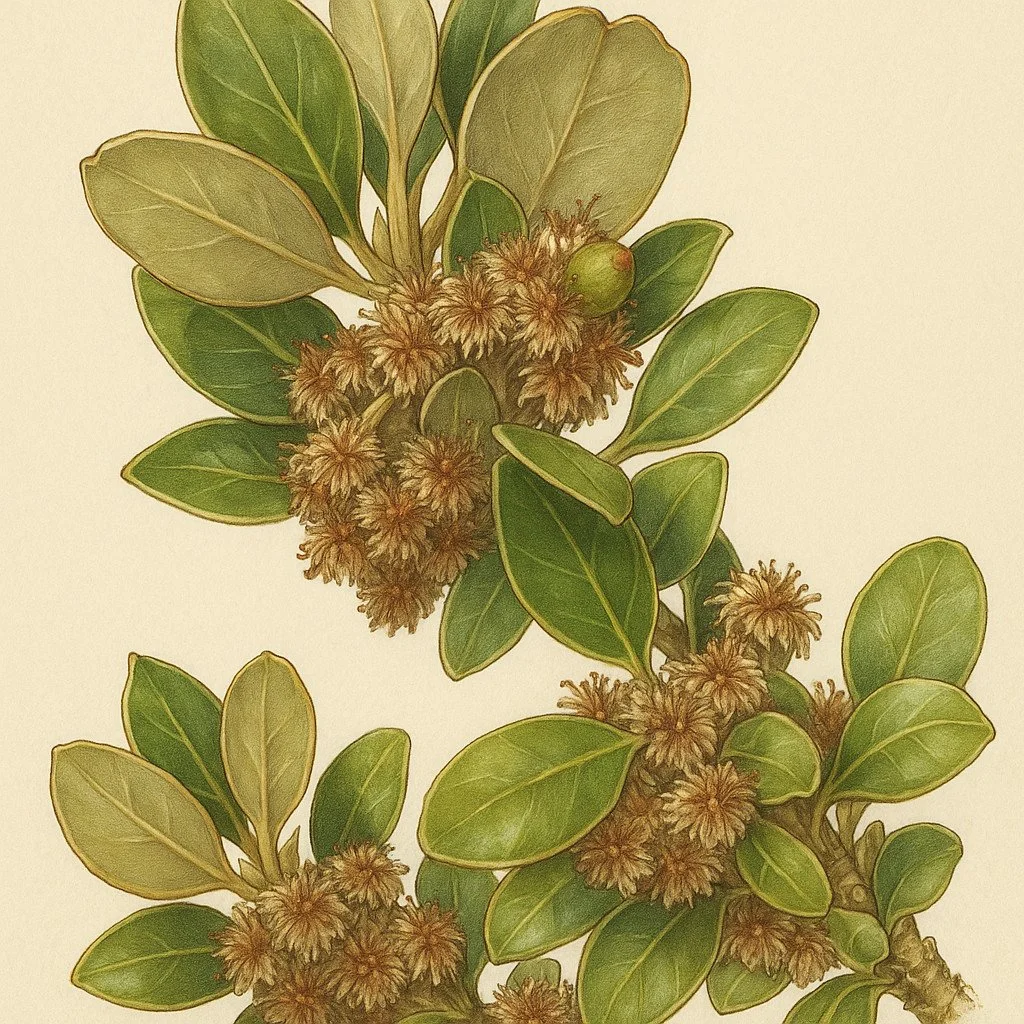
Hakapiri
Botanical name: Shawia traversiorum
Synonym: Olearia traversiorum
Common name(s): Hakapiri, Chatham Island Akeake
Plant facts:
A distinctive Chatham Islands tree with glossy dark green leaves and pale, felted undersides. Commonly found in dry coastal and lowland habitats, it is well known for its persistent fluffy seed heads and hardy nature.
Natural habitat:
Occurs in lowland forest, dune systems, lake and lagoon margins, and occasionally on coastal cliffs, usually in free-draining soils.
Growing environment:
Sun, Wind, Coastal, Drought & Free draining tolerant.
Endemic distribution:
Endemic to the Chatham Islands.
Height:
Typically 12–18 m tall
Flowering:
Late spring
Produces clusters of small cream to pale yellow flowers.
Fruiting:
Produces fluffy wind-dispersed seeds with persistent seed heads remaining on the branches.
Uses:
• Coastal shelter planting
• Hardy specimen tree
• Restoration planting on exposed sites
• Bird habitat and shelter
Appearance:
Growth habit:
A medium-sized tree with an upright to spreading form and stout branches. Mature bark becomes deeply fissured, fibrous, and rough-textured.
Leaves:
Leaves are thick, leathery, and glossy dark green above, with dense whitish felt beneath. Shapes range from oval to broadly obovate.
Flowers:
Small cream, buff, or pale yellow flower heads are produced in branched clusters during late spring.
Seeds:
Produces small light-brown seeds topped with fluffy hairs that assist wind dispersal. Seed clusters often persist after flowering.
How to grow:
Best grown in full sun with well-drained soil. Extremely hardy once established and tolerant of coastal exposure, wind, and dry conditions. Suitable for shelterbelts, coastal gardens, and restoration plantings.