
Clubmoss
Botanical name: Phlegmariurus varius
Common name(s): Clubmoss, Fir Moss
Plant facts:
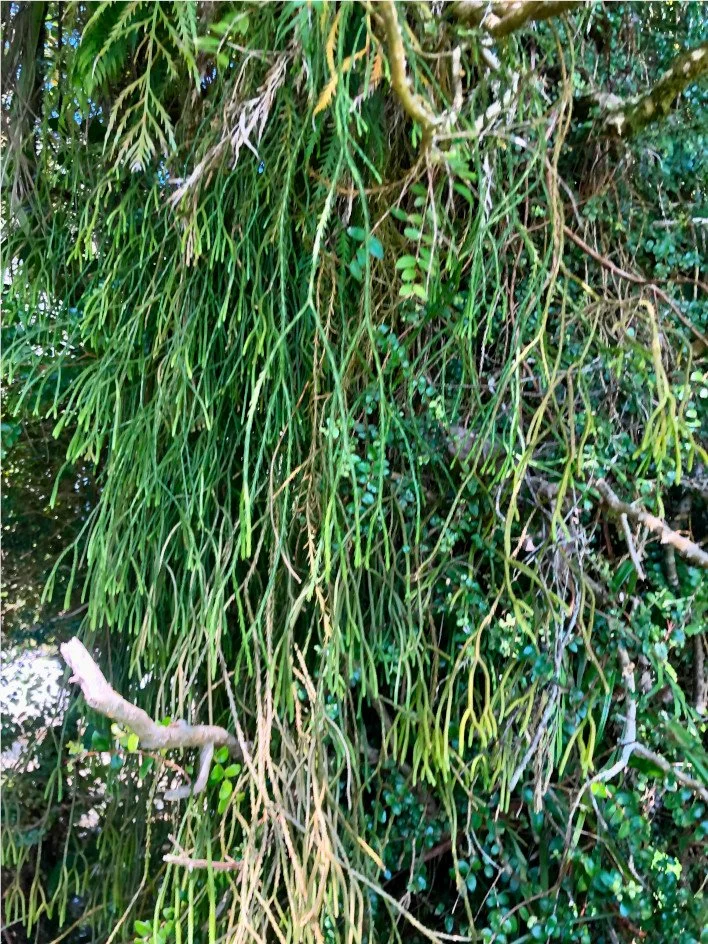
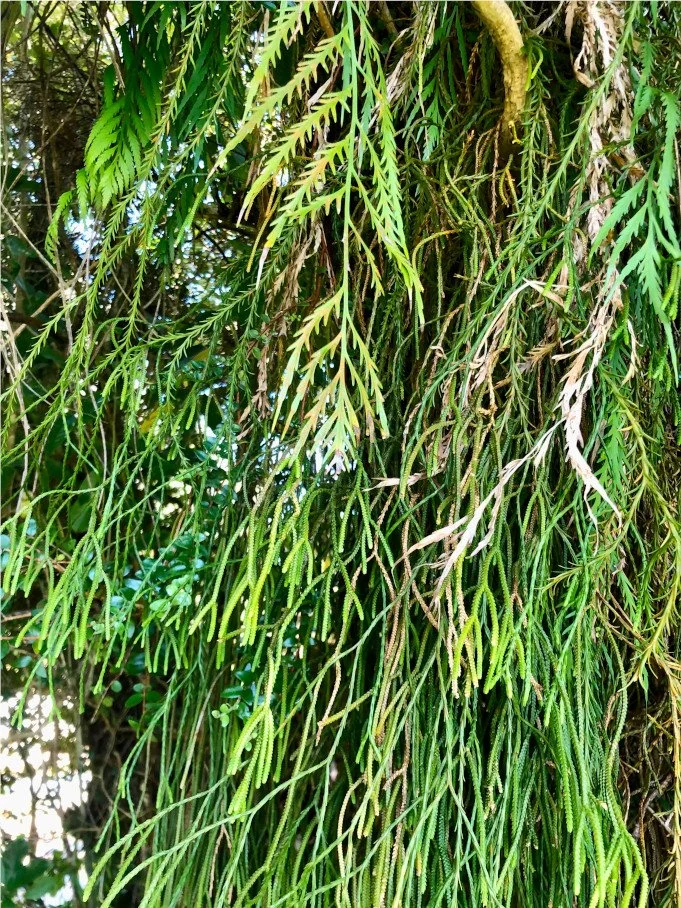
A striking native clubmoss with long, branching stems that may grow upright on the ground or hang pendulously from trees and rocks. Despite its moss-like appearance, it is an ancient spore-producing relative of ferns. Highly valued for its unusual texture and dramatic growth habit.
Natural habitat:
Found from coastal to subalpine regions in forests, scrub, peat bogs, and rocky habitats. Often grows as an epiphyte on trees or as a lithophyte on rocks.
Growing environment:
Shade, Moist, Humid & Free draining tolerant.
Endemic distribution:
Widespread throughout New Zealand, including the Kermadec, Three Kings, Chatham, Antipodes, Auckland, Campbell, North, South, and Stewart Islands. Also found in Australia.
Height / Length:
Branches range from 8 cm to 2 m long
Flowering:
Not applicable — spore-producing species.
Fruiting (spores):
Produces minute wind-dispersed spores in specialised fertile zones along the branch tips.
Uses:
• Hanging basket specimen
• Epiphytic and fern collections
• Adds dramatic texture to shaded gardens
Appearance:
Growth habit:
Can grow terrestrially, on rocks, or attached to trees. Plants form tufted clumps with erect or hanging branches depending on habitat.
Leaves:
Leaves are narrow, pointed, and arranged spirally along the stems. They spread outward at wide angles, giving the plant a soft, bottlebrush-like appearance. Colour ranges from deep green to yellow-green, sometimes with orange tones.
Fertile structures:
The fertile spore-bearing sections are usually narrower and distinct from the leafy stems, though sometimes only subtly different.
How to grow:
Can be propagated from rooted sections. Best grown in a moist, free-draining medium such as orchid mix. Prefers partial shade and high humidity and should never be allowed to completely dry out. Growth is generally slow. Epiphytic forms make excellent hanging basket plants.