Basket Grass
Botanical name: Oplismenus hirtellus subsp. hirtellus
Common name(s): Basket Grass
Plant facts:
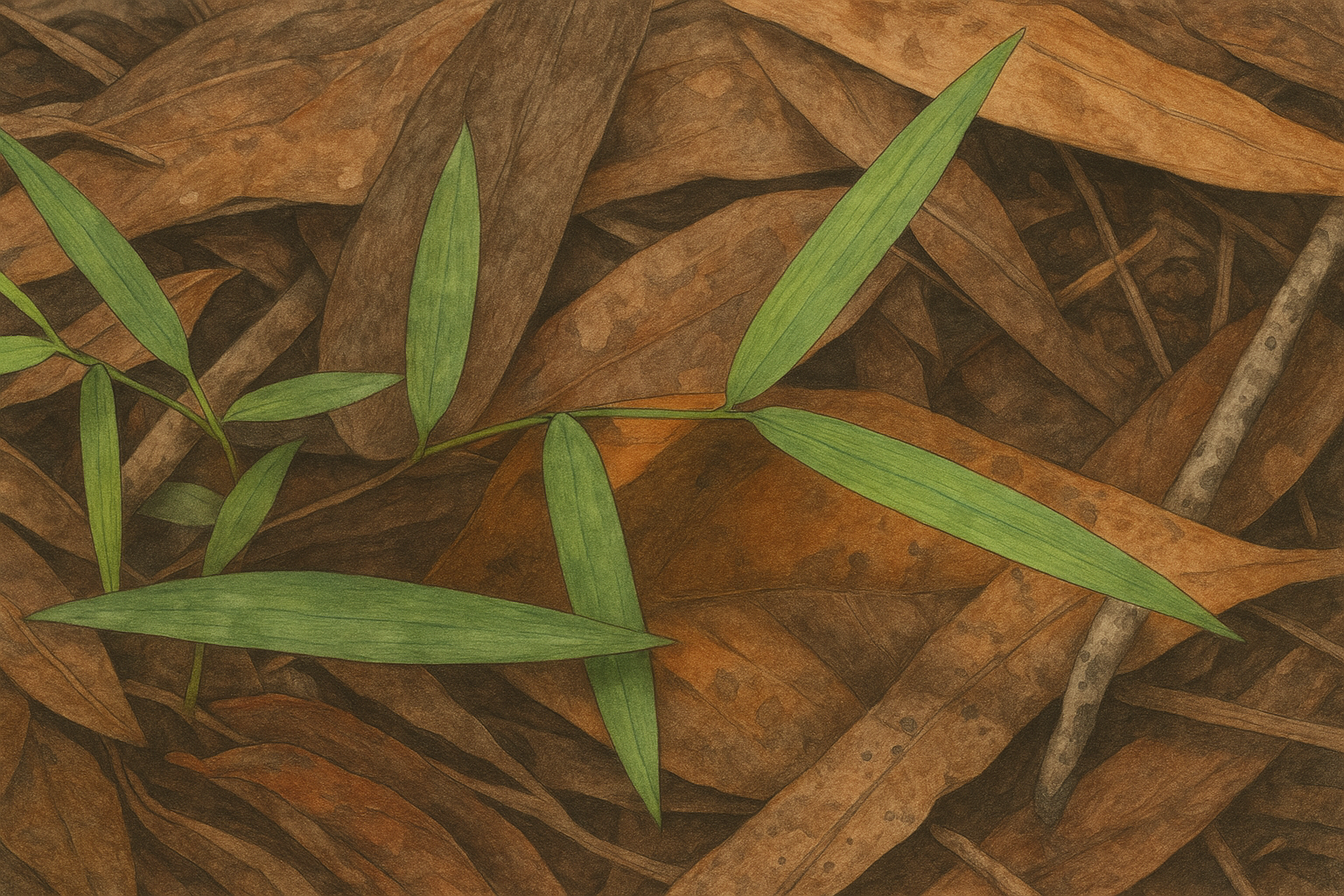
A low-growing perennial grass that forms loose, spreading mats. Easily recognised by its softly hairy leaves and sticky, awned seeds that readily attach to clothing, fur, and feathers for dispersal. Common in warm, sheltered environments.
Natural habitat:
Typically found in coastal and lowland forest margins, shaded tracks, disturbed ground, and subtropical environments.
Growing environment:
Shade, Moist, Warm & Free draining tolerant.
Endemic distribution:
Widespread throughout tropical and subtropical regions worldwide, including New Zealand, Australia, Hawaii, Madagascar, and many Pacific islands.
Height:
Up to 30 cm tall
Flowering:
December – June
Fruiting:
Produces sticky, barbed seeds that are spread by animals and people.
Uses:
• Ground cover in shaded areas
• Habitat and food source for small wildlife
• Useful for naturalistic forest plantings
Appearance:
Growth habit:
A creeping, mat-forming grass with decumbent stems that spread across the ground.
Leaves:
Leaves are soft, narrow, and often distinctly crimped or wavy. They may be lightly hairy and are typically pale beneath.
Flowers and seed heads:
Flowering stems rise above the foliage and carry raceme-like clusters of small green to purple spikelets. The spikelets have short sticky awns that aid seed dispersal.
Seeds:
Seeds readily cling to fur, feathers, and clothing, allowing the plant to spread easily.
How to grow:
Prefers warm, sheltered, partially shaded environments with moist but well-drained soil. Easily spreads in suitable conditions and can self-establish from seed.