
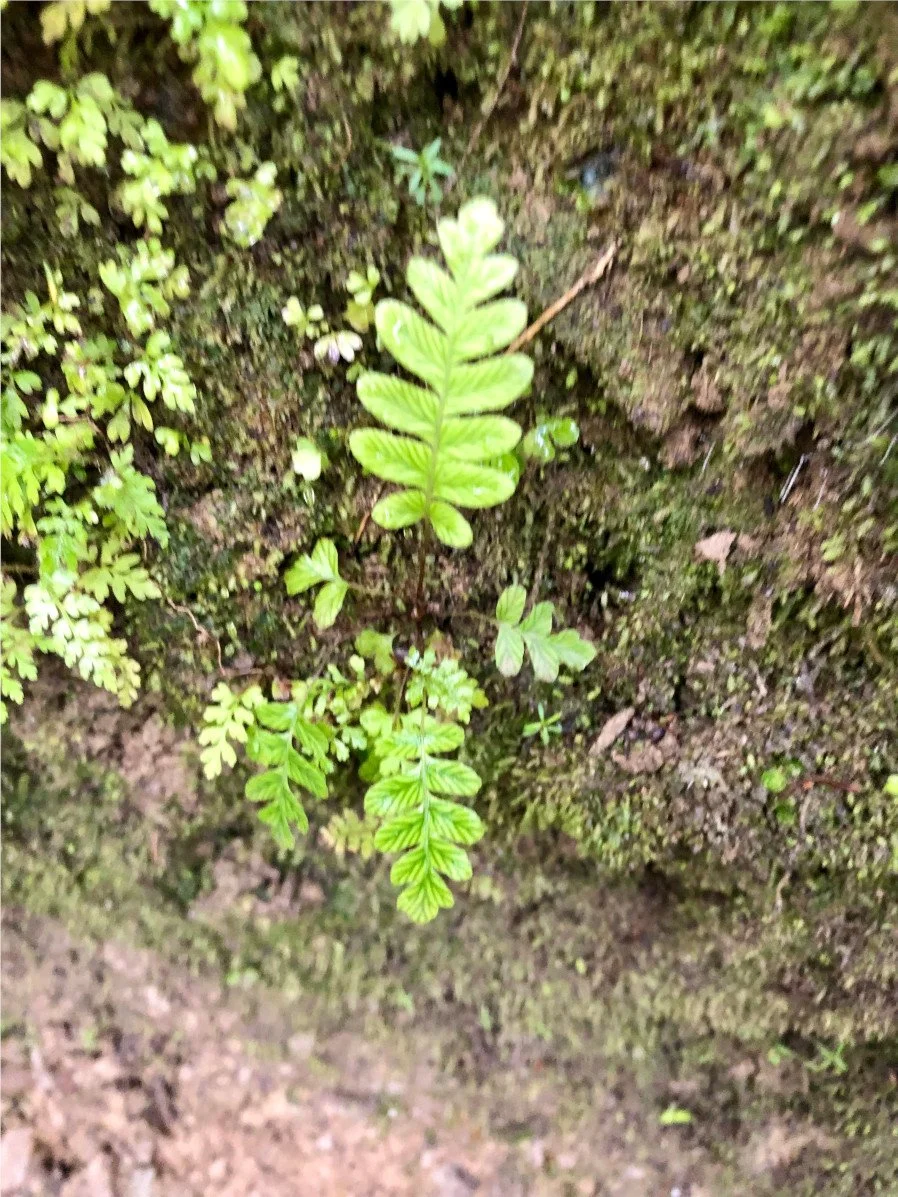
Taupeka
Botanical name: Notogrammitis heterophylla
Common name(s): Taupeka, Comb Fern
Plant facts:
A small native comb fern that grows as either an epiphyte on trees or amongst rocks and cliff faces. Forms dense tufted patches of delicate fronds and is commonly found in damp forest environments from coastal to subalpine regions.
Natural habitat:
Typically found growing on tree trunks, shaded rocks, cliff faces, boulders, and sheltered scree slopes within forests and shrublands.
Growing environment:
Shade, Moist, Wind & Free draining tolerant.
Endemic distribution:
Widespread throughout New Zealand including the Three Kings Islands, North Island, South Island, Stewart Island/Rakiura, Chatham Islands, and Auckland Islands. Also found in Australia.
Height:
Fronds typically 25–300 mm long
Flowering:
Not applicable — spore-producing fern.
Fruiting (spores):
Produces minute wind-dispersed spores on the undersides of fertile fronds.
Uses:
• Suitable for shaded fern collections
• Adds texture to native forest gardens
• Ideal for naturalistic epiphytic plantings
Appearance:
Growth habit:
Forms compact, tufted patches from short creeping rhizomes. Usually grows as an epiphyte but can also establish on rocks and cliff faces.
Fronds (leaves):
Fronds grow in two rows and range from light to dark green. They are narrow and divided into many small side leaflets (pinnae), creating a comb-like appearance.
Leaf structure:
Leaflets may have smooth edges or shallow lobes and are often slightly leathery. Fine pale hairs can occur along the stems and leaf surfaces.
Reproductive structures:
Spores are produced in sori located beneath the fertile pinnae and dispersed by wind.
How to grow:
Difficult to cultivate and best suited to cool, moist, shaded environments with excellent drainage and humidity. Should not be removed from the wild.