


Tall Mingimingi
Botanical name: Leucopogon fasciculatus
Synonyms: Cyathodes fasciculata, Leucopogon brevibarbis, Styphelia fasciculata
Common name(s): Mingimingi, tall mingimingi
About
Leucopogon fasciculatus is an endemic New Zealand evergreen shrub or small tree recognised by its slender, often dark-coloured branches, stiff narrow leaves, small white bell-shaped flowers and conspicuous fleshy fruit that ripen through shades of red, pink or white. It is an extremely variable species, particularly in leaf width, with broader-leaved forms occurring predominantly in western districts and narrower-leaved forms more characteristic of eastern populations. Plants are typically open and somewhat wiry in habit but can develop into substantial shrubs or small trees in favourable forest environments.
Natural habitat
Occurs from lowland to montane environments in light forest, forest margins, shrubland and regenerating vegetation. It is found beneath or alongside podocarp, broadleaved and beech forest and also occupies open ridges, scrub, rocky ground and relatively infertile sites. It generally favours upland rather than wetland conditions, although it occasionally occurs in wetter habitats.
Growing environment
Adaptable to full sun, light shade and open forest conditions. It performs particularly well in free-draining soils and tolerates relatively infertile, acidic and rocky substrates. Established plants can withstand considerable wind, frost and seasonal dryness. Young plants benefit from reliable moisture during establishment but should not be subjected to prolonged waterlogging.
Its wetland indicator status is FACU (Facultative Upland), meaning it usually occurs in non-wetland environments but can occasionally occur as a hydrophyte.
Endemic distribution
Endemic to New Zealand. It is widespread through much of the North Island and extends into the northern South Island, including North-West Nelson. Its South Island distribution includes forest communities where it may occur amongst red and silver beech together with podocarps such as rimu and miro. Its occurrence in North-West Nelson makes it a naturally significant species for the Nelson–Tasman region.
Height
Usually approximately 2–5 m tall, although sheltered specimens can develop into small trees around 5–6 m high. Plants growing on exposed or infertile sites are often substantially smaller.
Width
Generally approximately 1.5–3 m across when mature, potentially becoming broader in favourable open conditions. Forest-grown plants may remain narrower and more upright or irregular in form.
Flowering
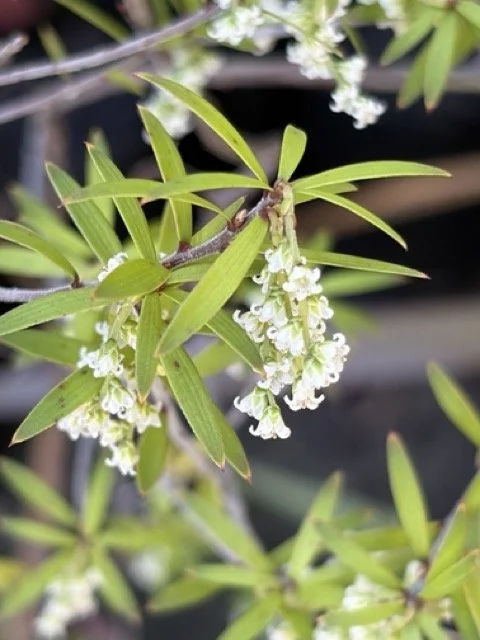
Primarily spring into early summer. Numerous small white to greenish-white, bell-shaped flowers approximately 3–5 mm across are produced in slender, often hanging clusters along the branchlets. The flowers may be subtly fragrant.
Fruiting
Fruit generally develops following flowering and ripens from summer into autumn. The fruits are small, rounded, fleshy drupes varying from bright red or pinkish through to pale or white when mature.
Uses
Native shrubland and forest restoration
Forest-margin planting
Wildlife gardens
Revegetation of relatively infertile sites
Understorey and light woodland planting
Exposed native gardens
Informal screening
Structural or specimen shrub
Providing fruit for native wildlife
Supporting native insects
Nelson–Tasman ecological planting where appropriately eco-sourced
Appearance
Growth habit: An evergreen, much-branched shrub or small tree with an open, spreading to upright habit. Branches are slender, wiry and often dark brown to almost black, giving older specimens a distinctive fine-branched appearance. Plants growing beneath forest can be comparatively sparse and irregular, while those receiving more light generally develop denser branching.
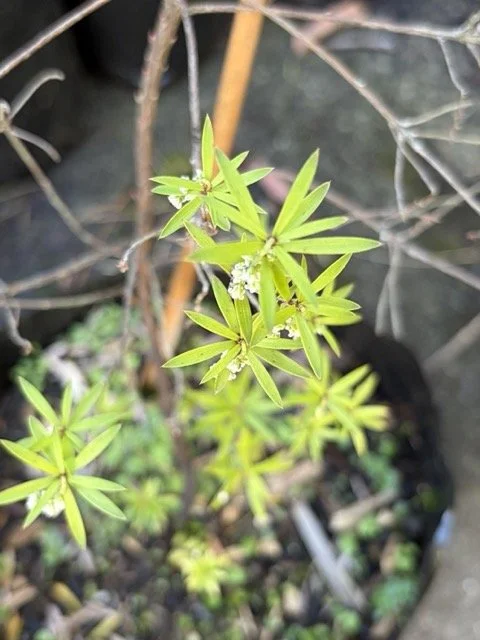
Leaves: Leaves are hard, narrow and stiff, typically approximately 10–15 mm long but varying more broadly from around 10–30 mm. They are linear to linear-oblong and terminate in a firm, pointed tip. The upper surface is generally dark green while the underside is paler or greenish.
Leaf width varies considerably between populations. Broader-leaved forms, with leaves around 4 mm wide, occur predominantly in western districts, while narrower forms with leaves around 1.5–2 mm wide are more characteristic of eastern populations. Leaves are arranged along the slender branchlets and can appear clustered because of the short distances between them.
Flowers: Small, white to greenish-white and bell-shaped, approximately 3–5 mm across. They are produced in slender, usually pendulous clusters from the branchlets and toward their tips. The five petals form a small tubular to bell-shaped flower, and the flowering display can be surprisingly conspicuous when plants carry numerous clusters.
Fruit: Small, rounded and fleshy drupes developing after flowering. Colour is variable, ranging from red and pinkish to pale or white at maturity. The fleshy fruit is adapted for consumption by animals, which subsequently disperse the seed.
Ecology
An important component of native forest margins, shrublands and open forest communities. The fleshy fruit is dispersed through frugivory, with animals consuming the fruit and transporting the enclosed seed away from the parent plant.
The flowers provide resources for insects, while the dense branching structure offers shelter and habitat for small animals. Leucopogon fasciculatus is also a known host plant of the endemic New Zealand moth Pyrgotis pyramidias, demonstrating its role in supporting specialised native invertebrate relationships.
Its ability to occupy relatively open and nutrient-poor sites also allows it to form part of naturally regenerating shrubland and transitional forest communities.
Associated habitats
Occurs in light podocarp, broadleaved and beech forest, forest margins, regenerating shrubland, open ridges and rocky or relatively infertile ground. In the northern South Island it occurs in red and silver beech forest and mixed forest containing podocarps such as rimu and miro.
In North-West Nelson it forms part of naturally diverse forest and shrubland communities and is particularly appropriate for ecological planting where local provenance material is available.
How to grow
Grow in full sun to partial shade in free-draining soil. Although adaptable, it generally develops a denser and more attractive form with reasonable light. Plants growing in deeper shade tend to become more open and slender.
Water regularly during initial establishment, but once a good root system has developed the species is reasonably tolerant of seasonal dryness. Avoid permanently waterlogged ground. It generally requires little fertiliser and is well suited to native gardens where low-maintenance, naturally structured planting is desired.
The species is relatively slow growing, so unnecessary heavy pruning should be avoided. Light formative pruning can be used when young if a denser specimen is desired, but its naturally irregular branching habit is part of its character.
For ecological restoration, locally eco-sourced plants are preferable because of the considerable variation that exists between populations, including differences in leaf dimensions.
Propagation
Propagation is principally from fresh seed, although cuttings can also be attempted. Collect fully ripe fleshy fruit and remove the surrounding pulp before sowing. Clean seed can be placed into a free-draining propagation medium and kept evenly moist.
Germination may be slow or irregular, so seed trays should be retained rather than discarded if germination does not occur immediately. Seedlings are initially relatively slow growing and should be handled carefully when transplanted.
Semi-hardwood cuttings taken from healthy shoots may also root under controlled propagation conditions, although seed is generally preferable when producing plants for ecological restoration because it maintains greater genetic diversity.
Cultural use
Mingimingi is a Māori name applied to several New Zealand shrubs with superficially similar fine-leaved or twiggy appearances. Specific traditional uses attributable confidently to Leucopogon fasciculatus are not well documented, so broader claims associated with plants called mingimingi should not automatically be assigned to this species.
Garden value
A distinctive native shrub valued more for its fine texture, natural form and ecological qualities than for a conventional ornamental appearance. The combination of dark wiry stems, narrow green foliage, small white flowers and colourful red, pink or white fruit provides subtle year-round interest.
It is particularly useful in naturalistic native gardens, forest margins and wildlife-focused planting. Its tolerance of relatively poor soils, frost, wind and seasonal dryness makes established plants useful for more challenging sites.
For Nelson–Tasman planting it has particular value because Leucopogon fasciculatus occurs naturally in North-West Nelson. The considerable natural variation within the species also makes locally eco-sourced material especially desirable where the objective is ecological restoration or the preservation of regional plant characteristics.