


Mānuka
Botanical name: Leptospermum scoparium var. scoparium
Synonyms: None
Common name(s): Mānuka, white tea tree, tea tree, kahikātoa
About
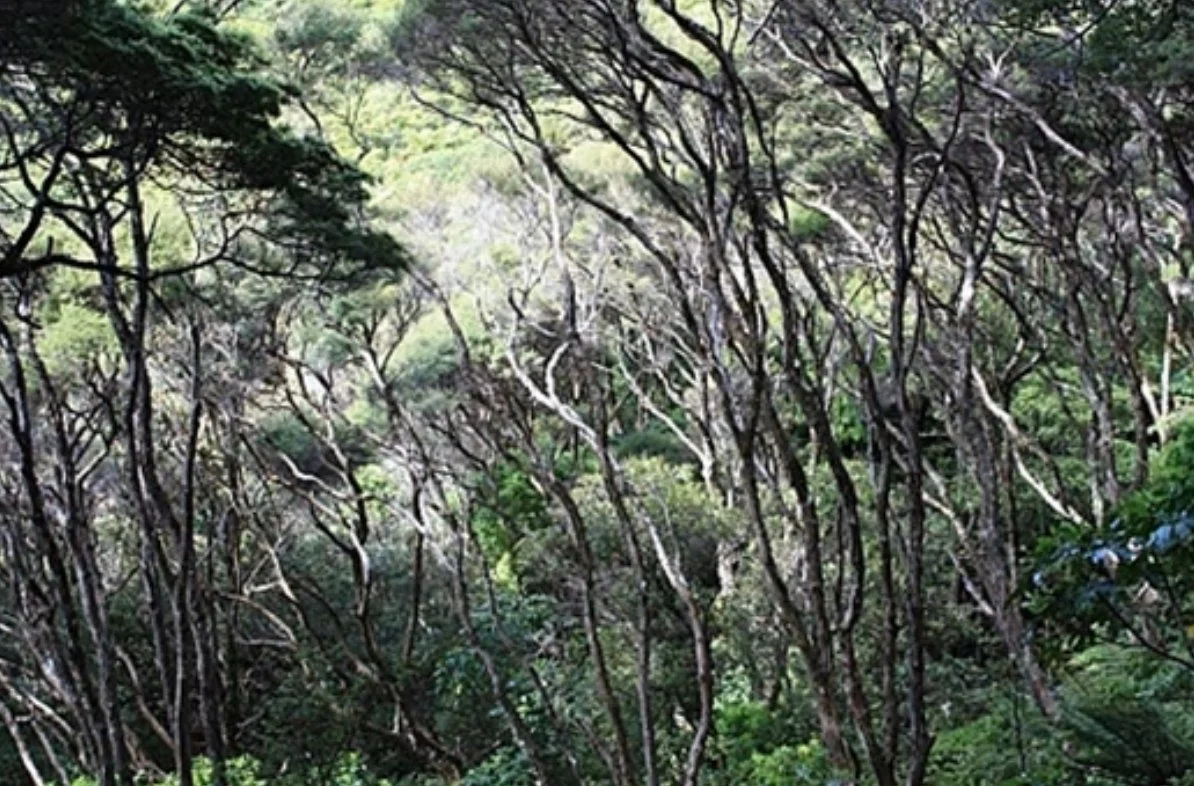
Leptospermum scoparium var. scoparium is a highly variable evergreen shrub or small tree and one of New Zealand’s most familiar native plants. It may grow as a low, spreading shrub in exposed environments or develop into a small tree in more sheltered situations. It is characterised by its flaky grey bark, numerous branches, small stiff sharply pointed leaves and masses of predominantly white flowers, often with pink to crimson colouring around their centres. Mānuka is an important pioneer species, readily colonising disturbed and relatively infertile ground and creating conditions that allow other native shrubs and forest species to establish.
Natural habitat
Extremely widespread and occupying habitats from coastal environments through lowland scrub and forest margins to montane and low-alpine vegetation. It is particularly characteristic of open or disturbed sites, including regenerating farmland, shrubland, forest margins, wetlands, poorly drained ground, exposed ridges and infertile soils. Its ability to tolerate difficult conditions allows it to become an important early component of regenerating native vegetation.
Growing environment
Highly adaptable and best grown in full sun to light shade. It tolerates a wide range of soils, including relatively infertile, acidic, sandy, clay and seasonally wet substrates, provided extreme long-term waterlogging is avoided by forms not naturally adapted to wetland conditions. Once established it has good tolerance of drought, frost, wind and coastal exposure. Its wetland indicator status is FAC (Facultative), reflecting its ability to occur naturally in both wetland and non-wetland environments.
Endemic distribution
Indigenous to New Zealand but not endemic, also occurring naturally in south-eastern Australia, including Tasmania. Within New Zealand it is widespread from northern Northland through the North and South Islands to Stewart Island/Rakiura and the Chatham Islands. It occurs from the coast to low-alpine environments and displays substantial regional variation in growth habit, foliage, flowers and other characteristics.
Height
Extremely variable according to habitat and form. Commonly approximately 2–5 m tall as a shrub or small tree, although larger specimens of Leptospermum scoparium can exceed this under favourable conditions. Low-growing and decumbent forms may remain considerably shorter.
Width
Typically approximately 1.5–4 m across, although growth habit varies considerably. Decumbent forms may spread approximately 2–4 m across, with branches occasionally developing adventitious roots where they contact the ground.
Flowering
Can flower throughout the year, although the main flowering display generally occurs during spring and summer. Flowers are borne singly in the leaf axils and measure approximately 8–25 mm across. Petals are predominantly white but may be flushed pink, while the receptacle can be pink, crimson or dark red.
Fruiting
Woody capsules approximately 5–7 mm across develop following flowering. The capsules are characteristically persistent and may remain attached to branches for prolonged periods, meaning mature plants commonly carry capsules throughout the year. Numerous very small seeds are released from mature capsules.
Uses
Mānuka is exceptionally versatile. It is widely used for ecological restoration, revegetation of disturbed ground, native shelter planting, erosion control, riparian and wetland-margin planting, coastal revegetation and establishing a protective nursery canopy for regenerating native forest. Its abundant flowers provide nectar and pollen for insects and are particularly important for honey production.
The hard, durable wood has traditionally been used for tools, implements and construction and remains valued as firewood and for smoking food. Mānuka foliage is also used for essential-oil production.
Appearance
Growth habit: An evergreen, densely branched shrub or small tree, ranging from low decumbent plants to upright specimens several metres tall. Numerous erect, spreading or trailing branches may arise from near the base. Prostrate branches can occasionally layer naturally where they contact the soil. Young branchlets are densely to sparsely covered with long, silky white hairs.
Leaves: Small, leathery and pale to dark green, generally approximately 5–20 × 1–8 mm, although most are narrower. Shape is highly variable, ranging from linear and narrowly lanceolate through lanceolate and oblanceolate to elliptic or obovate. The apex is invariably extended into a stiff, sharp point, giving foliage its familiar prickly feel when grasped. Young leaves may carry long silky white hairs, becoming sparsely hairy or hairless with age. Margins are very finely toothed.
Flowers: Solitary and approximately 8–25 mm diameter, generally with five rounded petals. Flowers are usually white but can be flushed with pink, while the central receptacle may be pink, crimson or dark red. Numerous stamens surround the centre of the flower. Heavy flowering can cover much of the outer canopy in white.
Fruit: A hard, dry, woody capsule approximately 5–7 mm diameter. Capsules are circular to broadly cup-shaped and characteristically remain attached to the branches after maturity. This persistent fruit is a useful feature for distinguishing mānuka from kānuka.
Ecology
Mānuka is an important pioneer and succession species. It rapidly colonises disturbed or open ground, including sites where previous vegetation has been cleared, and provides shelter that can facilitate establishment of later-successional native trees and shrubs. Dense stands protect the soil, reduce exposure and gradually contribute organic material as litter accumulates.
Its flowers are visited by a wide range of insects, including native flies and bees as well as introduced honeybees. The nectar is the source of commercially important mānuka honey. Mānuka also provides habitat for numerous native invertebrates and other organisms.
The species belongs to the Myrtaceae and is susceptible to myrtle rust (Austropuccinia psidii), first detected in New Zealand in 2017. The long-term effect of this introduced pathogen on mānuka populations continues to be monitored.
Associated habitats
Occurs in an exceptionally broad range of plant communities, including coastal scrub, lowland shrubland, regenerating farmland, wetland margins, forest margins, montane shrubland and low-alpine vegetation. Common associates vary greatly by region and environmental conditions and may include kānuka, mingimingi, coprosmas, koromiko, toetoe, flax, cabbage tree and a wide variety of regenerating native forest species.
In Nelson–Tasman, mānuka is an important component of naturally regenerating shrubland, particularly on disturbed, exposed and relatively infertile sites, and can act as an effective nursery species for eventual forest succession.
How to grow
One of the easiest New Zealand native woody plants to establish. Plant in full sun for the densest growth and heaviest flowering, although light shade is tolerated. Mānuka grows successfully across a broad range of soil types and generally requires little fertiliser.
Water during initial establishment, after which plants are usually tolerant of considerable seasonal dryness. They withstand exposed conditions, wind, frost and relatively poor soils extremely well. For restoration planting, mānuka can be planted relatively densely to rapidly establish protective shrub cover, suppress exotic grasses and weeds and provide shelter for later forest species.
Plants are naturally variable, so eco-sourced material should be preferred for ecological restoration where maintaining local genetic character is important.
Propagation
Very easily propagated from fresh seed. Mature capsules can be collected and allowed to open so that the extremely fine seed can be extracted. Sow onto the surface of a fine, free-draining propagation medium rather than burying deeply.
Fresh seed generally provides the best results and should ideally be sown soon after collection because viability can decline during storage, particularly if seed is allowed to dry excessively. Seedlings can be pricked out once sufficiently large to handle. Propagation from cuttings is possible but generally more difficult and less reliable than seed.
Cultural use
Mānuka has a long history of use by Māori. Its strong, hard wood was used for tools and implements, including digging sticks, weapons, paddles and combs, as well as for construction and eel weirs. The bark, leaves and gum also had applications within rongoā Māori.
Infusions and preparations made from different parts of the plant were traditionally used for a range of purposes. The pale gum exuded by the plant, known as pai mānuka, also had traditional uses.
Following European arrival, mānuka foliage was used to make tea-like drinks, contributing to the English common name “tea tree”. Today the species has considerable economic significance through mānuka honey, essential oils and other plant-derived products.
Garden value
An extremely hardy and versatile native shrub suitable for naturalistic gardens, restoration planting, shelter, exposed banks and informal hedging. Its small evergreen leaves provide year-round structure, while the profusion of white to pink-flushed flowers creates an attractive display and provides valuable resources for insects.
Its ability to tolerate wind, frost, poor soils, exposure and periods of drought makes it particularly valuable on difficult sites. The substantial natural variation within mānuka has also produced numerous ornamental selections with differences in flower colour, foliage and growth habit. For ecological planting, locally eco-sourced forms are preferable to ornamental cultivars because they preserve the regional characteristics of wild populations.