
Button Daisy
Botanical name: Leptinella squalida subsp. squalida
Synonyms: Cotula squalida
Common name(s): Button daisy, brass buttons
About
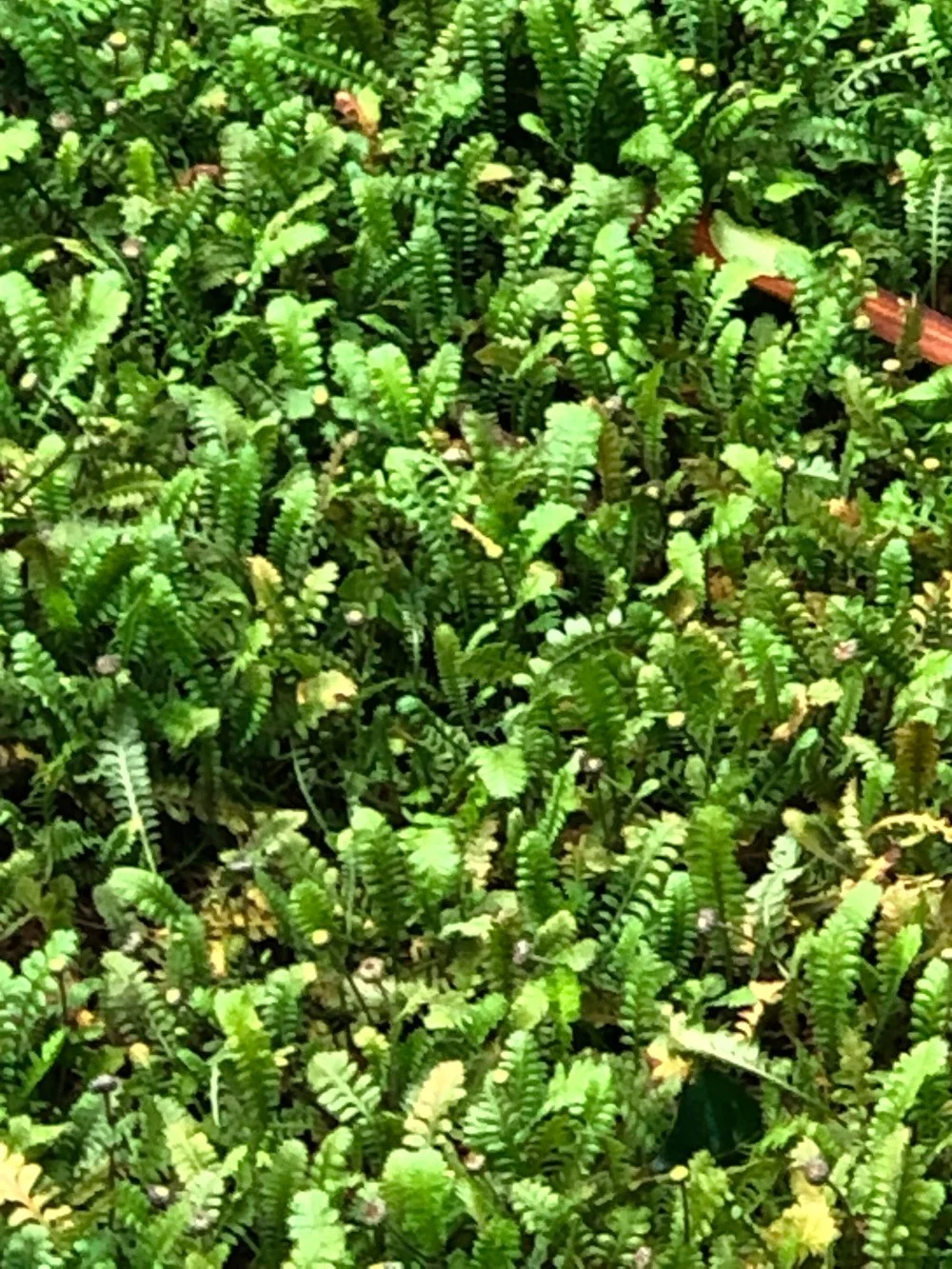
Leptinella squalida subsp. squalida is a fast-growing, widely creeping perennial herb endemic to New Zealand. It belongs to the daisy family (Asteraceae) and spreads by flexible surface or near-surface rhizomes to form dense, carpet-like turfs. Its tiny, finely divided leaves are typically bright to yellow-green with characteristic brown pigmentation around the basal portion and lower pinnae. Male and female flower heads occur on separate plants. Highly adaptable and tolerant of a broad range of growing conditions, it occurs naturally in everything from coastal turf and riverbeds to damp lowland forest openings, with some forms extending into subalpine and alpine environments. Its current New Zealand conservation status is Not Threatened (2023).
Natural habitat
Primarily a coastal and lowland species occurring from sea level to approximately 300 m, although some forms occur at subalpine to alpine elevations in the central North Island. Typical habitats include open turf, coastal cliffs, coastal grassland, riverbeds, damp open ground, shrubland openings and lowland forest. It can tolerate disturbance and has even become established as a naturally occurring lawn plant in some urban areas.
Growing environment
Extremely adaptable, growing successfully in sun or shade and across a relatively broad range of soils. It performs particularly well where soils retain some moisture without remaining permanently waterlogged. Its natural occurrence in both exposed turf and shaded forest openings demonstrates considerable tolerance of differing light levels. It can grow in both wetland and non-wetland situations and has a FAC (Facultative) wetland indicator rating.
Endemic distribution
Endemic to New Zealand. Occurs in the North Island, the north-western portion of the South Island, including North-
West Nelson, and the Chatham Islands. It is widespread over much of its range but becomes uncommon north of the Waikato.
Height
Extremely low-growing, generally forming foliage approximately 1–5 cm above the ground. Flowering peduncles are approximately 10–60 mm tall and usually extend above the leaves.
Width
Spreads indefinitely by creeping rhizomes and can develop extensive dense turfs under favourable conditions. Leaves are generally spaced approximately 5–30 mm apart along the rhizomes, allowing colonies to spread rapidly across suitable open ground.
Flowering
August–February. Flower heads are small and predominantly yellow-green. Female capitula are approximately 3–5 mm across when flowering, while male heads are approximately 4–7 mm across.
Fruiting
September–June. Female flower heads enlarge considerably after flowering, reaching approximately 10 mm diameter and developing into almost spherical fruiting heads. Mature cypselae are approximately 1.9 × 0.9 mm, initially pale and wrinkled before becoming smooth and brown.
Uses
Excellent native groundcover
Native lawn and lawn substitute
Groundcover between stepping stones
Rockeries and garden borders
Damp or lightly shaded gardens
Coastal and lowland native plantings
Native turf and ecological restoration
Bank and surface stabilisation
Container and trough planting
Useful alternative to conventional lawn grasses in appropriate situations
Suitable for planting beneath taller native shrubs where sufficient light reaches the ground
Appearance
Growth habit: A dioecious, rapidly spreading perennial forming dense, often monospecific carpets or growing amongst other native turf plants. Rhizomes occur at or immediately below the soil surface and are green, dark green or reddish-green, flexible and covered with scattered hairs. Branching usually occurs singly at flowering nodes. Fine roots arise along the creeping stems.
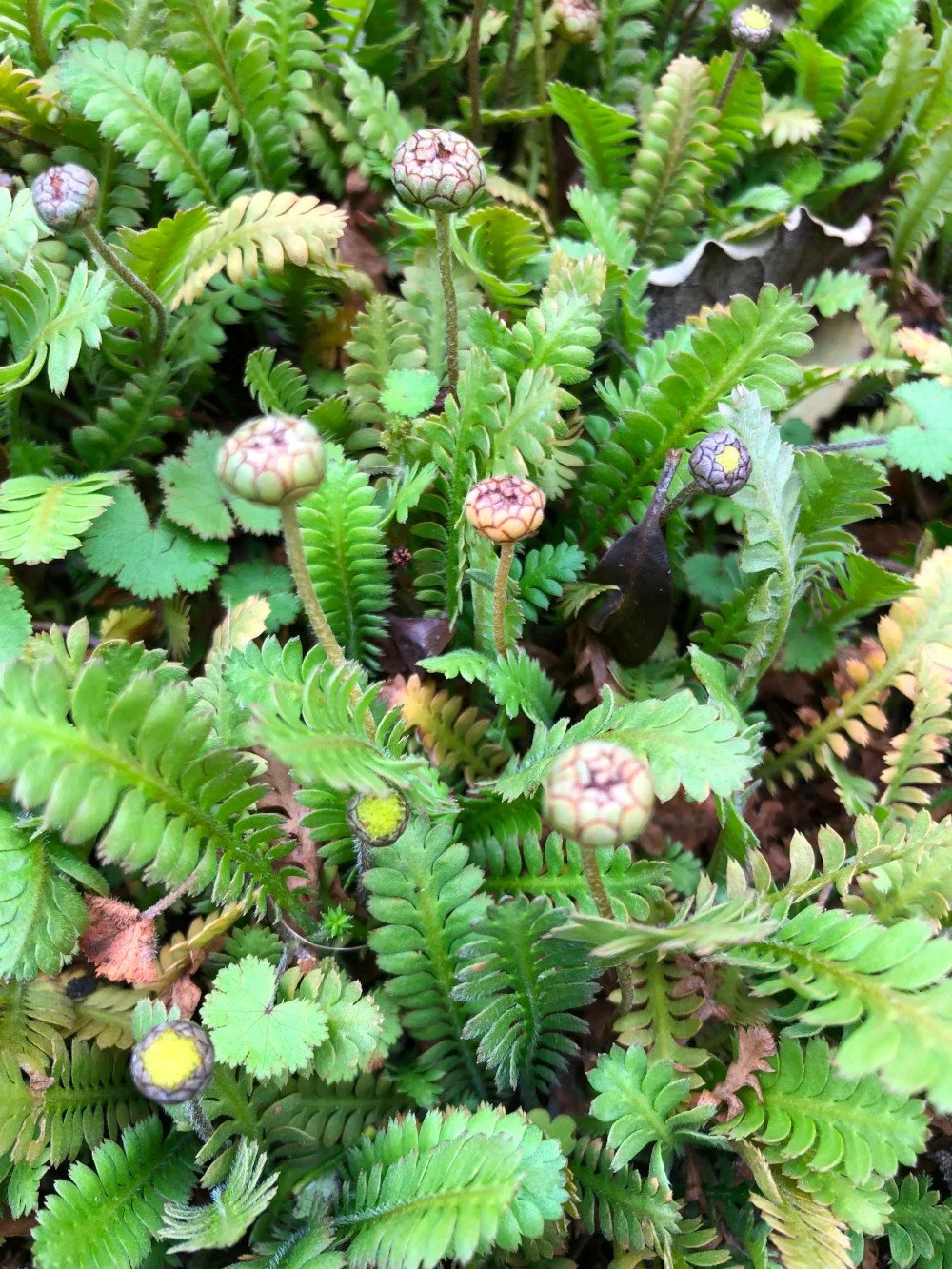
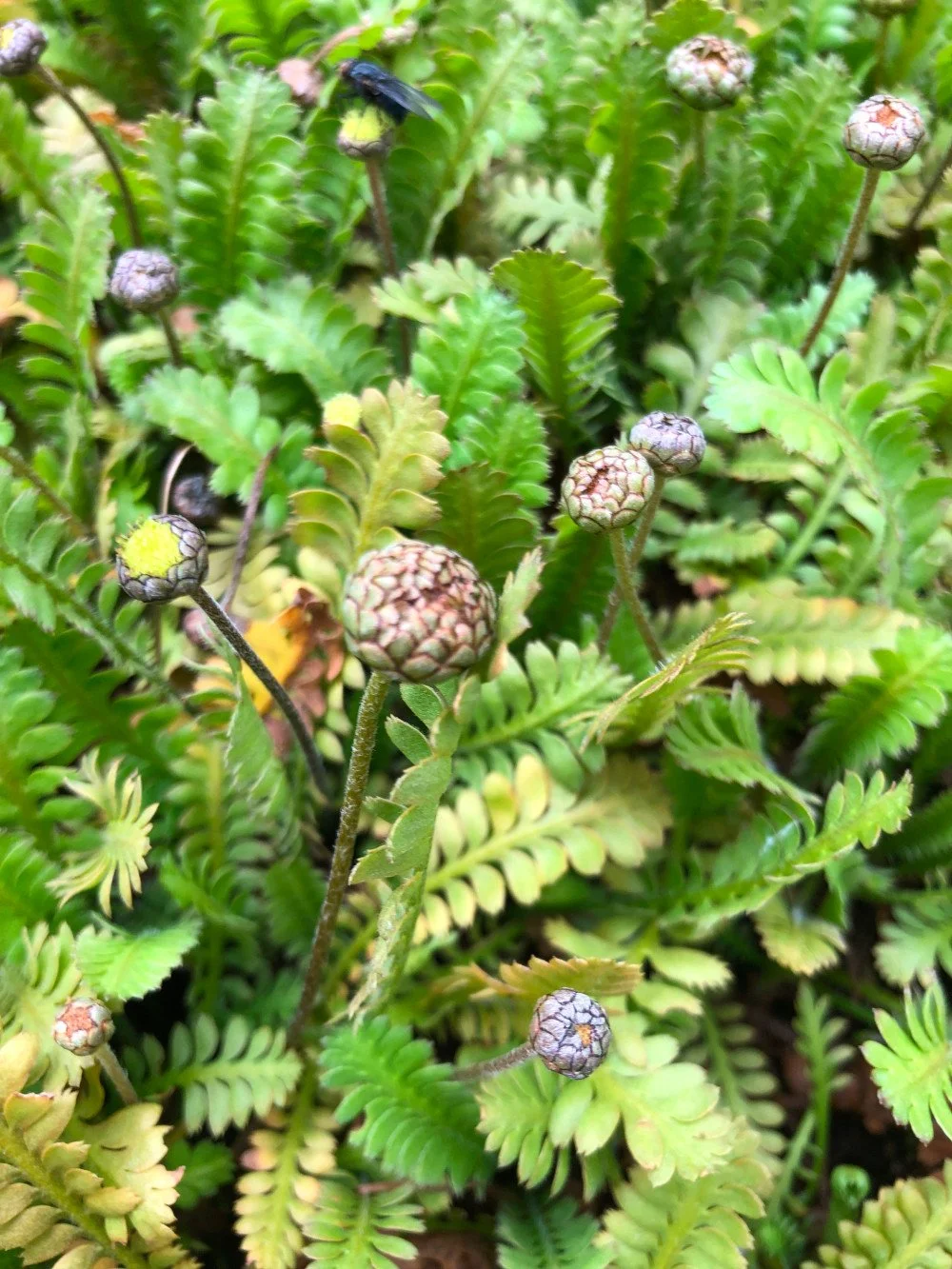
Leaves: Small and 1-pinnatifid, generally 5–10 mm long but occasionally reaching approximately 20 mm, and 3–20 mm wide. The blade is broadly elliptic to obovate, bright green or yellow-green and ranges from fleshy to membranous. The basal third to half of the blade and particularly the proximal pinnae commonly develop distinctive brown pigmentation. Leaves may be sparsely to moderately hairy or occasionally almost hairless.
The leaves carry approximately 6–20 pairs of closely arranged oblong to elliptic pinnae. Larger pinnae may be almost circular or obovate. The distal pinnae are not completely divided to the rachis and are more closely packed and held at a narrower angle than those toward the middle of the leaf. Individual pinnae may carry up to approximately 10 small teeth.
Flowers: Male and female flower heads are produced on separate plants. They arise from the rhizomes on slender, sparsely hairy peduncles approximately 10–60 mm long. Female heads initially measure approximately 3–5 mm across and contain around 15–70 yellow-green florets. The involucral bracts enlarge considerably following flowering and eventually enclose the developing fruiting head. Male capitula are approximately 4–7 mm across, with substantially more numerous florets.
Fruit: Small papery cypselae approximately 1.9 × 0.9 mm. They are initially pale and wrinkled, becoming brown and smooth as they mature. The female capitulum expands to approximately 10 mm across during fruit development.
Ecology
A characteristic component of open native turf communities and damp disturbed habitats. Its rapidly spreading rhizomes enable it to colonise open ground and intermingle with other small turf-forming species. Its dense growth can suppress taller seedlings and help protect exposed soil surfaces. The papery cypselae are dispersed primarily by wind and possibly through attachment to animals or other moving material. Its ability to occupy both hydrophytic and non-hydrophytic environments reflects the considerable ecological flexibility of the species.
Associated habitats
Commonly associated with coastal turf, damp grassland, river margins, forest and shrubland openings and other short native turf communities. It is frequently recorded growing alongside native pennyworts such as Hydrocotyle heteromeria and Hydrocotyle microphylla. Depending on locality, it may occur with native grasses, sedges, creeping herbs and other low-growing turf species.
How to grow
An exceptionally easy native groundcover to cultivate. Plant in sun, partial shade or reasonably open shade in soil that remains moderately moist but drains adequately. It tolerates a broad range of soil conditions and can spread rapidly once established.
For use as a lawn substitute, plant rooted pieces relatively closely and allow the rhizomes to knit together into a continuous carpet. Occasional trimming or division can be used to control spread and maintain a dense, even surface. It is particularly useful in situations where conventional lawn grasses struggle because of partial shade or consistently moist soil.
The species is naturally variable, so individual forms can differ considerably in foliage size, pigmentation, density and growth habit. Selection of attractive forms has considerable horticultural potential.
Propagation
Extremely easy from rooted pieces or division. Sections of creeping rhizome carrying several leaves and established roots can be separated from the parent colony and replanted directly into moist soil or a free-draining propagation medium. Plants establish quickly when kept adequately watered.
Seed propagation is also possible where male and female plants occur together and viable seed is produced, although vegetative propagation is substantially easier and maintains the characteristics of selected forms.
Cultural use
Specific traditional Māori uses attributable with confidence to Leptinella squalida subsp. squalida are not well documented. Claims sometimes made online regarding traditional weaving or medicinal use should be treated cautiously unless supported by reliable ethnobotanical sources. Its best-established contemporary values are ecological, horticultural and conservation-related.
Garden value
One of the most useful New Zealand native plants for creating a very low, dense groundcover. Its finely divided foliage produces an attractive fern-like or mossy texture, while its creeping rhizomes allow it to develop into a continuous carpet. It is particularly valuable as a native lawn alternative, between paving and stepping stones, around rocks, beneath taller native plants and along damp garden margins.
The species’ natural variability also provides excellent opportunities for horticultural selection. Forms range from fresh bright green through bronze-toned foliage, while selections such as the internationally cultivated Leptinella squalida ‘Platt’s Black’ demonstrate the ornamental potential of its darker foliage forms. Its adaptability, rapid establishment and natural occurrence in North-West Nelson make it especially useful for Nelson–Tasman native gardens where appropriately eco-sourced material is available.