



Pukatea
Botanical name: Laurelia novae-zelandiae
Synonyms: None commonly used
Common name(s): Pukatea
About:
Laurelia novae-zelandiae is a large endemic New Zealand evergreen tree best known for its massive plank-like buttresses, glossy toothed leaves and strong association with damp lowland forest.
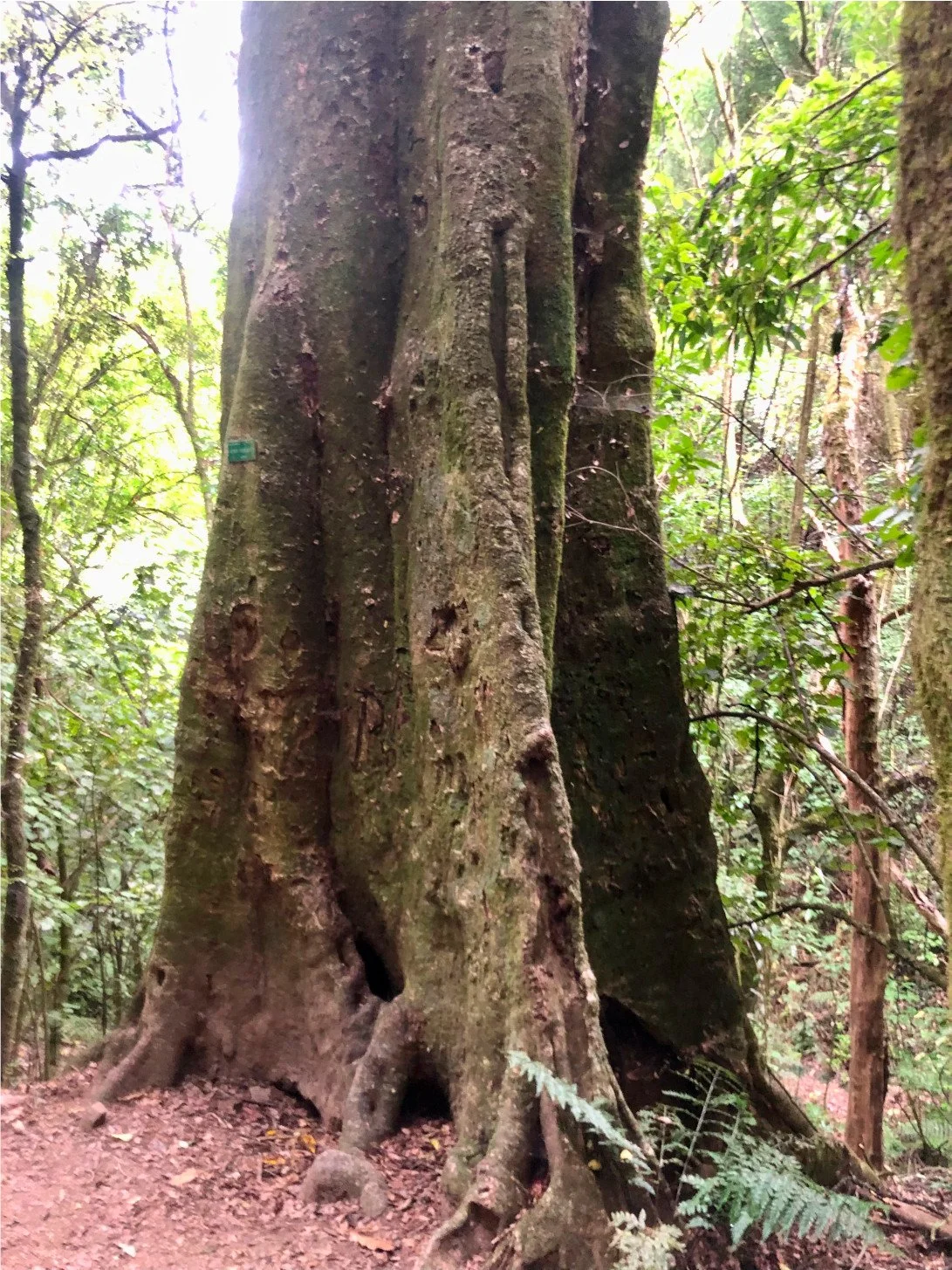
Mature trees can become imposing forest giants, reaching around 35 m tall with trunks up to 2 m in diameter. In wet or swampy ground they often develop broad fluted buttresses and, in some conditions, specialised respiratory roots that help the tree cope with waterlogged soils.
Pukatea is the only species of Laurelia native to New Zealand. It belongs to the family Atherospermataceae and is closely associated with moist, sheltered forest environments.
Natural habitat:
Lowland semi-swamp forest, damp broadleaved forest, gully forest, stream margins, river terraces and other sheltered forest where soil moisture is consistently high.
It is especially characteristic of poorly drained or seasonally waterlogged sites but can also occur on better-drained forested slopes and hillsides where humidity remains high.
Growing environment:
Partial Shade, Shade, Moist Soil, Wet Soil, Humus-rich Soil, Sheltered Conditions & Poor Drainage tolerant.
Young plants prefer moist, sheltered conditions and protection from severe frost and drying winds.
Older trees are well adapted to saturated soils and may develop broad buttresses or specialised root structures in response to prolonged waterlogging.
Endemic distribution:
Endemic to New Zealand.
Occurs throughout the North Island from Northland southwards and extends into the northern South Island.
In the South Island it is principally found in Nelson, Marlborough and northern Westland.
Height:
Usually up to approximately 35 m.
Exceptional trees may approach 40 m.
Width:
Mature crowns may spread approximately 8–15 m or more depending on site and competition.
The basal buttresses of old trees can occupy a substantial area around the trunk.
Flowering:
Usually October–December, occasionally beginning in September.
Flowers are small, approximately 4–7 mm across, and are borne in short axillary racemes up to around 3 cm long.
They are greenish to whitish and relatively inconspicuous.
Pukatea produces male and female flowers, with some bisexual flowers also reported. Individual trees may show strong dominance of one flower type.
Fruiting:
October–January.
The fruiting structures contain numerous narrow dry achenes.
Each achene is approximately 5 mm long and carries a long persistent hairy style, giving the mature fruiting head a feathery appearance.
The lightweight achenes are dispersed by wind.
Uses:
• Large native specimen tree
• Wetland and swamp-forest restoration
• Riparian restoration
• Gully and streamside planting
• Large-scale ecological revegetation
• Shade tree for large properties
• Cultural planting
• Historical timber species
• Habitat and biodiversity planting
• Restoration of lowland forest ecosystems
Appearance:
Growth habit:
A tall, evergreen forest tree developing a substantial upright trunk and broad crown.
Young trees are more slender and relatively conventional in form, while mature individuals often become strongly fluted at the base.
Old pukatea can develop immense hollow trunks and broad plank-like buttresses, particularly where growing in swampy or shallow soils.
Trunk/Bark:
The trunk may reach approximately 2 m in diameter.
Bark is pale brownish-grey to grey and comparatively thin.
One of the tree’s most distinctive features is the development of large vertical buttresses at the trunk base. These may project outward as broad, flattened plates and help stabilise mature trees in wet or unstable soils.
Older trunks frequently become hollow internally.
In persistently waterlogged substrates, specialised upward-growing respiratory roots may also develop around the base.
Leaves:
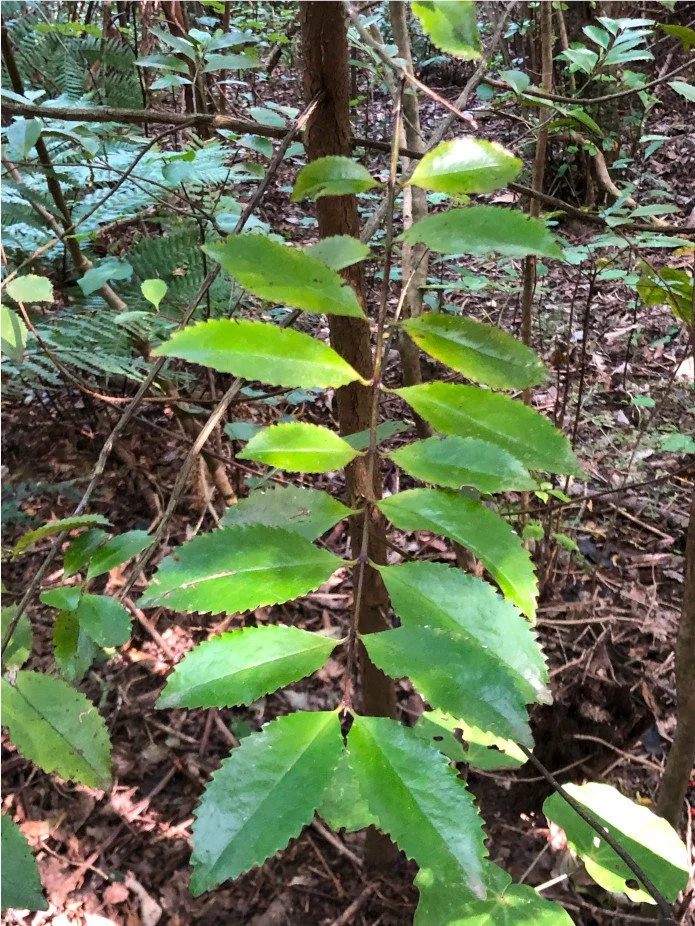
Leaves occur in opposite pairs along the branchlets.
They are leathery, glossy dark green above and noticeably paler beneath.
The blade is approximately 4–8 cm long and 2.5–5 cm wide, usually elliptic to elliptic-obovate.
Margins are distinctly and rather coarsely toothed with blunt serrations.
Petioles are short, generally up to about 1 cm long.
The leaves contain aromatic oil cells and can have a noticeable scent when crushed.
Young branchlets are characteristically four-angled and may be reddish with sparse hairs.
Flowers:
Flowers occur in short axillary racemes and are only around 4–7 mm across.
They are greenish to whitish and lack the large showy petals typical of many flowering trees.
Male flowers are divided almost to the base and generally carry around 6–12 stamens.
Female flowers are more urn-shaped and contain numerous carpels.
Nectar-producing glands are present and can attract a range of insects.
Fruit:
The fruiting structure consists of numerous individual dry achenes.
Each achene is spindle-shaped and approximately 5 mm long.
The persistent style can reach around 2 cm and is densely clothed in long silky hairs, producing a feathery appearance that assists wind dispersal.
Seeds:
Each dry achene contains a single seed.
The mature achenes are light and equipped with long silky hairs derived from the persistent style, allowing them to be carried away from the parent tree by wind.
Seed viability can be variable, and only a proportion of the numerous fruits produced may contain well-developed viable seed.
Ecology:
Pukatea is an important structural species of New Zealand’s wet lowland forests.
Its ability to tolerate saturated and poorly aerated soils allows it to occupy forest habitats that exclude many other large tree species.
The enormous buttresses of mature trees stabilise the trunk in shallow, wet or unstable ground, while specialised respiratory roots can improve gas exchange where soils remain waterlogged.
The flowers produce nectar and attract insects including bees, flies and other small invertebrates.
Old trees provide considerable habitat value. Hollow trunks, buttress cavities, rough bark and large root systems create shelter for native invertebrates, fungi, epiphytes and other forest organisms.
Associated habitats:
Lowland swamp forest, podocarp-broadleaved forest, alluvial forest, riparian forest, stream margins, damp gullies, river terraces and sheltered lowland slopes.
It commonly grows with moisture-loving native trees and shrubs such as kahikatea, pukatea-associated broadleaved species, māhoe, kiekie, tree ferns and a rich fern and bryophyte ground layer.
How to grow:
Pukatea is best suited to large properties, wetland margins and restoration sites where there is room for it to develop into a substantial tree.
Plant in moist, fertile soil with abundant organic matter. It performs particularly well in damp or seasonally waterlogged sites but can also grow successfully in better-drained soils if moisture remains reliable.
Young plants benefit from partial shade and shelter while establishing.
Avoid very exposed, dry sites and areas subject to severe frost.
Once established, the tree is capable of developing a deep, extensive root system and requires little intervention.
Because mature pukatea can become very large and develop wide buttresses, it should be planted well away from buildings, paths, drains and confined garden spaces.
Propagation:
Propagation is usually from fresh seed.
Collect mature fruit when the achenes are fully developed and beginning to loosen from the fruiting head.
Sow onto a moist, humus-rich propagation medium and cover only lightly.
Maintain consistent moisture and shelter from strong sunlight while seedlings establish.
Because seed viability may be variable, sowing a generous quantity of fresh seed usually gives the best chance of successful germination.
Cultural use:
Pukatea has a long history of Māori use.
The timber was used for items including bowls, paddles, clubs and carved parts associated with waka.
The bark was also used in rongoā Māori. It contains the alkaloid pukateine, which has recognised analgesic properties.
Large natural hollows that develop in ancient trunks were sometimes used as burial places.
Pukatea therefore has both practical and cultural significance extending well beyond its ecological importance as a forest tree.
Garden value:
A magnificent native tree for large gardens, lifestyle blocks, stream margins and wetland restoration.
Its glossy dark green foliage, strongly fluted trunk and enormous buttresses give mature trees a highly distinctive appearance.
Pukatea is particularly valuable where a large native tree is required for damp or poorly drained ground that would be unsuitable for many other species.
It is not appropriate for small suburban gardens, but in the right setting it can become one of the most impressive and ecologically valuable trees in a native landscape.