
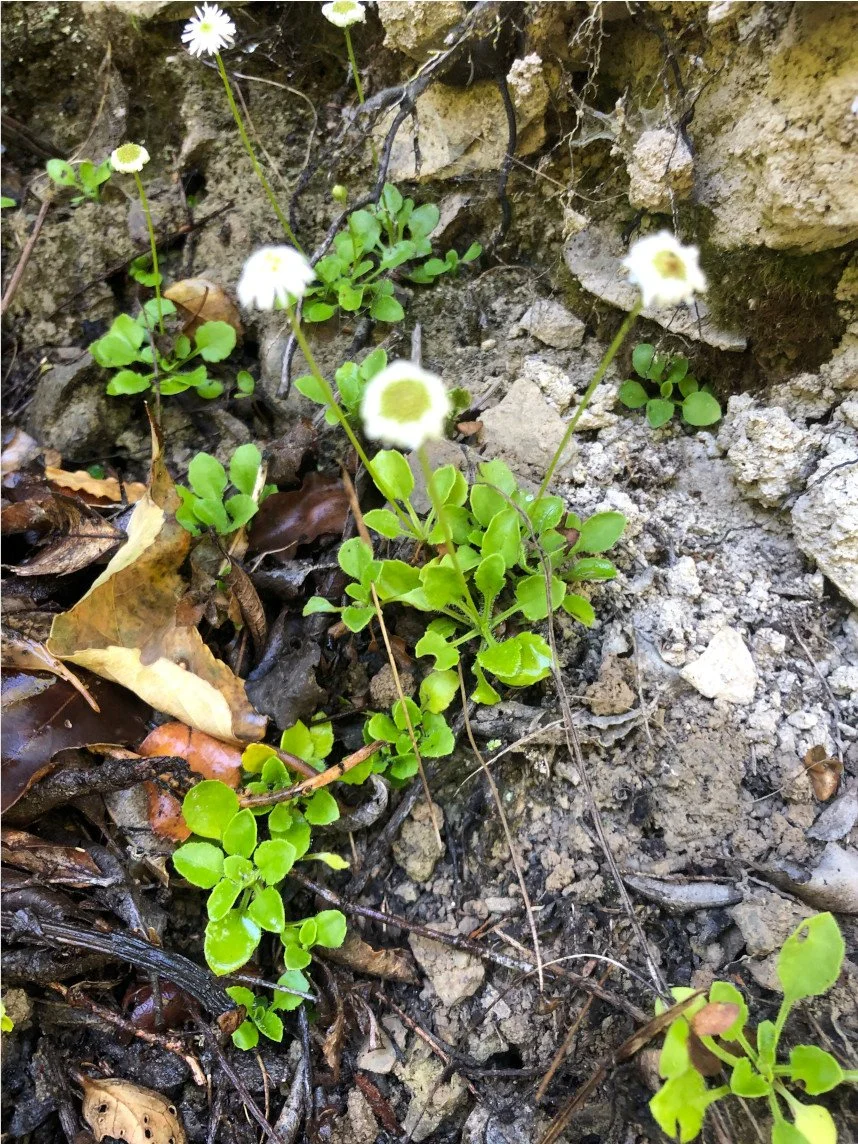
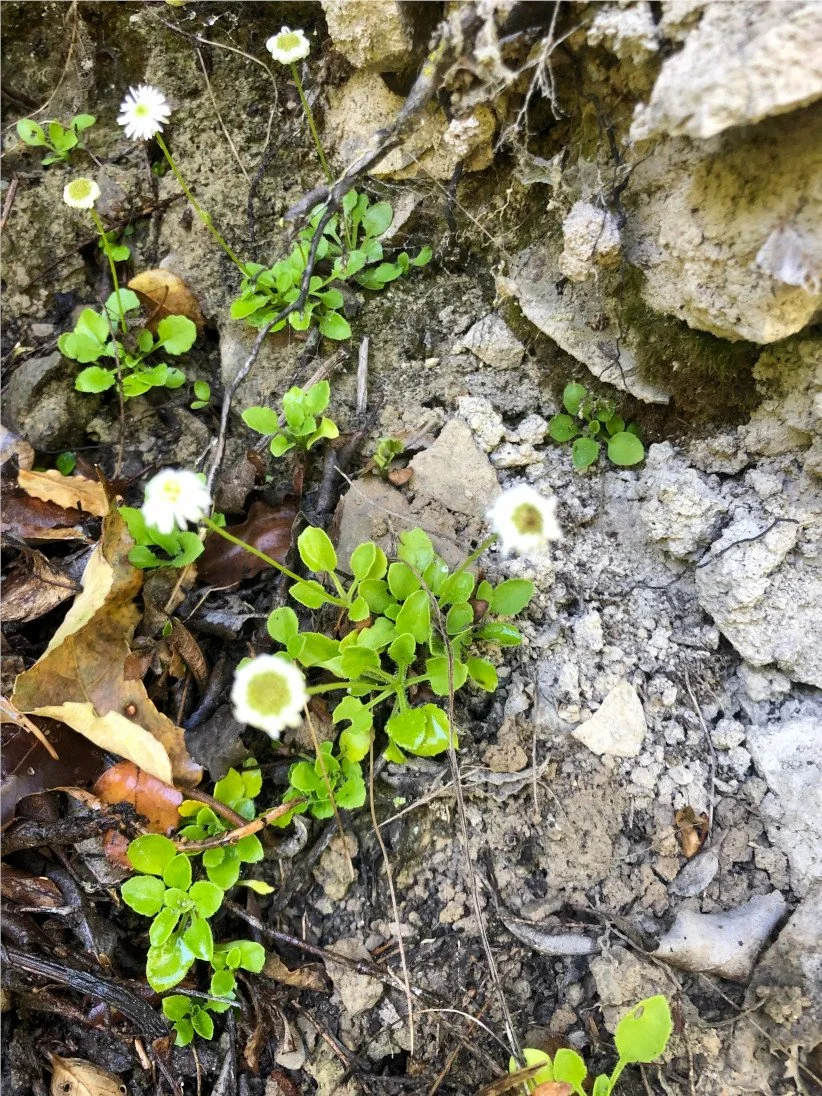
Papataniwhaniwha
Botanical name: Lagenophora pumila
Common name(s): Papataniwhaniwha
Plant facts:
A small, delicate native daisy endemic to New Zealand. Despite its modest size, it is widespread and adaptable, often forming loose patches in suitable conditions. Known for its white and yellow flowers and its role as an indicator of wetland environments.
Natural habitat:
Found in lowland to montane grasslands, open forest, coastal cliffs, and other lightly disturbed areas.
Growing environment:
Sun, Moist, Wetland & Free draining tolerant.
Endemic distribution:
Widespread throughout New Zealand, including offshore and subantarctic islands. Rarely recorded beyond New Zealand.
Height:
Flowering stems typically 8–16 cm tall
Flowering:
September – February
Produces small white flowers with yellow centres, similar in appearance to miniature daisies.
Fruiting:
November – April
Uses:
• Ground layer planting
• Adds seasonal interest to native gardens
• Indicator species for wetland conditions
Appearance:
Growth habit:
Low-growing herb that spreads via slender, branching rhizomes, forming open to sometimes extensive patches.
Leaves:
Small (10–20 mm), rounded to oval leaves forming a basal rosette. Leaves are slightly leathery with shallow teeth and fine, rough hairs.
Flowers:
Daisy-like flower heads (10–15 mm wide) on slender stems. White ray florets surround a yellow centre, giving a classic “miniature lawn daisy” appearance.
Fruit:
Produces small, dry seeds (achenes) that allow it to self-seed readily in suitable conditions.
How to grow:
Best grown in open, lightly competitive areas where it can self-seed and spread naturally. Prefers moist but well-drained soils in full sun to partial shade. Often behaves as a short-lived but self-sustaining garden plant.