
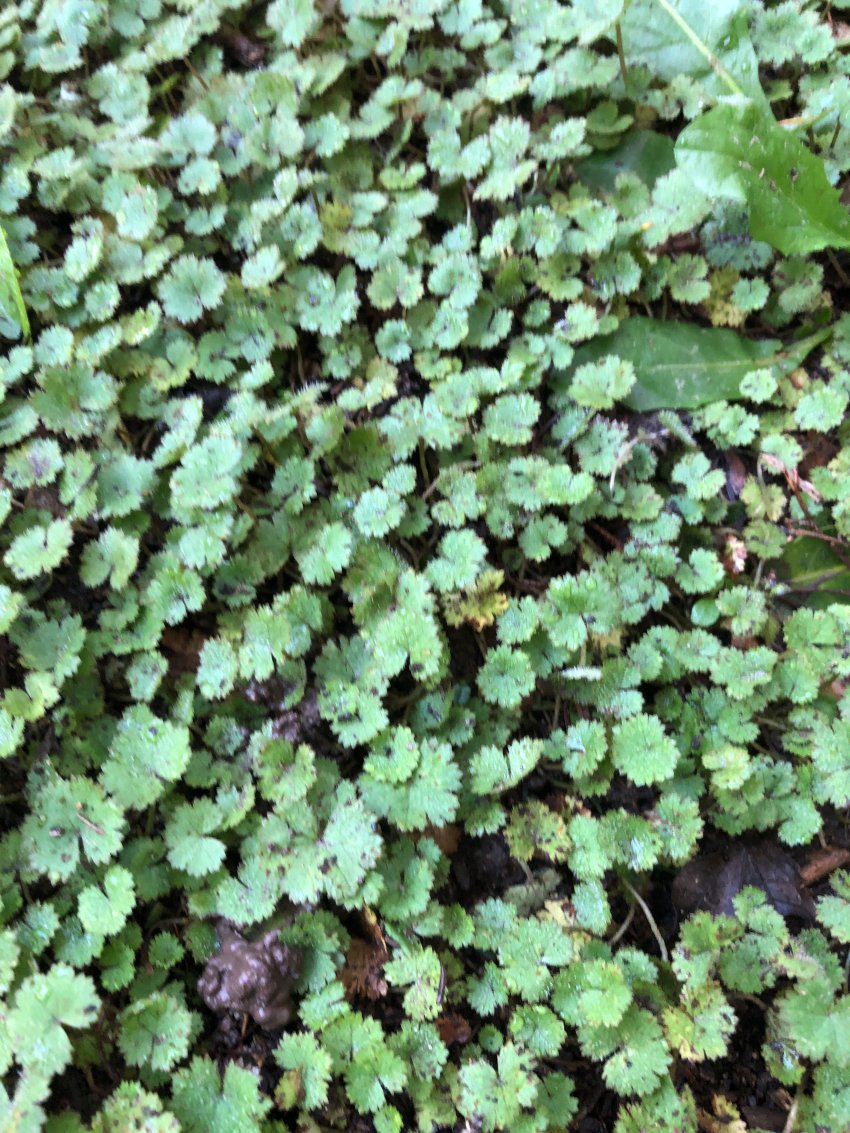
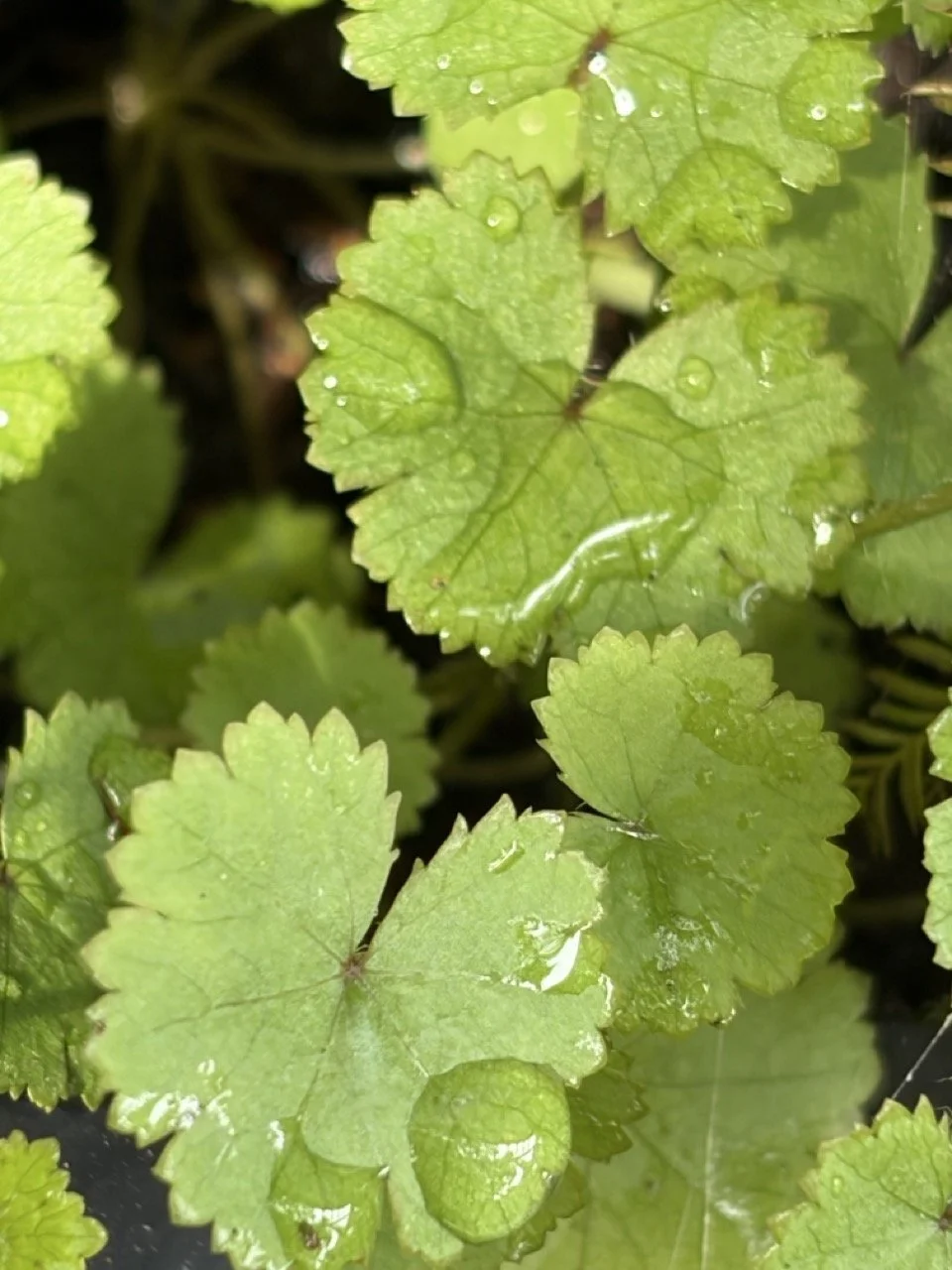
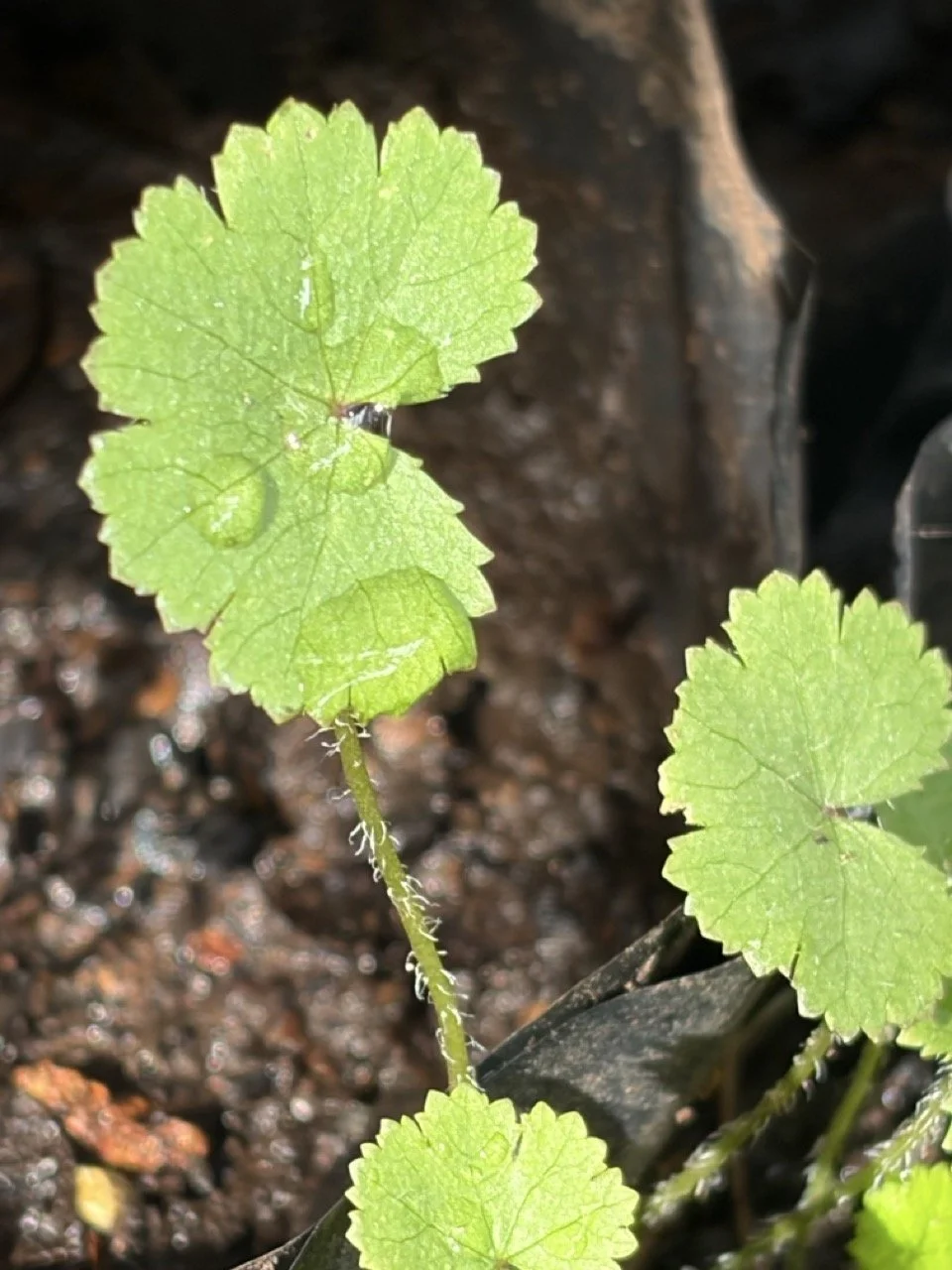
Musky Marsh Pennywort
Botanical name: Hydrocotyle moschata var. moschata
Synonyms: None
Common name(s): Musky marsh pennywort, Hairy pennywort
About:
A small, creeping perennial herb endemic to New Zealand, Hydrocotyle moschata var. moschata forms extensive low patches of rounded, lobed leaves on slender spreading stems. The foliage is usually dull green, sometimes developing a distinctive reddish margin, and varies considerably in its degree of hairiness and leaf dissection.
The leaves are typically divided into 5–7 broad segments, which are themselves shallowly lobed and serrated. Tiny flowers are produced in simple umbels held at or slightly below foliage height. It is widespread in lowland to montane environments and is particularly characteristic of forest margins, clearings and other moist or partially shaded ground.
Natural habitat:
Lowland to montane habitats, particularly forest margins, forest clearings and open or disturbed ground.
It occurs in both wetland and non-wetland environments and can tolerate considerable disturbance. It may also establish naturally in lawns and other modified grassy habitats.
Growing environment:
Frost, Sun, Partial Shade, Moist Soil & Free Draining tolerant. Adaptable to both open and shaded positions, but generally performs best where the soil retains some moisture.
Endemic distribution:
Endemic to New Zealand.
Recorded from the North Island, South Island, Stewart Island/Rakiura, Kermadec Islands and Chatham Islands.
Height:
Approximately 2–10 cm tall.
Width:
Spreading indefinitely by slender creeping stems and capable of forming extensive patches.
Flowering:
Primarily spring through summer, although flowering may vary with locality and growing conditions.
The numerous tiny flowers are borne in simple umbels on short peduncles approximately equal to or somewhat shorter than the leaves.
Fruiting:
Following flowering, with mature fruit potentially present over an extended period.
Fruit is approximately 1.3–1.5 mm long by 1–1.3 mm wide.
Uses:
• Native groundcover
• Woodland gardens
• Forest-floor planting
• Underplanting
• Damp garden areas
• Naturalistic native planting
• Between larger shrubs and ferns
• Low-growing habitat planting
• Lawn alternative in suitable areas
Appearance:
Growth habit:
A small perennial creeping herb with slender stems that spread across the ground and form broad patches.
Plants remain very low and can weave between grasses, herbs and other ground-layer vegetation.
Leaves:
Leaves are usually dull green and approximately 5–20 mm across, occasionally reaching about 25 mm.
A reddish or reddish-brown margin is often present.
The blade is divided approximately one-quarter to one-half of the way toward the centre into 5–7 broad, obovate segments. Each segment is generally further divided into three lobes and has serrated margins.
The teeth terminate in blunt or sharp, somewhat cartilaginous points.
Leaf surfaces range from moderately to densely hairy on both sides to forms in which most hairs are concentrated on the upper surface.
The petioles are similarly variable, ranging from almost hairless to densely hairy.
Flowers:
Flowers are extremely small and inconspicuous, grouped into simple many-flowered umbels.
Unlike Hydrocotyle elongata, which produces conspicuously elongated flower stalks extending well above its leaves, the peduncles of H. moschata var. moschata are approximately equal to or somewhat shorter than the foliage.
Individual flowers are virtually stalkless or borne on extremely short pedicels.
Fruit:
Fruit is small and hairless, approximately 1.3–1.5 × 1–1.3 mm.
The dorsal edge is acute and the ribs are slender but distinctly raised.
The fruit divides into mericarps, which are dispersed by both wind and water.
Ecology:
Hydrocotyle moschata var. moschata is a widespread component of New Zealand’s low-growing ground vegetation.
Its creeping growth allows it to occupy gaps between other plants and rapidly cover suitable exposed soil. It occurs naturally across a wide moisture gradient and is classified as facultative, meaning it is commonly encountered in both wetland and non-wetland situations.
The small mericarps are capable of dispersal by water and wind, helping the species colonise newly available habitat.
Its low foliage also contributes shelter and structural diversity for small terrestrial invertebrates.
Associated habitats:
Forest margins, forest clearings, damp forest floors, grassland, lawns, moist banks, disturbed ground, open scrub, stream margins and low-growing native vegetation from lowland to montane elevations.
How to grow:
An adaptable and easily maintained native groundcover.
Plant into moist, reasonably fertile soil in full sun, partial shade or filtered woodland light. In exposed sunny positions, more consistent soil moisture is beneficial, while established plants tolerate somewhat drier conditions in shade.
It spreads naturally through its creeping stems and can eventually form substantial patches.
Where its spread becomes excessive, plants can simply be trimmed or lifted from unwanted areas.
Its naturally small stature makes it particularly useful beneath larger native shrubs, around ferns and in informal woodland-style plantings.
Propagation:
Very easily propagated by division.
Lift established sections containing both rooted stems and foliage, separate them into smaller pieces and replant directly into moist prepared soil. Keep divisions moist until established.
It may also be propagated from ripe seed, although division is generally the simplest method where established plants are available.
Cultural use:
No specific traditional Māori use is widely documented for Hydrocotyle moschata var. moschata.
The specific name moschata means “musky”, referring to the plant’s characteristic scent.
Garden value:
A useful fine-textured endemic groundcover, particularly for naturalistic native and woodland gardens.
Its small rounded leaves, reddish leaf margins and softly hairy foliage give established patches considerable close-up interest, while its creeping habit allows it to form a natural green carpet beneath larger plants.
It is especially useful where a very low native species is wanted for filling spaces between ferns, sedges, shrubs and other forest-floor plants without introducing a tall groundcover.