
Simpson’s Helichrysum
Botanical name: Helichrysum simpsonii subsp. simpsonii
Synonyms: Helichrysum intermedium, Helichrysum intermedium var. intermedium, Helichrysum intermedium var. humile
Common name(s): Simpson’s helichrysum
About:
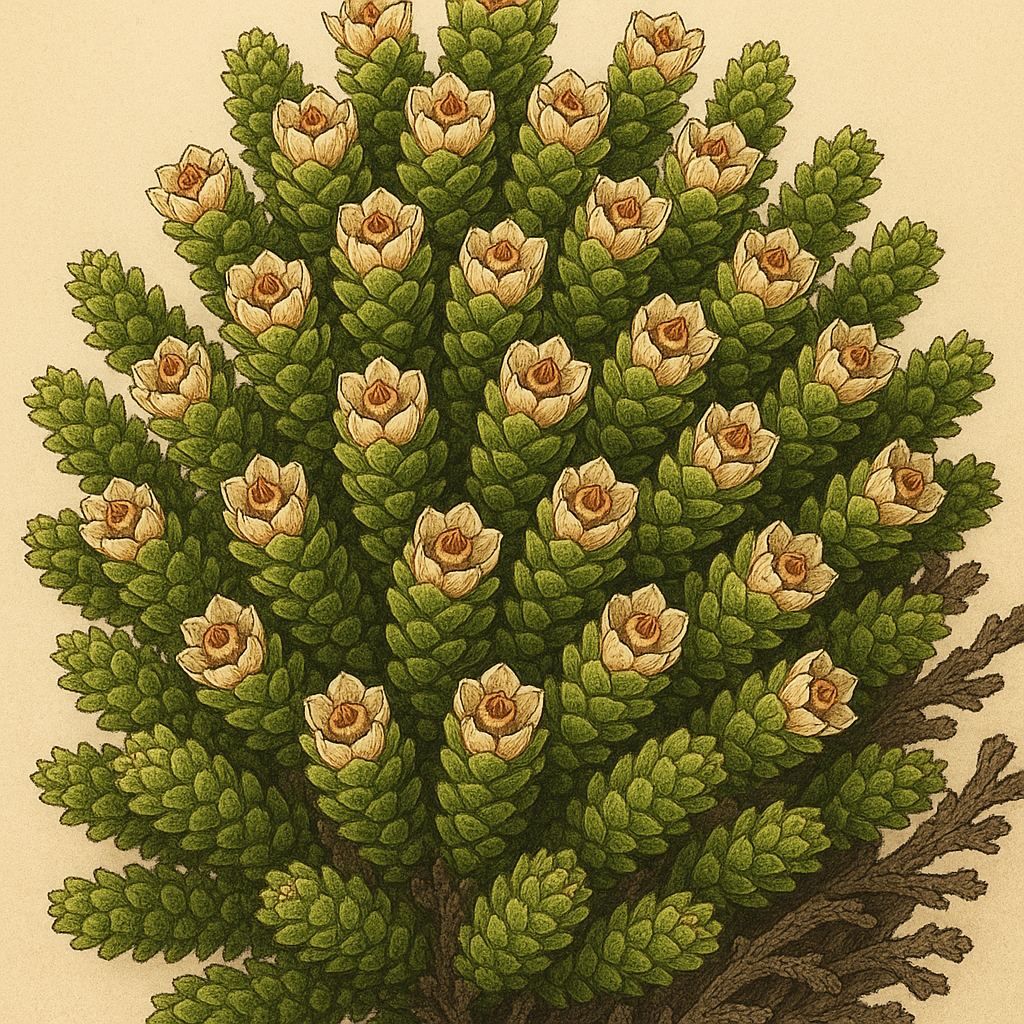
A distinctive endemic alpine and subalpine shrub forming low, spreading masses of green and white stems over rocky ground. Helichrysum simpsonii often grows prostrate or cascading over rock faces, with slender branchlets densely clothed in tiny scale-like leaves partly hidden by whitish woolly hairs.
The species was long known as Helichrysum intermedium, but that name was illegitimate because it had already been used for an African species. In 2023, the replacement name Helichrysum simpsonii was published for the New Zealand plant.
Natural habitat:
Found in open montane to alpine environments, especially rocky slopes, rock outcrops, ledges, scree margins and exposed herbfield or shrubland. It is adapted to cold, windy, high-light environments with thin, stony soils and excellent drainage.
Growing environment:
Frost, Sun, Wind, Cold & Free Draining tolerant. Best suited to cool, exposed sites with sharp drainage and low humidity.
Endemic distribution:
Endemic to the South Island of New Zealand. Recorded from north-west Nelson, Marlborough, Canterbury, Otago and Southland.
Height:
Usually around 10–30 cm tall, often remaining lower where stems trail across rocks.
Width:
Approximately 30–100 cm or more, spreading outward over surrounding rocks and open ground.
Flowering:
Summer
Produces small white to yellowish composite flower heads in tight clusters at the tips of branchlets.
Fruiting:
Summer – autumn
Produces small dry achenes with pappus hairs that aid dispersal by wind.
Uses:
• Alpine and rock garden planting
• Specialist native plant collections
• Scree and dry-wall planting
• Trough and container planting
• Cascading over rocks and retaining walls
• Native alpine restoration
• Educational and botanical displays
Appearance:
Growth habit:
A low, much-branched perennial shrub forming dense spreading mats or cushions. Branches may lie across the ground, trail over rocks or hang down from ledges.
The branchlets are usually only about 2–3 mm wide and are partly obscured by tightly appressed leaves and a covering of pale woolly hairs.
Leaves:
Leaves are tiny and scale-like, closely overlapping along the branchlets.
Their shape can be somewhat variable, but they are usually green and partially embedded in whitish tomentum, producing the characteristic green-and-white appearance of the stems.
The dense woolly covering helps protect the foliage from desiccation, cold and intense alpine sunlight.
Flowers:
Flower heads are small and clustered toward the ends of stems. They are composed of numerous tiny florets enclosed within papery involucral bracts.
The overall flower colour ranges from creamy white to pale yellow.
Fruit:
Produces small single-seeded dry achenes typical of the daisy family.
Each achene bears fine pappus hairs that act as a parachute, allowing seed to be dispersed by wind across open alpine terrain.
Ecology:
Helichrysum simpsonii is strongly adapted to exposed mountain environments.
Its low, spreading growth reduces exposure to strong alpine winds, while the woolly covering around the small leaves helps reduce moisture loss and insulates the plant against rapid changes in temperature.
Trailing stems allow it to exploit cracks, ledges and rocky surfaces where competition from larger plants is limited.
Its wind-dispersed seed is well suited to colonising open scree, rocky slopes and other disturbed alpine substrates.
Associated habitats:
Subalpine shrubland, alpine herbfield, rocky slopes, rock ledges, scree margins, fellfield, open mountain grassland and sparsely vegetated rocky ground.
How to grow:
Best treated as a specialist alpine plant.
Grow in full sun in a very free-draining gritty or stony substrate. A raised rock garden, alpine trough, scree bed or crevice between rocks is ideal.
Avoid heavy soils, prolonged winter wetness and warm humid conditions. Good air movement is important, particularly in lower-elevation cultivation.
Once established, plants are highly frost tolerant and cope well with exposure, but they dislike stagnant moisture around the crown and roots.
Propagation:
Best propagated from fresh seed or carefully taken cuttings.
Sow seed onto a sharply draining alpine mix and cover only lightly. Keep cool, bright and evenly moist without waterlogging.
Short non-flowering shoots may also be tried as cuttings in a gritty propagation medium. Because this is an alpine specialist, rooting conditions should remain cool with excellent ventilation.
Cultural use:
No major traditional Māori practical use is widely documented for Helichrysum simpsonii. Its significance is primarily ecological and botanical as part of New Zealand’s distinctive endemic alpine flora.
Garden value:
An attractive specialist plant for rock gardens and alpine collections.
Its trailing habit, fine green foliage and contrasting whitish woolly stems create a distinctive texture, particularly when allowed to spill naturally over stones, walls or trough edges.
It is best suited to gardeners able to provide cool conditions and exceptionally good drainage, but in the right setting it forms a beautiful, highly characteristic piece of South Island alpine vegetation.