
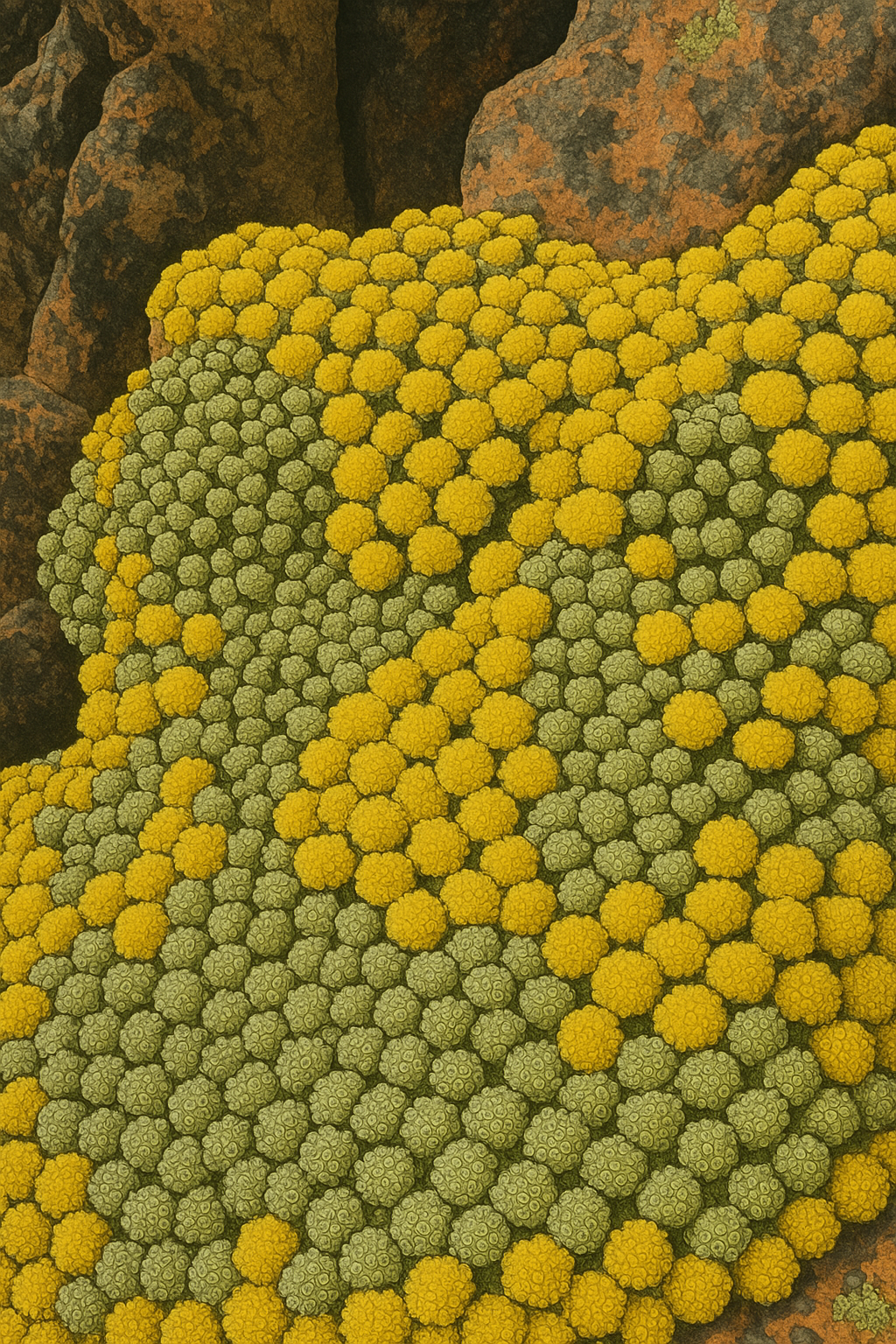
Coral Shrub
Botanical name: Helichrysum coralloides
Synonyms: Ozothamnus coralloides
Common name(s): Coral shrub, Coral sea shrub
About:
A highly distinctive endemic alpine shrub with thick, knobbly, coral-like stems densely clothed in tiny overlapping scale leaves. Helichrysum coralloides develops into an upright shrub when young, gradually becoming more mound- or cushion-forming with age. Its pale woolly foliage and unusual stem structure give it a striking sculptural appearance
quite unlike most other New Zealand shrubs.
Natural habitat:
Occurs in dry rocky places at montane and subalpine elevations, particularly on exposed stony slopes, scree, rock ledges and other sharply drained upland sites.
Growing environment:
Frost, Sun, Wind, Dry & Extremely Free Draining tolerant. Best suited to cool, exposed, low-humidity sites with excellent drainage.
Endemic distribution:
Endemic to the South Island of New Zealand, with a restricted distribution centred on southern Marlborough and adjacent upland areas.
Height:
Usually 20–60 cm tall, often remaining lower and more cushion-like in cultivation.
Width:
Approximately 30–60 cm wide, becoming broader and more mound-forming with age.
Flowering:
Summer
Produces small solitary daisy-like flower heads approximately 6–10 mm across at the tips of the stems. The central disc is bright yellow.
Fruiting:
Summer – autumn
Produces small cylindrical achenes approximately 1–1.5 mm long, each equipped with a pappus that assists wind dispersal.
Uses:
• Alpine and rock garden feature
• Specialist native plant collections
• Scree and dry-wall planting
• Trough and container planting
• Educational and botanical displays
• Native alpine restoration
• Architectural foliage interest
Appearance:
Growth habit:
A much-branched shrub with erect, spreading or ascending stems, eventually forming a compact mound or cushion. Branchlets are largely hidden by persistent, tightly overlapping leaves and dense woolly hairs.
The stems can become thick and knobbly, giving mature plants the characteristic coral-like structure that inspired the common name.
Leaves:
Leaves are tiny, usually around 4–6 mm long and 2–3 mm wide, oblong-spathulate and tightly appressed to the stem.
The outer surface is relatively smooth and hairless, while the inner surface is densely covered in white tomentum. Because the leaves overlap closely, the white wool protrudes around their margins and creates a silvery-grey effect.
Seedlings and reversion shoots may carry more spreading leaves that are woolly on both surfaces.
Flowers:
Flower heads are solitary and sessile at the ends of stems, generally 6–10 mm in diameter. The involucral bracts are pale, membranous and slightly brown or yellow tinged, surrounding a bright yellow central disc.
The flowers are comparatively small and understated, with the plant grown mainly for its extraordinary foliage and stem form.
Fruit:
Produces narrow cylindrical achenes approximately 1–1.5 mm long. These bear pappus hairs that allow the mature seed to be dispersed by wind across exposed alpine terrain.
Ecology:
Helichrysum coralloides is strongly adapted to dry, exposed montane and subalpine environments.
Its tightly appressed leaves and dense tomentum help reduce moisture loss, protect against strong wind and intense alpine sunlight, and insulate living tissues from rapid temperature fluctuations.
The compact, densely branched form also reduces exposure to abrasive wind and helps the plant persist on shallow, rocky substrates where larger shrubs cannot establish.
As an alpine composite, its lightweight pappus-bearing fruits are well suited to wind dispersal across open rocky landscapes.
Associated habitats:
Montane rocklands, subalpine scree, rocky slopes, exposed ledges, dry bluffs, shallow stony soils and sparsely vegetated alpine ground.
How to grow:
A specialist plant requiring sharp drainage and cool conditions.
Best grown in full sun in a gritty, mineral-rich substrate with very low water retention around the crown. It is especially suited to scree beds, raised rockeries, alpine troughs and dry walls.
Avoid heavy soils, prolonged winter wetness and warm humid positions. In unsuitable lowland conditions, plants may decline from root or crown rot.
Tufa, coarse gravel and very free-draining alpine mixes can be particularly effective in cultivation.
Propagation:
Best propagated from fresh seed where legitimately sourced material is available.
Sow onto a very free-draining alpine propagation mix and keep lightly moist but never saturated. Cool, bright conditions with good air movement are preferable.
Cuttings may also be possible from suitable non-flowering material, although this species is generally regarded as more specialised than ordinary garden shrubs.
Cultural use:
No major traditional Māori practical use is widely documented for Helichrysum coralloides. Its significance lies primarily in its unique place within New Zealand’s specialised alpine flora.
Garden value:
A superb foliage plant for specialist alpine gardens. Its thick coral-like stems, tiny overlapping leaves and silvery-white woolly texture give it year-round structural interest even when not flowering.
It is particularly effective in troughs, rock gardens, scree plantings and alpine houses where its highly unusual form can be appreciated at close range. Its cultivation requirements are specialised, but in the right cool, sharply drained position it makes a remarkable and distinctly New Zealand feature plant.