


Broadleaf
Botanical name: Griselinia littoralis
Synonyms: Pukateria littoralis
Common name(s): Broadleaf, Kapuka, Pāpāuma
About:
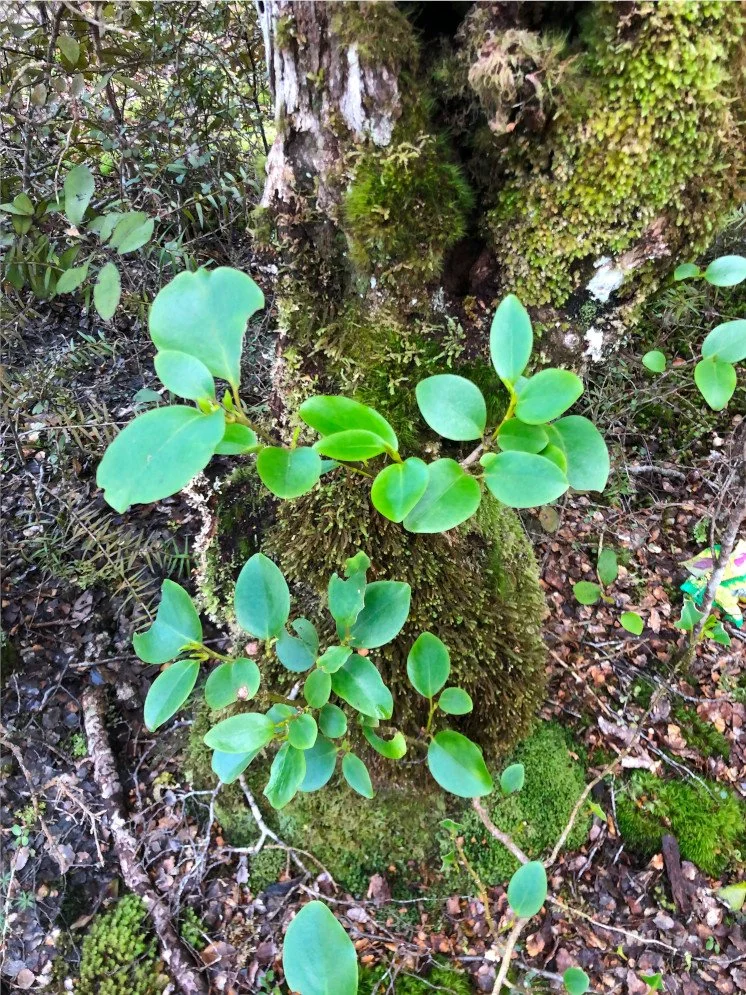
A fast-growing, hardy evergreen tree with dense foliage and distinctive thick, glossy yellow-green leaves. Griselinia littoralis is one of New Zealand’s most widespread and adaptable native trees, occurring from coastal forest to montane environments. It is exceptionally tolerant of wind and salt exposure and has become one of the country’s most widely cultivated native hedging and shelter species. In moist forests it may occasionally begin life as an epiphyte before sending roots down to the ground.
Natural habitat:
Occurs in coastal, lowland and montane forest, forest margins, shrubland and exposed coastal habitats. It is particularly common in wetter forests and is capable of occupying exposed, windswept sites. In humid forest it can occasionally establish epiphytically on other trees, eventually developing descending roots that reach the forest floor.
Growing environment:
Frost, Sun, Partial Shade, Wind, Coastal & Salt tolerant. Adaptable to a wide range of soils but performs particularly well in fertile, moist, free-draining ground. Established trees are hardy and withstand considerable exposure.
Endemic distribution:
Endemic to New Zealand. Widespread through the North Island, South Island and Stewart Island/Rakiura from near sea level into montane forest. It tends to occur at higher elevations in the North Island than in the cooler southern parts of its range.
Height:
Usually 5–10 m tall, occasionally reaching approximately 15 m under favourable forest conditions.
Width:
Approximately 3–6 m when growing as a mature free-standing tree, although considerably narrower when regularly clipped as a hedge.
Flowering:
October – December
Produces numerous small, inconspicuous green to yellow-green flowers in branched clusters. Male and female flowers are generally produced on separate trees, so both sexes need to occur within pollinating distance for female plants to reliably produce fruit.
Fruiting:
January – June
Female trees produce small fleshy fruits approximately 6–7 mm long. These mature from green to dark purple or almost black and are dispersed primarily by fruit-eating birds.
Uses:
• Native hedging
• Shelter belts and windbreaks
• Coastal planting
• Screening and privacy planting
• Revegetation and ecological restoration
• Forest and forest-margin restoration
• Bird habitat and food source
• Specimen tree
• Traditional Māori medicinal use
Appearance:
Growth habit:
A densely branched evergreen shrub or small to medium-sized tree with a rounded crown. Young plants can grow rapidly, developing into robust, bushy specimens. Mature trunks develop rough, dark bark, while branches form a dense framework capable of withstanding considerable wind exposure.
Leaves:
Leaves are alternate, thick, leathery and glossy yellow-green to dark green above, with a paler, duller underside. They are generally broad-ovate to ovate-oblong or rounded, approximately 5–14 cm long and 2–5 cm or more wide. Margins are smooth, and the leaf base is often slightly asymmetrical, providing a useful identification feature.
Flowers:
Flowers are very small and greenish to yellowish-cream, borne in branched clusters on slender twigs. Plants are usually dioecious, with male and female flowers occurring on separate individuals. Their subdued colour makes flowering much less conspicuous than the foliage or later fruit crop.
Fruit:
The fruit is a small, fleshy, oval berry-like drupe approximately 6–7 mm long. Initially green, it matures to dark purple or almost black and retains a small ring-like structure at its tip. Fruits are produced in clusters and are eaten by birds, which disperse the seeds.
Ecology:
An important component of many New Zealand forest communities. Its dense evergreen crown contributes shelter and structure, while fruiting female trees provide food for native birds that subsequently disperse the seed. Broadleaf responds well to canopy openings and can grow rapidly during forest regeneration. Its ability to withstand wind and exposure also makes it valuable around forest margins.
The foliage is palatable to introduced browsing mammals, including deer, goats and possums, which can suppress regeneration where browsing pressure is high.
Associated habitats:
Coastal forest, lowland forest, montane forest, forest margins, regenerating forest, shrubland, exposed coastal slopes and humid forest interiors. It commonly associates with a broad range of native broadleaved trees, podocarps, tree ferns and understory shrubs.
How to grow:
An easy and highly adaptable native tree. Plant in full sun or partial shade in moist, reasonably fertile, free-draining soil. Regular moisture during establishment encourages rapid growth, although established plants tolerate considerable exposure and periods of drier conditions.
For hedging, plants can be spaced relatively closely and clipped from a young age to encourage dense branching. Broadleaf responds exceptionally well to pruning and can be maintained as anything from a compact formal hedge to a substantial shelter screen. Unclipped plants should be allowed sufficient room to develop into small trees.
Propagation:
Can be propagated from fresh seed or semi-hardwood cuttings. Seed should be cleaned of its fleshy outer covering before sowing and may germinate gradually. Cuttings are particularly useful for reproducing selected forms with desirable foliage, growth habit or hedging characteristics.
Cultural use:
Known by Māori names including kapuka and pāpāuma. The bark has been recorded as having traditional medicinal use, including preparations associated with treating skin complaints. As with other traditional plant remedies, historical ethnobotanical use should be distinguished from modern medical advice.
Garden value:
One of the most useful and dependable New Zealand native trees for cultivation. Its dense evergreen foliage, rapid establishment and exceptional tolerance of clipping make it particularly valuable for hedges, privacy screens and shelter belts. It is especially effective in exposed coastal gardens where salt-laden winds can damage less tolerant species. Left unclipped, it develops into an attractive rounded native tree suitable for larger gardens, restoration plantings and naturalistic landscapes.