
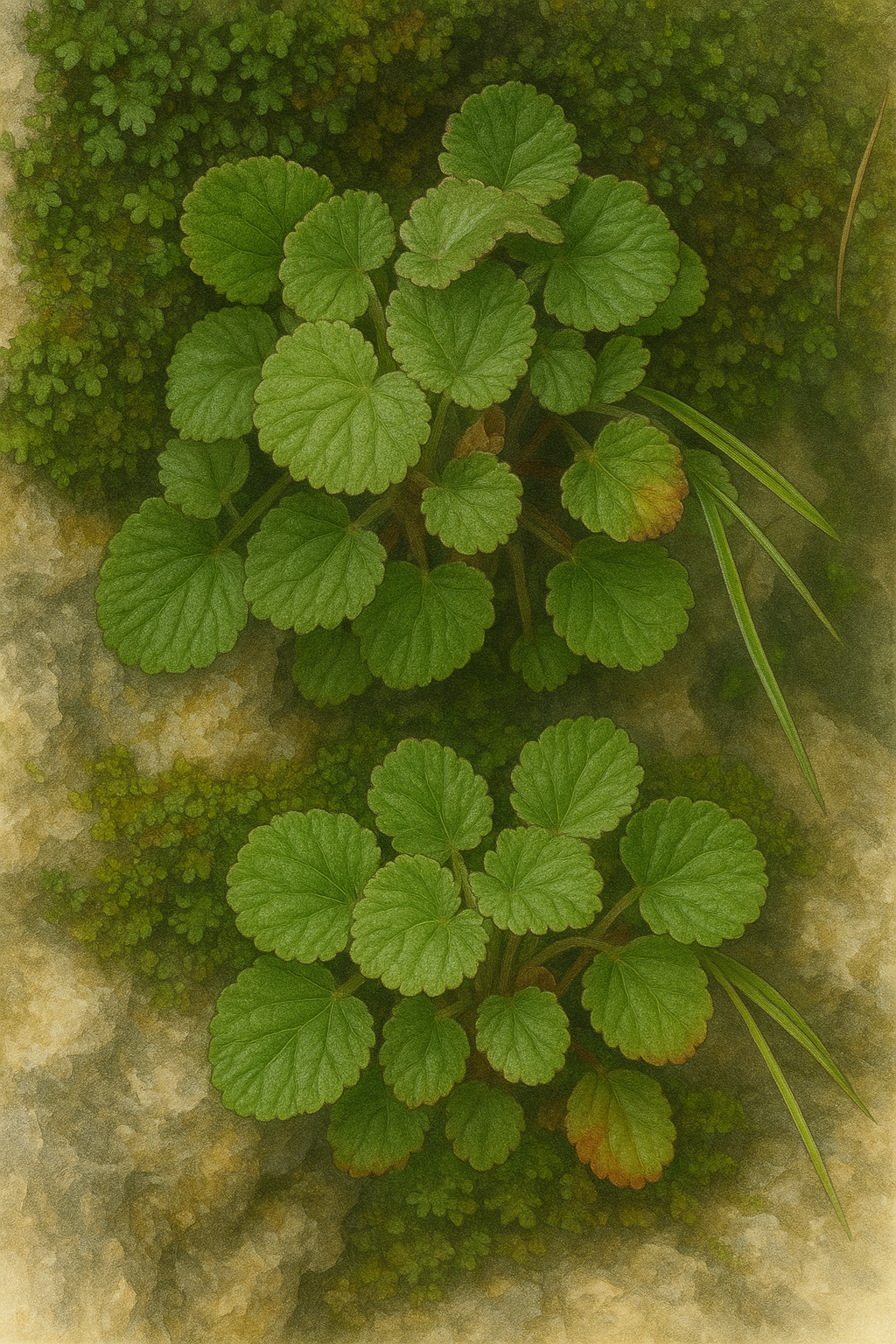
Cockayne’s Geum
Botanical name: Geum cockaynei
Synonyms: Oncostylus cockaynei
Common name(s): Cockayne’s Geum
About:
An attractive montane to subalpine perennial herb forming leafy clumps from a stout woody rootstock. Geum cockaynei has distinctive bronze-green, reddish-green or green foliage and produces slender, often arching flower stems carrying numerous small creamy-white flowers. Unlike many geums with larger solitary flowers, this species can produce up to 30 flowers on a single inflorescence, creating a delicate display above the foliage.
Natural habitat:
Montane to subalpine grasslands and herbfields, particularly damp tussock grassland, moist herbfields, rocky sites and stream banks. It generally occupies cool, open mountain environments where soils remain reasonably moist without prolonged waterlogging.
Growing environment:
Frost, sun, wind and cool conditions tolerant. Prefers moist but free-draining soils and performs particularly well in cooler climates. In warmer areas it is best treated as a specialist alpine plant where cool root conditions can be maintained.
Endemic distribution:
Endemic to New Zealand’s North and South Islands, occurring from the Raukumara Ranges south through the central North Island and into the mountain ranges of the South Island.
Height:
Up to approximately 40 cm when flowering.
Width:
Approximately 20–40 cm, gradually forming a compact perennial clump.
Flowering:
December–March. Produces numerous creamy-white flowers, generally up to 10 mm across, on slender flowering stems that may carry as many as 25–30 flowers.
Fruiting:
December–April. Develops numerous small, flattened, densely hairy achenes. The mature fruits are adapted primarily for wind dispersal.
Uses:
• Alpine and rock gardens
• Native herbfields
• Tussock garden planting
• Streamside planting in suitable cool climates
• Container and alpine-house cultivation
• Specialist native plant collections
• High-country restoration planting
Appearance:
Growth habit:
An erect, clump-forming perennial herb arising from a stout woody stock. The crown becomes surrounded by persistent fibrous remnants of old leaves, while fresh foliage forms above. Flowering stems rise conspicuously from the basal leaves and may arch through their upper portion.
Leaves:
Basal leaves reach approximately 150 mm long and are conspicuously covered with white hairs. They are pinnately divided, usually with numerous pairs of progressively larger lateral leaflets and a substantially larger terminal leaflet.
The terminal leaflet ranges from approximately 10–70 mm long and has toothed, crenate or serrated margins, sometimes with shallow lobes. Foliage varies from green to reddish-green or attractive bronze-green. Stem leaves are fewer, smaller and often occur in pairs, becoming progressively reduced towards the flowers.
Flowers:
The flowering stem may reach approximately 400 mm tall and supports a branched inflorescence carrying from a few to as many as 25–30 flowers. Individual flowers are relatively small, generally up to 10 mm across.
The petals are creamy white, broadly ovate to obovate and approximately 4–10 mm long. The green calyx is hairy, complementing the softly textured stems and foliage.
Fruit:
Numerous small achenes develop together following flowering. Individual achenes are approximately 1.5–1.8 mm long, flattened and densely hairy, particularly around their margins. Persistent hairy styles add to the feathery appearance of the mature fruiting heads.
Ecology:
Geum cockaynei is a characteristic herb of cool montane and subalpine environments, particularly where moisture is relatively reliable. Its perennial rootstock enables plants to survive cold winters and seasonal exposure before producing fresh growth and flowers during the warmer months.
The numerous flowers provide resources for visiting alpine insects, while the lightweight hairy fruits are adapted for dispersal by wind.
The species is currently understood to form part of a taxonomically complex group, with some populations presently included within G. cockaynei potentially representing additional undescribed species.
Associated habitats:
Montane and subalpine tussock grassland, damp herbfield, stream margins, rocky ground, open mountain slopes and other cool high-country vegetation.
It commonly grows amongst native tussocks and a diverse assemblage of small alpine and subalpine herbs adapted to open, frost-prone environments.
How to grow:
Best grown in a cool, sunny position with consistently moist but well-drained soil. A gritty, humus-rich alpine mix provides a good balance between moisture retention and drainage.
Plants perform particularly well in rock gardens in cooler parts of New Zealand. In warmer climates, cultivation in an alpine house, trough or container may provide better control over temperature and moisture.
Avoid hot, humid positions and soils that become either excessively dry or permanently waterlogged. Some protection from intense afternoon heat may be beneficial outside naturally cool districts.
Propagation:
Best propagated from fresh seed. Sow mature seed into a fine, free-draining propagation medium and maintain cool, evenly moist conditions.
Seedlings should be transplanted carefully once sufficiently developed and grown in good light with excellent air circulation. Young plants are particularly well suited to pots before eventual establishment in a rock garden or other suitable cool position.
Cultural use:
No specific traditional Māori uses for Geum cockaynei are widely documented. Its significance lies primarily in its place within New Zealand’s distinctive montane and alpine flora.
The species commemorates Leonard Cockayne, whose extensive botanical and ecological work contributed greatly to the understanding of New Zealand vegetation.
Garden value:
A delicate and unusual native perennial for alpine enthusiasts and gardeners in cooler regions. The combination of bronze-green to reddish foliage, softly hairy leaves and airy clusters of creamy-white flowers gives it a much finer appearance than many larger ornamental geums.
It is particularly effective amongst tussocks, rocks and other low alpine plants where its natural high-country character can be retained. Its manageable size also makes it an excellent candidate for alpine troughs, containers and specialist native plant collections.