



Black Beech
Botanical name: Fuscospora solandri
Synonyms: Fagus solandri; Nothofagus solandri; Nothofagus solandri var. solandri
Common name(s): Black Beech, Tawhairauriki, Tawhai Rauriki
About:
Black Beech is a widespread native canopy tree of lowland and montane forests, especially in drier districts east of New Zealand’s main mountain ranges. It is recognised by its small leathery leaves, layered spreading branches and dark, deeply furrowed bark, which is frequently covered in black sooty mould.
The mould grows on sugary honeydew produced by native scale insects living beneath the bark. This honeydew is an important high-energy food for native birds, insects and lizards, making Black Beech forests particularly valuable wildlife habitats.
Natural habitat:
Occurs in lowland to montane forest from sea level to approximately 900 metres above sea level.
It commonly grows on dry slopes, ridges, gullies, terraces and glacial alluvial surfaces. In favourable areas it becomes the dominant canopy tree and forms extensive, nearly pure Black Beech forest.
Growing environment:
Prefers full sun or partial shade in cool climates with free-draining soil. It tolerates relatively dry conditions, poor soils, frost and exposed upland environments once established.
Black Beech generally favours lower and drier habitats than Mountain Beech, although the two species frequently overlap and hybridise.
Endemic distribution:
Endemic to New Zealand.
Found in the North and South Islands. It is uncommon north of the Central Volcanic Plateau and East Cape, with Te Hauturu-o-Toi / Little Barrier Island representing its present northern limit.
In the South Island it occurs mainly through Nelson, Marlborough, northern Westland, Canterbury and Banks Peninsula.
Height:
Typically 15–25 m, occasionally reaching approximately 27 m
Width:
Approximately 6–12 m
Flowering:
September–December
Heavy flowering generally occurs during mast years and may give the canopy a noticeable reddish colour.
Fruiting:
November–April
Produces small nuts enclosed within woody cupules, with abundant crops formed irregularly during mast years.
Uses:
• Native forest restoration
• Dryland and montane revegetation
• Wildlife habitat
• Honeydew forest restoration
• Shelter planting
• Erosion control
• Carbon sequestration
• Large specimen tree
• Ecological corridor planting
Appearance:
Growth habit:
A medium to large evergreen forest tree with a straight trunk and dense spreading crown.
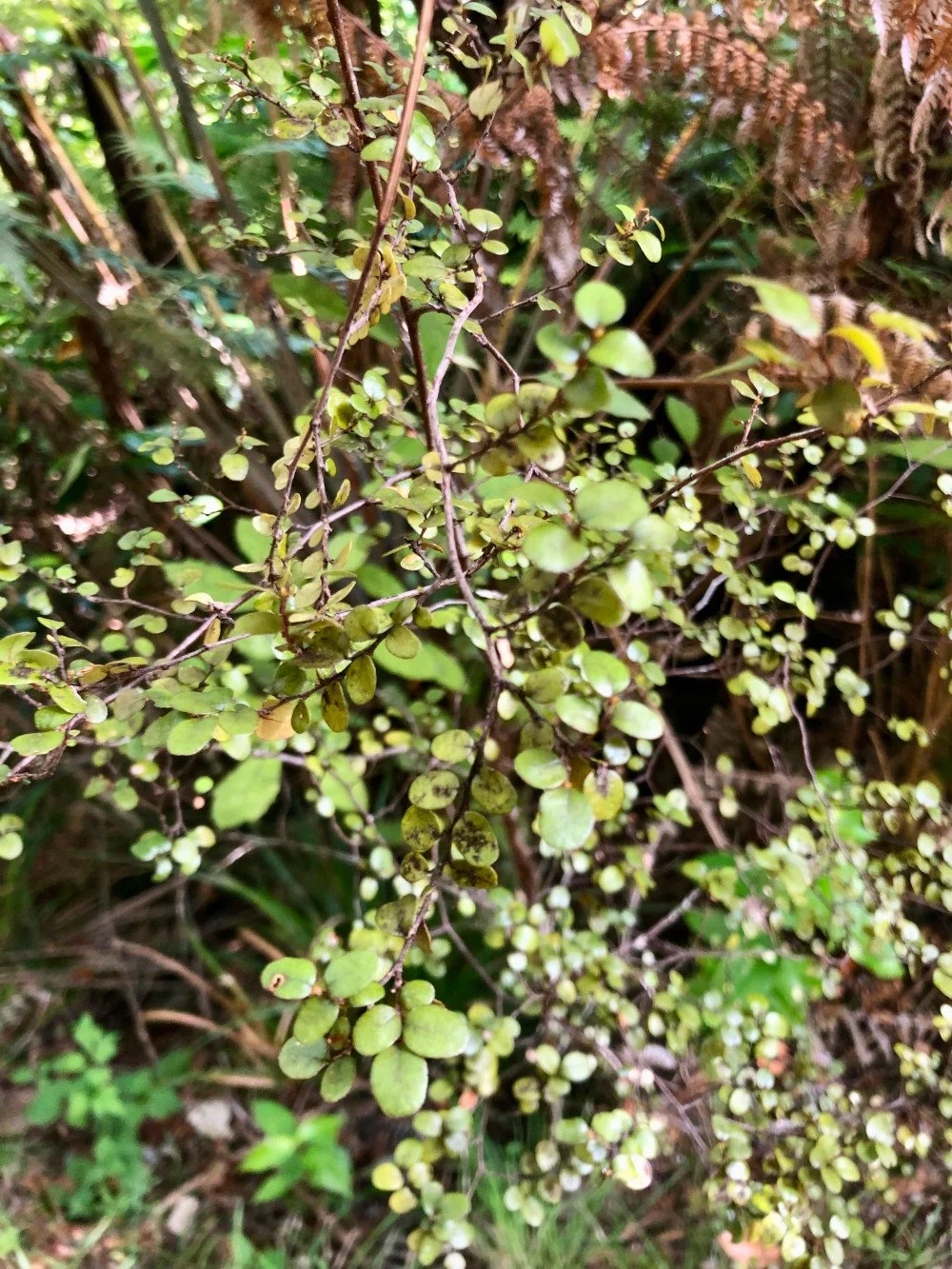
Branches are numerous, stout and often arranged in distinctive horizontal tiers, creating a layered or pagoda-like appearance. Young saplings may have a semi-divaricating growth habit.
Trunk/Bark:
Young trees have relatively smooth, thin, pale grey bark.
On mature trees, the bark becomes thick, fibrous, deeply fissured and charcoal-grey to almost black. The dark appearance is often intensified by sooty mould growing on honeydew excreted by native scale insects.
The trunk may exceed 1 metre in diameter. Fresh wood ranges from pinkish or yellowish to light or dark brown.
Leaves:
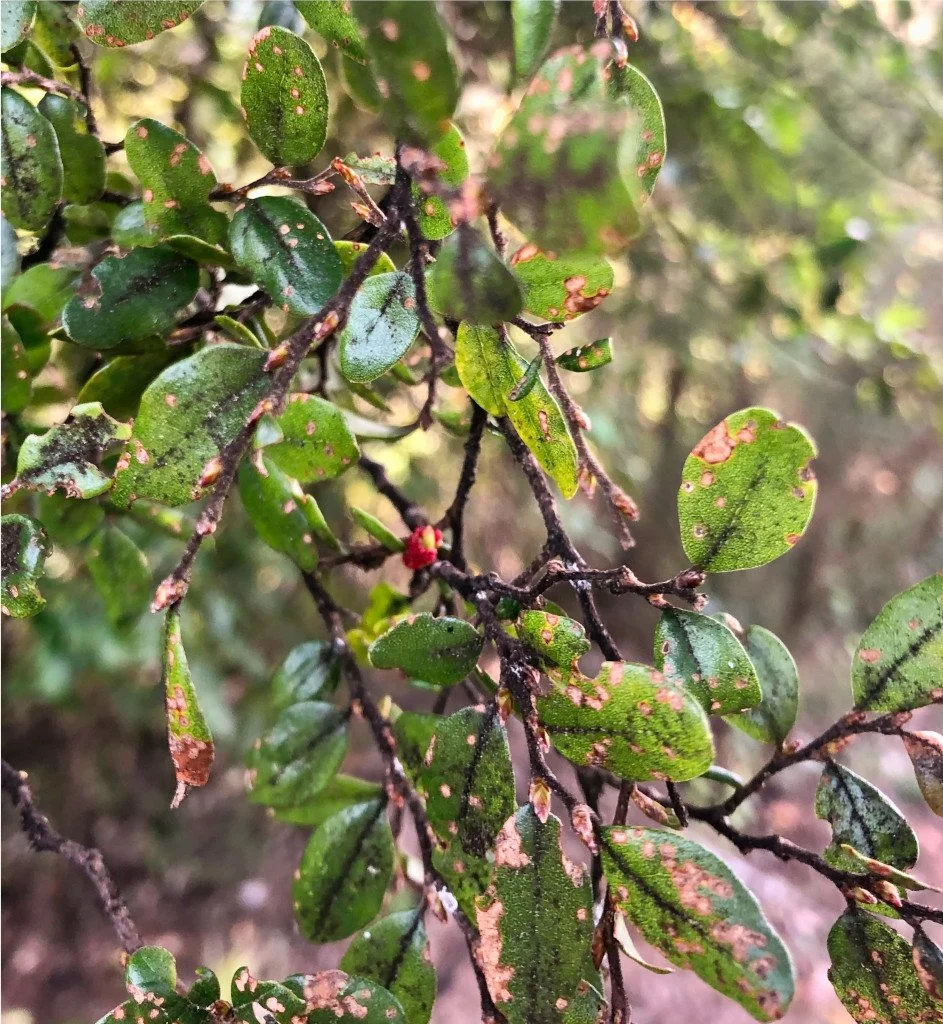
Leaves are alternately arranged, leathery and generally 8–20 mm long.
They are oblong-elliptic to ovate, dark glossy green above and grey-green to almost white beneath because of a fine covering of hairs. The margins are entire and often slightly incurved, while the tip is rounded or blunt and may end in a very small point.
Leaf veins are usually visible on both surfaces, and the tiny hairy pits found beneath Red Beech leaves are absent.
Flowers:
Small male and female flowers are produced separately on the same tree.
Male flowers occur singly or in small groups and contain 8–17 stamens with conspicuous dark red anthers. Female flowers are clustered within small hairy structures that later develop into woody cupules.
The flowers are wind pollinated and are generally inconspicuous except during heavy flowering years.
Fruit:
The mature cupule is approximately 3–7 mm long and usually divides into two or three valves.
Each contains one to three small, reddish-brown nuts that may be triangular or flattened and have wings broadest near the base.
Seeds:
Seeds are dispersed mainly by wind and gravity.
Black Beech produces irregular mast crops in which very large quantities of seed are released simultaneously. These crops support native wildlife but may also cause increases in introduced mice, rats and stoats.
Ecology:
Black Beech forms ecologically important forests supporting a wide range of native birds, bats, reptiles, insects, fungi, lichens and epiphytes.
Native scale insects living in the bark excrete droplets of sugary honeydew from fine waxy tubes. This honeydew feeds tūī, korimako / bellbirds, kākā, silvereyes, native wasps, moths, bees and other insects. Sooty mould fungi grow on the surplus sugar and create the tree’s characteristic darkened appearance.
Black Beech naturally hybridises with Mountain Beech, Fuscospora cliffortioides, where their ranges overlap. Extensive hybrid swarms may occur, producing trees with intermediate leaf shapes.
It also hybridises with Hard Beech, forming Fuscospora × apiculata, and with Red Beech, forming Fuscospora × dubia.
Associated habitats:
Lowland beech forest, montane forest, dry eastern forest, podocarp–broadleaved forest, ridges, river terraces, gullies and glacial alluvial surfaces.
Common associates include Mountain Beech, Red Beech, Hard Beech, rimu, tōtara, kāmahi, broadleaf, māhoe, five-finger, Coprosma species and native tree ferns.
How to grow:
Plant in full sun or partial shade in free-draining soil. Young trees grow relatively quickly when provided with reliable moisture and protection from weed competition.
Water regularly during establishment, particularly through the first two summers. Once established, Black Beech is tolerant of dry conditions and requires little maintenance.
Allow ample room for the mature crown and root system. Avoid planting beneath overhead services or close to small buildings.
Propagation:
Propagation is most readily achieved from fresh seed collected during autumn mast years.
Sow soon after collection because viability declines with storage. Use a free-draining seed-raising mix and maintain cool, evenly moist conditions until germination.
Cuttings are extremely difficult to strike and are not generally considered a practical propagation method.
Cultural use:
The Māori names Tawhairauriki and Tawhai Rauriki refer to this species and are also sometimes applied to Mountain Beech.
Black Beech forests have long provided habitat, food and materials important to Māori communities, particularly through the abundance of birds and insects supported by their honeydew ecosystems.
The timber is strong and was used historically for general construction, fencing and other purposes, although it is less durable when exposed to damp conditions.
Garden value:
Black Beech is a handsome specimen tree for large gardens, farms, parks and ecological restoration projects. Its fine foliage, layered branching and dark textured bark provide strong year-round character.
It is especially valuable for creating native honeydew forest, supporting birds and insects, and restoring dry lowland and montane forest communities. Its mature size makes it best suited to spacious properties and landscape-scale planting.