
Creeping Fuchsia
Botanical name: Fuchsia procumbens
Synonyms: Fuchsia kirkii
Common name(s): Creeping Fuchsia, Trailing Fuchsia, Climbing Fuchsia
About:
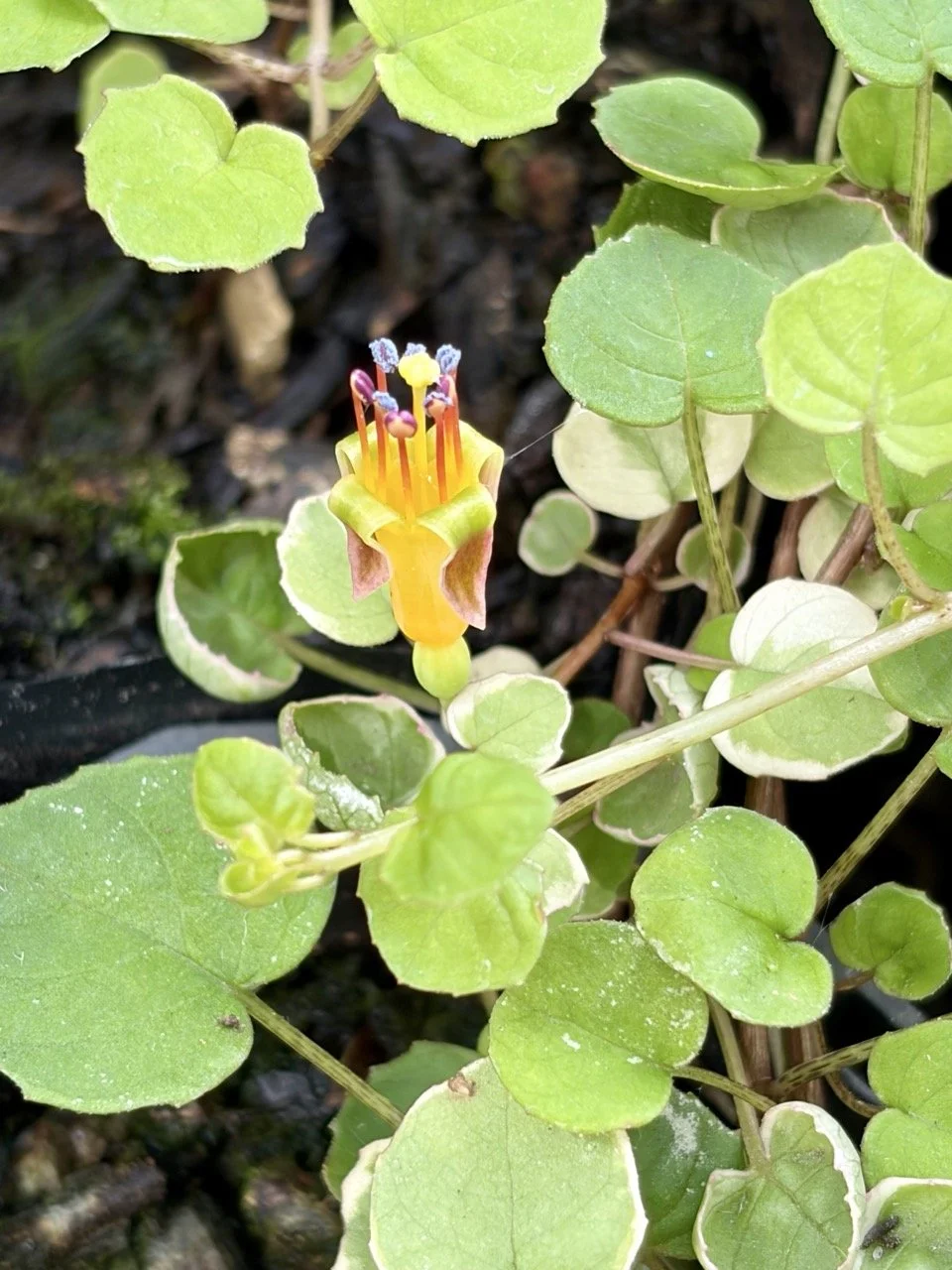
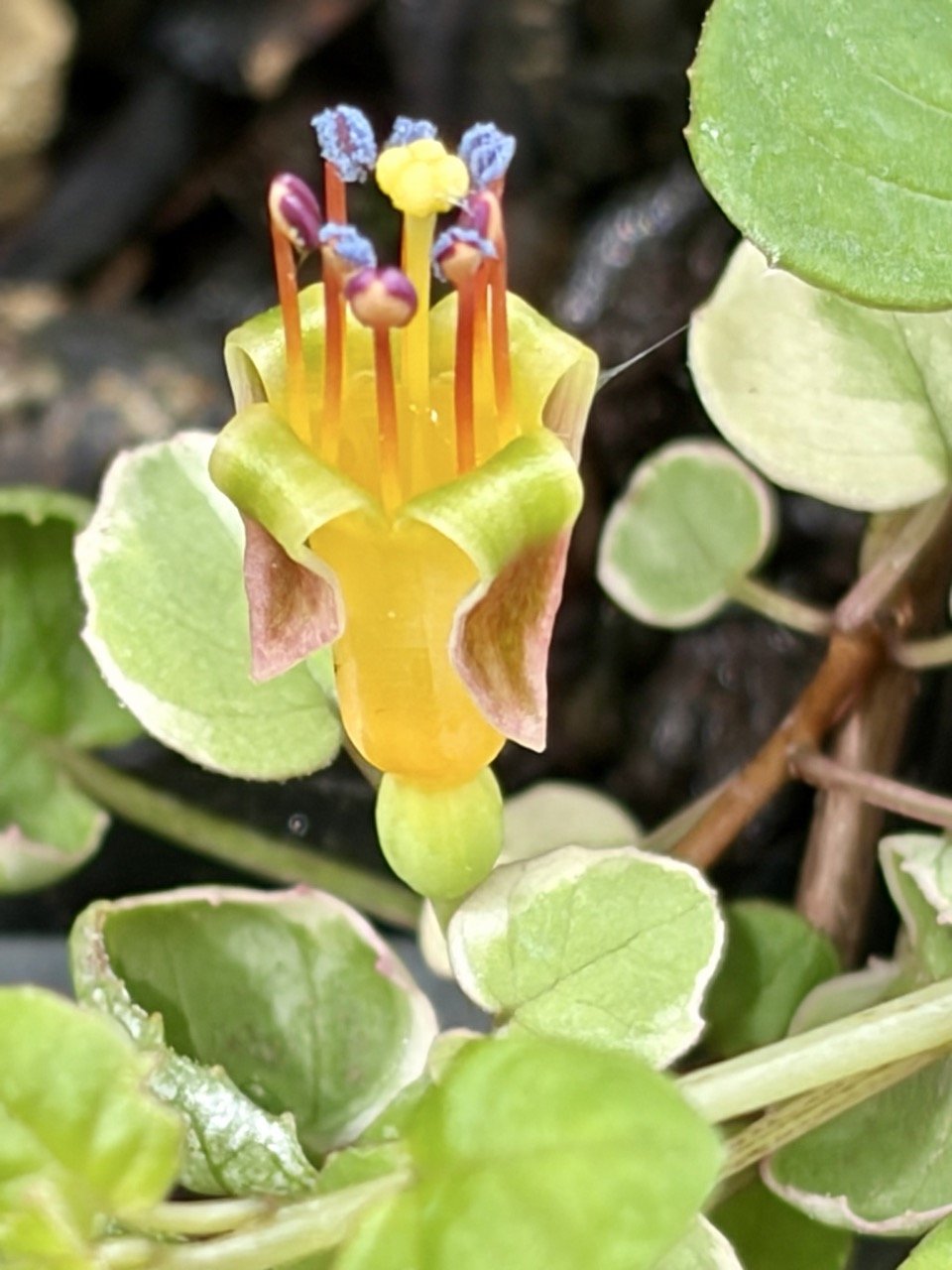
Creeping Fuchsia is a distinctive low-growing native shrub with slender woody stems that spread across the ground or scramble through nearby vegetation. Unlike New Zealand’s other native fuchsias, its flowers face upwards and have no petals, instead displaying a golden-yellow floral tube and sharply reflexed sepals tipped with purple.
It forms broad, tangled mats and produces unusually large crimson to magenta berries. Its long flowering season, colourful fruit and adaptable growth habit make it an excellent native ground cover or hanging-basket plant.
Natural habitat:
Strictly coastal, occurring on cobble and gravel beaches, dune slacks, coastal cliffs, grasslands, shrublands and the margins of saltmarshes.
It may grow close to the high-tide line and can tolerate occasional inundation during spring tides. It is also able to persist amongst dense naturalised grasses and other disturbed coastal vegetation.
Growing environment:
Prefers full sun or partial shade in moist but free-draining soil. It tolerates wind, salt exposure, coastal disturbance and a wide range of soil types.
Although naturally associated with northern coastal environments, it adapts well to cultivation provided it is protected from severe frost and prolonged drought.
Endemic distribution:
Endemic to New Zealand.
Naturally restricted to the northern North Island, extending from Te Oneroa-a-Tōhē / Ninety Mile Beach and Perpendicular Point south to Maunganui Bluff in the west and Kennedy Bay on the Coromandel Peninsula in the east.
It is naturalised on Kāpiti Island.
Height:
Usually 10–30 cm as a ground cover, but capable of scrambling to approximately 1 m through supporting vegetation
Width:
Stems may reach 2 m long and form mats several metres across
Flowering:
September–May
Fruiting:
November–July
Uses:
• Native ground cover
• Coastal restoration
• Hanging baskets
• Bank and retaining-wall planting
• Rock gardens
• Container planting
• Wildlife gardens
• Pollinator and fruiting plant
Appearance:
Growth habit:
A prostrate, lianoid shrub forming extensive scrambling mats.
The long, flexible stems trail across the ground, root naturally where they contact suitable soil and may climb into low shrubs or other supporting vegetation.
Stems:
The stems are slender, pliable and weakly woody, generally 3–6 mm in diameter and up to about 2 m long.
Branchlets are finer and spread freely through surrounding vegetation. Older stems may form dense interwoven masses.
Leaves:
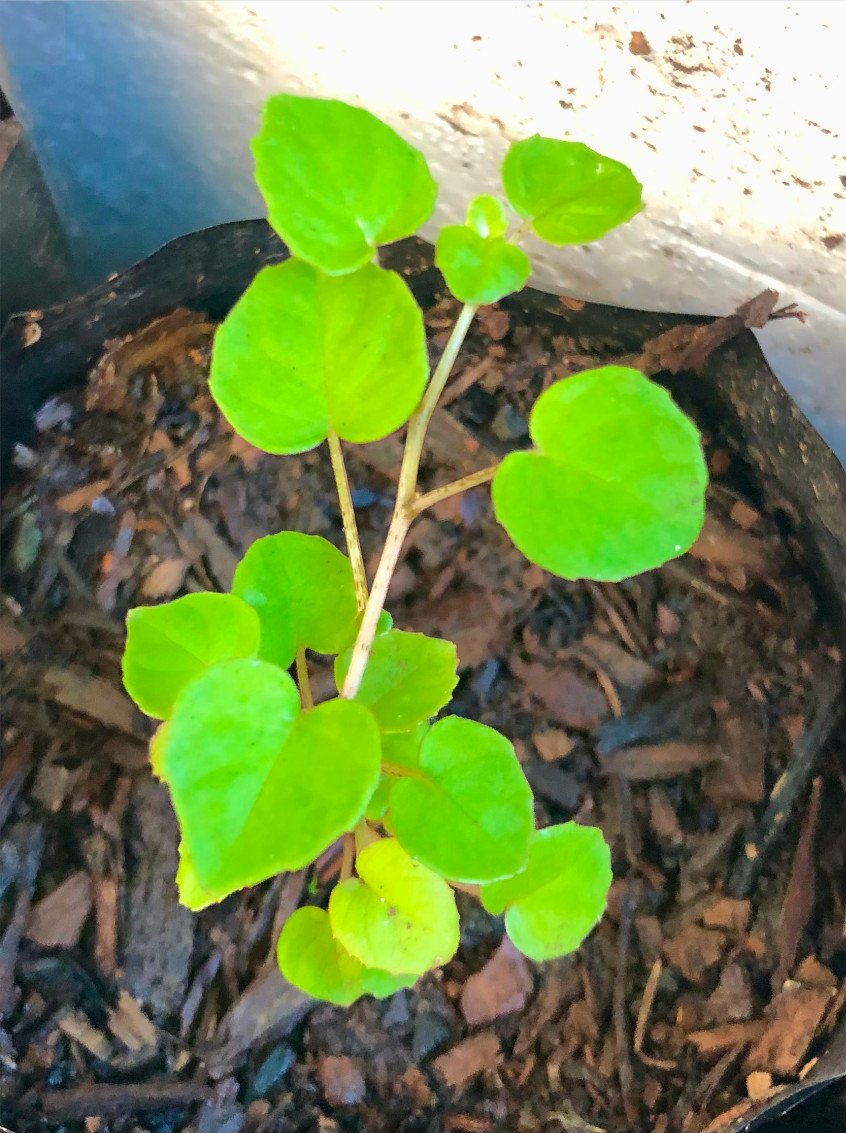
Leaves are small, thin and broadly oval to almost circular, usually 5–20 mm long and wide.
They are bright green, carried singly on long slender stalks and have shallowly toothed or wavy margins. The leaf base is slightly heart-shaped, while the apex is rounded or blunt.
Flowers:
Flowers are borne singly on short upright stalks and face upwards, an unusual feature among fuchsias.
The tubular floral structure is golden yellow, while the four narrow sepals are purple-tipped and strongly reflexed. Petals are absent. Slender purple stamens surround the prominent style, and the pollen is a characteristic vivid blue.
Individual plants may bear male, female or bisexual flowers, and some isolated populations contain only one sex.
Fruit:
The fruit is an elongated, fleshy berry approximately 15–25 mm long.
It ripens from crimson to bright magenta or purplish-red and often develops a pale waxy bloom. The berries are edible but are generally described as mild, watery or slightly bland.
Seeds:
Each berry contains numerous small seeds.
The fruit is likely dispersed by birds, reptiles and invertebrates, while vegetative spread through naturally rooting stems also allows plants to persist where seed production is limited.
Ecology:
Creeping Fuchsia is adapted to exposed and frequently disturbed coastal habitats. Its flexible stems can spread through shifting vegetation, gravel and sand, while rooted stem sections help plants survive burial, erosion and physical disturbance.
The flowers are likely visited by insects and possibly native lizards, while the berries provide food for fruit-eating animals. Dense mats create shelter for coastal invertebrates and help cover exposed ground.
Some wild populations consist predominantly or entirely of one flower type. These populations can persist through vegetative reproduction even when pollination and seed production are limited.
Although naturally uncommon, the species is tolerant of environmental disturbance and competition from many introduced grasses. Coastal subdivision, earthworks and habitat clearance remain important threats.
Associated habitats:
Coastal cliffs, cobble beaches, gravel shores, dune slacks, coastal swales, saltmarsh margins, open grasslands and low coastal shrublands.
Associated species may include pōhuehue, shore bindweed, sand coprosma, taupata, glasswort, native ice plant, knobby club rush and other salt-tolerant coastal herbs and shrubs.
How to grow:
Plant in full sun or partial shade in moist, free-draining soil. It performs well in sandy, gravelly or loamy ground and is particularly suited to banks, rock walls, coastal gardens and containers.
Allow the stems to trail naturally, scramble through low shrubs or cascade over the edge of a hanging basket. Water regularly during establishment and during prolonged dry periods.
Light trimming after fruiting helps control spread and encourages fresh, dense growth. Avoid heavy pruning into old bare stems unless rejuvenation is required.
Propagation:
Propagation is easy from fresh seed, semi-hardwood cuttings, layering or naturally rooted stem sections.
Cuttings and layered pieces usually establish quickly when kept evenly moist. Fresh seed should be cleaned from ripe berries and surface-sown onto a fine, free-draining seed mix.
Cultural use:
No specific traditional Māori uses are widely recorded for Creeping Fuchsia, although the colourful berries are edible and may have been gathered locally.
The species name procumbens refers to its trailing or prostrate growth habit. Its vivid blue pollen and unusual upright flowers distinguish it from New Zealand’s other native fuchsias.
Garden value:
Creeping Fuchsia is an excellent native ground cover for coastal gardens, shaded banks, containers and hanging baskets. Its rounded foliage, exceptionally long flowering season and bright magenta berries provide interest for much of the year.
Its ability to tolerate salt, wind and disturbed ground makes it particularly useful in northern coastal landscapes. It is also one of the most unusual native fuchsias and deserves wider cultivation for both its ornamental and conservation value.