


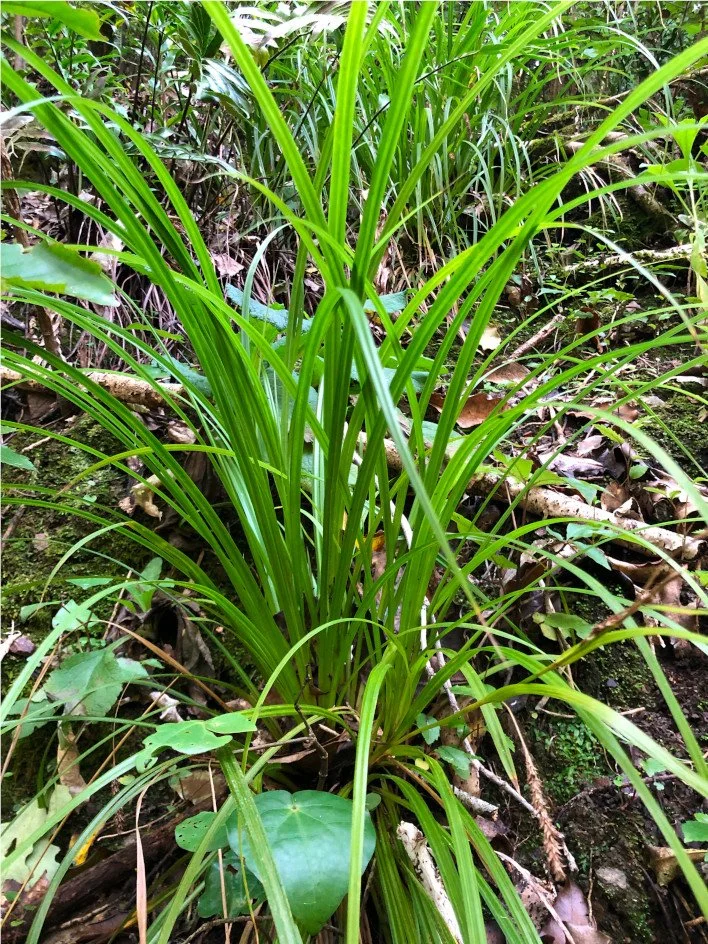
Kiekie
Botanical name: Freycinetia banksii
Synonyms: Freycinetia baueriana subsp. banksii
Common name(s): Kiekie, Tāwhara (flower bracts), Ureure (fruit)
About:
Kiekie is one of New Zealand’s most distinctive native climbers, producing long cane-like stems clothed with spiralling pleated leaves and numerous aerial roots that cling to forest trees. It is renowned for its sweet edible flower bracts (tāwhara) and fragrant fruit, both highly prized by Māori. Dense tangles of kiekie provide valuable habitat for native wildlife while adding a dramatic tropical appearance to native forests.
Natural habitat:
Occurs in coastal to montane forests, especially in moist forests, gullies, limestone country and river valleys. It climbs trees, sprawls over fallen logs, or forms extensive ground tangles where support is absent.
Growing environment:
Frost, Shade, Part Shade, Humid & Moist tolerant.
Endemic distribution:
Endemic to New Zealand.
Occurs throughout the North Island and in the South Island as far south as the Clarence River in the east and Fiordland in the west, being most common in wetter western forests.
Height:
Climbing stems to 30 m long
Width:
Can spread several metres, forming extensive climbing or ground-covering masses.
Flowering:
August – November
Produces creamy white to purplish edible flower bracts surrounding cream-coloured flower spikes.
Fruiting:
January – May
Develops elongated pineapple-like fruit with sweet edible flesh.
Uses:
• Forest restoration
• Native climber for large gardens
• Wildlife habitat
• Traditional weaving material
• Edible flower bracts and fruit
• Cultural plantings
Appearance:
Growth habit:
A vigorous woody climber with numerous branching cane-like stems that produce abundant aerial roots for climbing. When no trees are available it forms dense tangled thickets across the forest floor.
Leaves:
Long, leathery, dark green leaves are strongly pleated with yellow flecking and finely serrated margins. Leaves are spirally arranged near the ends of stems and can reach up to 2 metres long.
Flowers:
The true flowers are packed into cream-coloured cylindrical spikes surrounded by thick, fleshy white to purplish bracts known as tāwhara, which are sweet and edible.
Fruit:
Produces large cylindrical fruiting heads made up of numerous tightly packed segments. The ripe fruit contains sweet pinkish flesh with a caramel-like flavour and many small seeds.
Ecology:
Kiekie provides important food and shelter for native wildlife. The flowers and fruit are eaten by birds and possums, while the dense climbing stems offer habitat for forest invertebrates. The flowers are also thought to be adapted for pollination by New Zealand’s native short-tailed bat, making it one of the country’s few bat-pollinated plants.
Associated habitats:
Podocarp forest, broadleaf forest, coastal forest, limestone forest, gullies, river margins, swamp forest margins and mature regenerating forest.
How to grow:
Grow in moist, fertile, well-drained soil in part shade to full shade. Provide a tree, post or trellis for climbing, or allow it to form a ground cover beneath established trees. Water regularly while establishing, although mature plants tolerate short dry periods remarkably well.
Propagation:
Readily propagated from fresh seed or from rooted stem sections. Plants establish slowly but become vigorous once established.
Cultural use:
Kiekie is one of New Zealand’s most culturally significant forest plants. The sweet tāwhara flower bracts and ripe ureure fruit were highly prized seasonal foods by Māori. The leaves were widely woven into finely crafted baskets, mats and tukutuku panels, while the aerial roots were used for binding and making fish traps. Kiekie features prominently in Māori traditions and place names throughout Aotearoa.
Garden value:
An exceptional native climber that creates a lush subtropical effect in shaded gardens. Its bold foliage, edible flowers and fruit, cultural significance and excellent wildlife value make it one of New Zealand’s finest forest vines for larger native landscapes.