
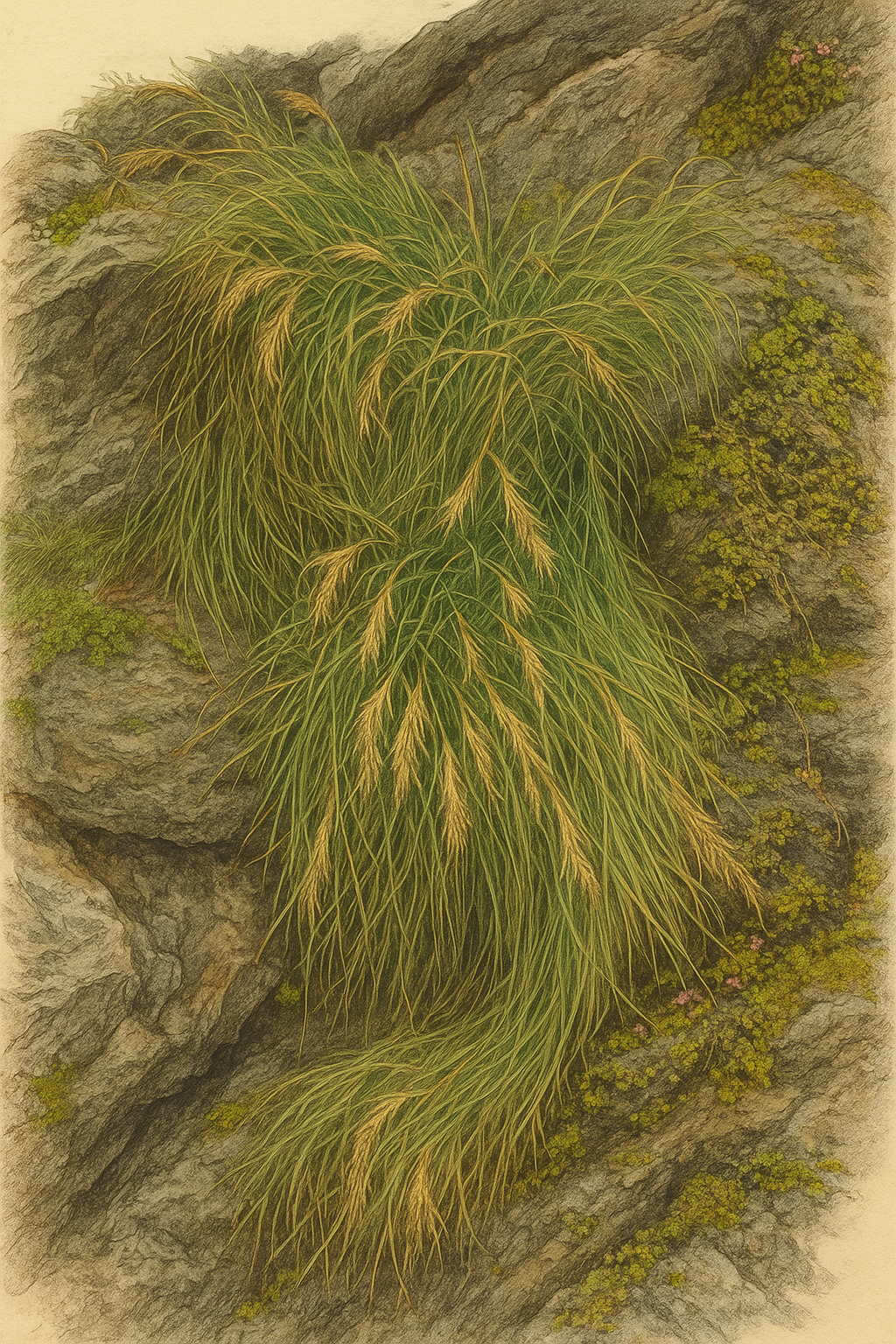
Cox’s Fescue
Botanical name: Festuca coxii
Synonyms: Agropyrum coxii
Common name(s): Cox’s Fescue, Blue Festuca
About:
Cox’s Fescue is a distinctive endemic tussock grass from the Chatham Islands, prized for its elegant blue-grey foliage and compact nodding flower heads. It forms dense clumps of fine, tightly inrolled leaves that arch gracefully, making it an outstanding ornamental grass for coastal gardens, rockeries and exposed landscapes. Exceptionally hardy and drought tolerant once established, it thrives where many other plants struggle.
Natural habitat:
Restricted to exposed coastal environments, growing on cliff faces, rock ledges, peaty turf, rock stacks, petrel burrows and windswept ridgelines.
Growing environment:
Sun, Coastal, Wind, Frost & Free draining tolerant.
Endemic distribution:
Endemic to New Zealand.
Naturally confined to the Chatham Islands, where it occurs on most islands, islets and rock stacks.
Height:
30–50 cm
Width:
30–50 cm
Flowering:
November – February
Produces compact nodding flower heads with distinctive orange anthers held amongst the foliage.
Fruiting:
January – April
Develops fine grass seed dispersed naturally by wind, water and attachment to animals.
Uses:
• Feature tussock
• Coastal gardens
• Rock gardens
• Gravel gardens
• Mass landscape planting
• Texture contrast
• Erosion control
• Native restoration
Appearance:
Growth habit:
A densely tufted perennial tussock with gracefully arching foliage and a neat, compact habit.
Leaves:
Fine, tightly rolled blue-grey to glaucous leaves form dense weeping clumps. The foliage is soft in appearance but tough and highly resilient to coastal exposure.
Flowers:
Short, compact nodding panicles are produced during summer, carrying numerous tightly packed spikelets with long awns and bright orange anthers.
Fruit:
Fine grass seed matures through summer and is dispersed naturally by wind, water and attachment to animals.
Ecology:
An important component of the exposed coastal ecosystems of the Chatham Islands, where it helps stabilise shallow soils and peat while providing shelter for native invertebrates in harsh, wind-blasted environments.
Associated habitats:
Coastal cliffs, rock stacks, peaty turf, coastal bluffs, exposed ridgelines, petrel colonies and rocky coastal grasslands.
How to grow:
Plant in full sun with excellent drainage. It performs best in open, exposed positions and tolerates drought, salt spray and strong coastal winds once established. Avoid humid or poorly drained sites, where plants may become short-lived.
Propagation:
Readily propagated from fresh seed or by dividing established clumps. Division every few years helps maintain vigour and attractive growth.
Cultural use:
While no specific traditional Māori uses are recorded, this species is an important component of the unique coastal flora of the Chatham Islands and contributes to the character of these windswept island landscapes.
Garden value:
Cox’s Fescue is an outstanding ornamental native grass valued for its silvery-blue foliage, compact habit and excellent tolerance of harsh coastal conditions. It combines beautifully with other native tussocks and low-growing coastal plants, adding year-round colour, texture and movement to modern landscapes, rock gardens and restoration plantings.