
Banks Peninsula Blue Tussock
Botanical name: Festuca actae
Synonyms: Festuca ovina subsp. matthewsii var. grandiflora, Festuca novae-zelandicae var. grandiflora, Festuca ovina subsp. novae-zelandiae var. grandiflora, Festuca ovina subsp. matthewsii var. eu-matthewsii, Festuca petriei forma tenuifolia
Common name(s): Banks Peninsula Blue Tussock
About:
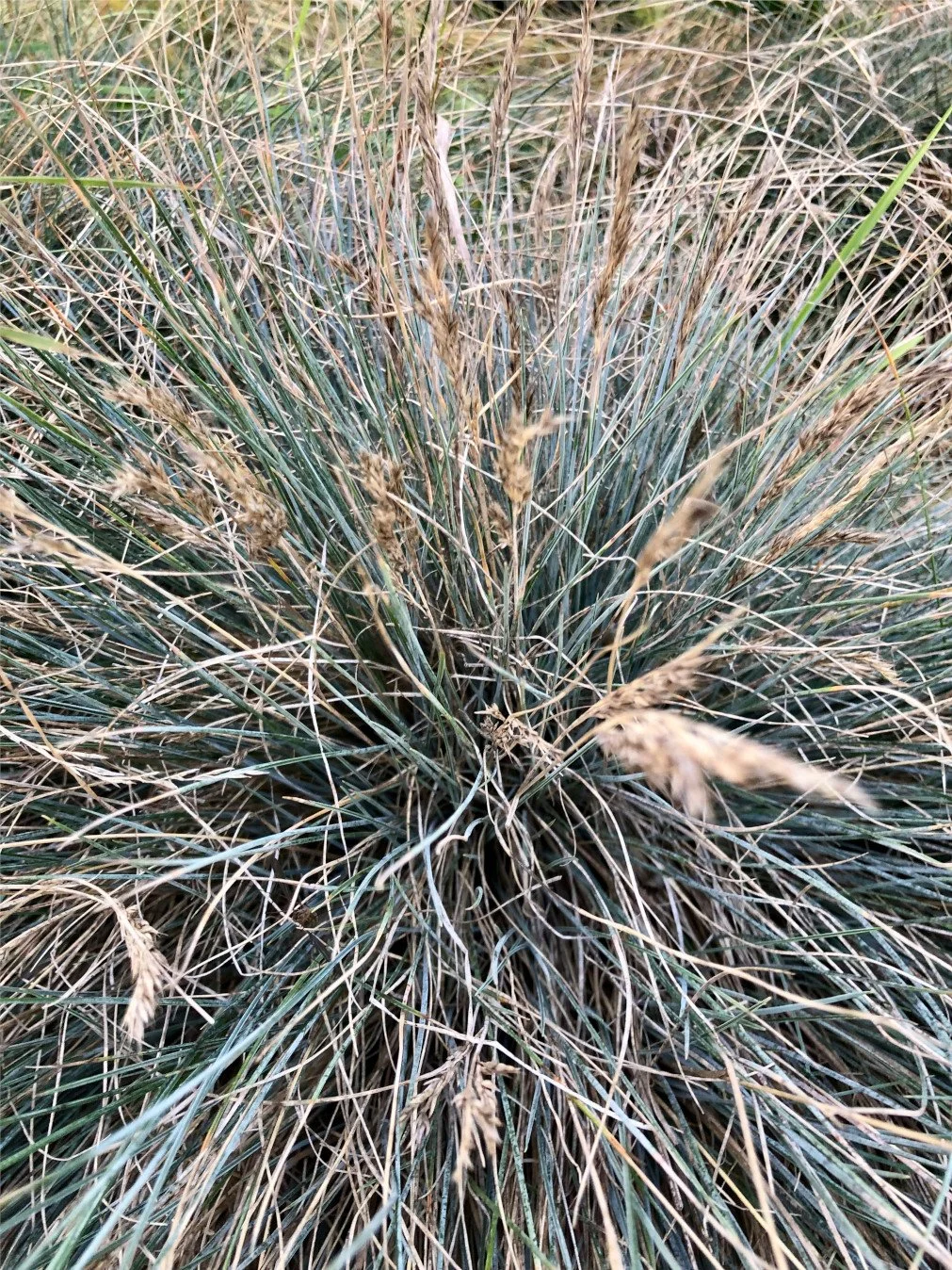
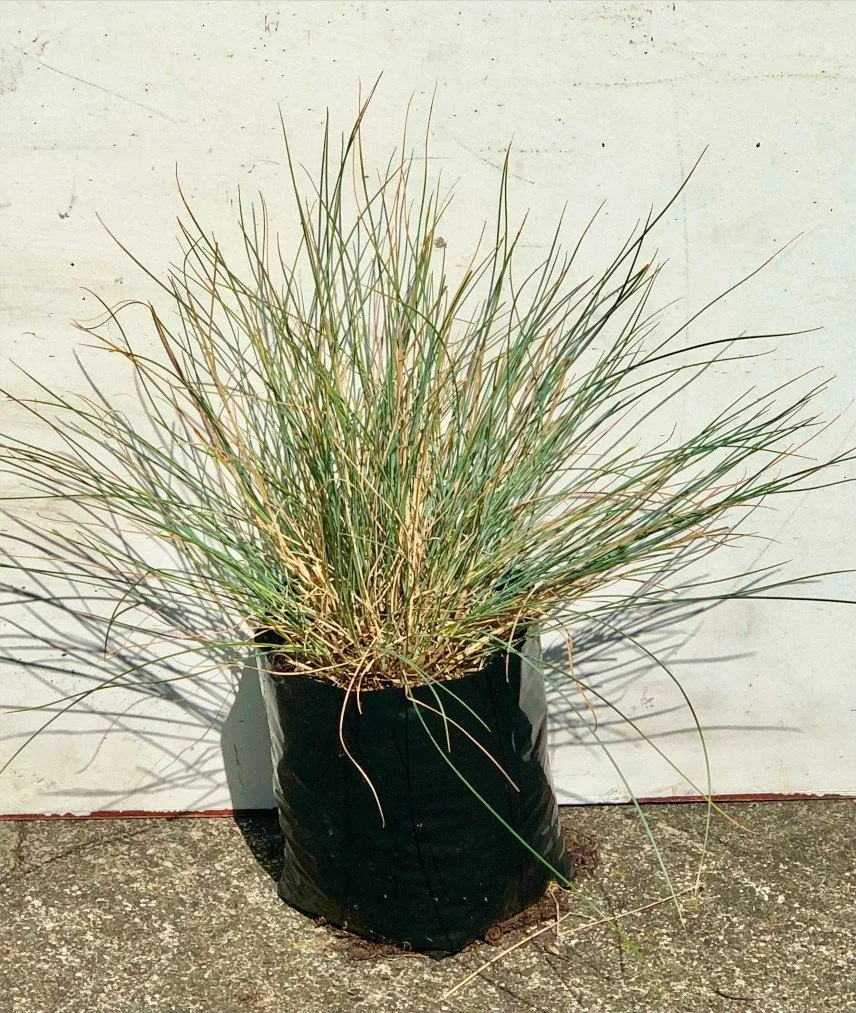
Banks Peninsula Blue Tussock is a graceful endemic tussock grass valued for its fine silvery blue-grey foliage and elegant upright flowering stems. Forming neat clumps of slender glaucous leaves, it is exceptionally hardy and well suited to dry, exposed sites where it provides year-round texture and movement. Its distinctive blue colouring makes it one of New Zealand’s most attractive ornamental native grasses.
Natural habitat:
Naturally occurs on rocky slopes, bluffs, talus, rock outcrops and sparsely vegetated stabilised slopes from coastal to montane environments.
Growing environment:
Sun, Frost, Wind & Free draining tolerant.
Endemic distribution:
Endemic to New Zealand.
Naturally restricted to Banks Peninsula in Canterbury.
Height:
Foliage to approximately 40 cm, flowering stems 60–70 cm
Width:
Approximately 40–60 cm
Flowering:
October – December
Produces airy panicles of yellow-flowered spikelets held above the foliage.
Fruiting:
November – April
Develops fine grass seed dispersed naturally by wind.
Uses:
• Feature tussock
• Mass landscape planting
• Dry gardens
• Coastal gardens
• Rockeries and gravel gardens
• Erosion control
• Habitat restoration
• Texture contrast in native plantings
Appearance:
Growth habit:
A neat, densely tufted perennial tussock forming compact clumps from intravaginal shoots.
Leaves:
Fine, long, blue-grey to silvery glaucous leaves are narrow, stiff and gracefully arching. The foliage remains attractive throughout the year and develops a soft, flowing appearance in even light winds.
Flowers:
Open, airy flowering stems rise well above the foliage during spring and early summer, carrying numerous yellow-flowered spikelets in loose panicles.
Fruit:
Fine grass seed develops through summer and is dispersed naturally by wind, water and attachment to animals.
Ecology:
This species is well adapted to exposed rocky environments where it helps stabilise shallow soils and provides shelter for small native invertebrates. The dense tussocks also contribute valuable structure within naturally open grassland and rocky ecosystems.
Associated habitats:
Rock outcrops, coastal bluffs, talus slopes, dry grasslands, open shrublands, rocky ridges and sparsely vegetated montane slopes.
How to grow:
Grow in full sun in free-draining soils. It performs exceptionally well in dry, exposed positions and tolerates poor, rocky soils once established. Avoid prolonged wet or humid conditions, which can reduce vigour. Remove old flowering stems if desired to maintain a tidy appearance.
Propagation:
Easily propagated from fresh seed or by division of established clumps. Division is best carried out during autumn or early spring when soil moisture is reliable.
Cultural use:
Although there are no widely recorded traditional Māori uses specific to this species, it contributes to the unique native grasslands and rocky ecosystems that characterise Banks Peninsula.
Garden value:
One of New Zealand’s finest ornamental tussock grasses, Banks Peninsula Blue Tussock is highly valued for its elegant blue foliage, tidy growth habit and exceptional drought tolerance. It is ideal for contemporary landscapes, gravel gardens, coastal plantings and large-scale native restoration projects, where it provides year-round structure, movement and colour with very little maintenance.