


Inanga
Botanical name: Dracophyllum filifolium
Synonyms: Dracophyllum setifolium, Dracophyllum pungens, Dracophyllum virgatum, Dracophyllum heterophyllum, Dracophyllum ×vulcanicum, Dracophyllum urvilleanum var. filifolium, Dracophyllum collinum, Dracophyllum filifolium var. centrale, Dracophyllum filifolium var. collinum
Common name(s): Inanga
About:
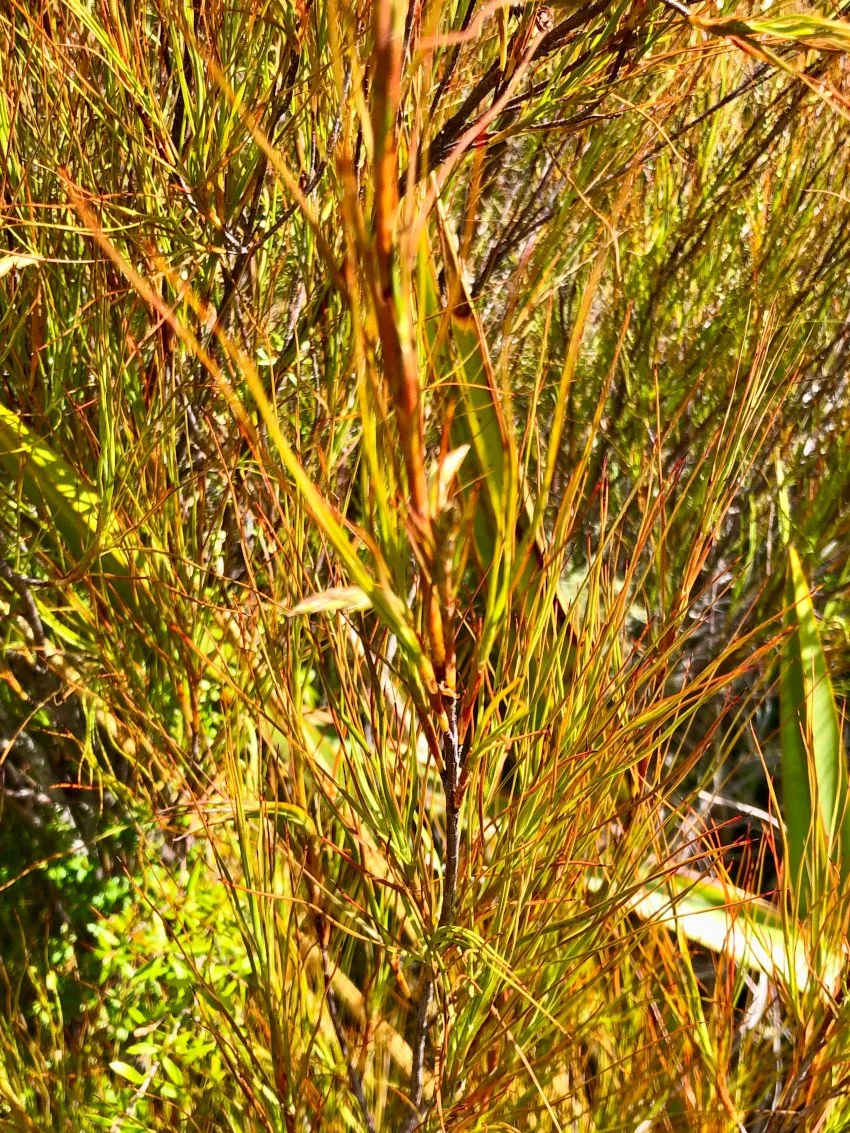
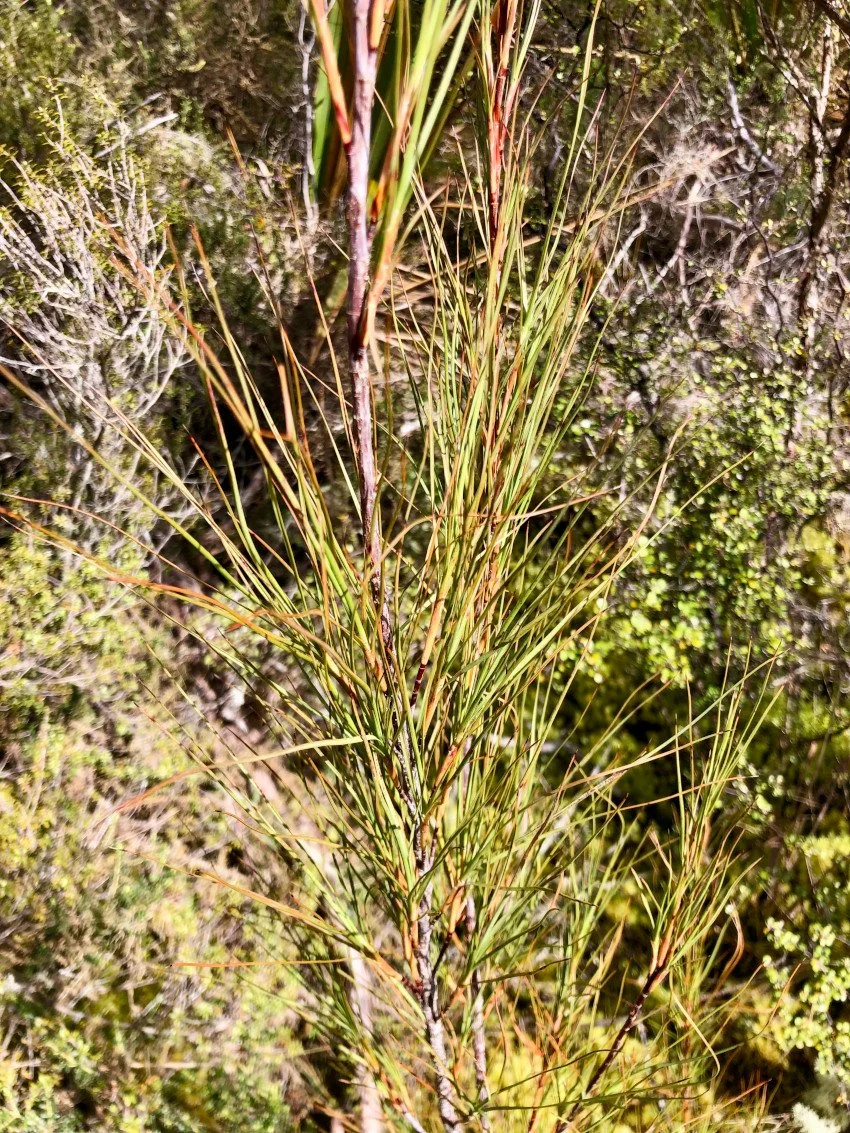
Inanga is a slender, upright shrub or small tree endemic to New Zealand. It is recognised by its long, extremely narrow, grass-like leaves and compact spikes of white flowers. The floral and inflorescence bracts project conspicuously beyond the flowers, giving the flower spikes a sharply pointed appearance. It occurs from lowland forest in the southern part of its range to exposed montane shrubland and grassland at elevations of up to about 1,500 m.
Natural habitat:
Found in lowland to montane forest, forest margins, shrubland, tussock grassland and open montane vegetation. It commonly grows on mountain slopes, saddles, ridges and exposed upland sites. Near sea level it is largely confined to the southern part of its range.
Growing environment:
Prefers cool, open conditions in full sun or light shade. It grows best in acidic, humus-rich, free-draining soil that remains moderately moist. Established plants tolerate wind, frost and exposed montane conditions but generally dislike prolonged heat, drought, heavy soils and waterlogging.
Endemic distribution:
Endemic to New Zealand. Found from the Huiarau Range south through the North Island, throughout suitable areas of the South Island, and on Stewart Island/Rakiura.
Height:
1–4 m
Width:
Approximately 1–2.5 m
Flowering:
November–June
Fruiting:
Fruit may be present throughout the year.
Uses:
• Specialist native gardens
• Cool-climate shrub borders
• Montane and alpine-style plantings
• Ecological restoration within its natural range
• Botanical collections
• Architectural specimen planting
Appearance:
Growth habit:
An erect, multi-stemmed shrub or small tree with slender, often closely upright branches. The narrow foliage gives the plant a fine-textured, somewhat rush-like appearance.
Trunk/Bark:
Older branches have finely fissured grey, brown or sometimes dark brown bark. Young stems are slender, flexible and reddish-brown.
Leaves:
Leaves are crowded along the branchlets and held erect to spreading. The blades are linear to linear-triangular, generally 4–20 cm long and only 0.7–1.5 mm wide. They are green, hairless and faintly striated, with finely toothed margins and sharply pointed tips. A small tuft of rough hairs occurs near the base of the upper surface.
Flowers:
White flowers are produced in dense terminal spikes on short lateral branchlets. Each spike is approximately 2–3 cm long and carries five to ten sessile flowers. The broad, pointed flower bracts and inflorescence bracts are longer than the flowers and often partly conceal them.
Fruit:
The fruit is a small, sessile, light brown capsule approximately 2–2.5 mm long. It is rounded to obovoid and remains partly enclosed by the persistent calyx.
Seeds:
The seeds are minute, narrow and yellowish-brown, with a lightly netted surface. They are dispersed by wind.
Ecology:
Inanga is an important component of montane shrublands, ridges and forest margins, where its narrow leaves and flexible branches allow it to withstand strong winds and cold conditions. Its flowers provide nectar and pollen for small native insects, while the minute seeds are carried to new sites by wind.
Its fine foliage and upright structure add vertical texture to open shrublands and provide shelter for smaller herbs, mosses and invertebrates.
Associated habitats:
Montane forest, forest margins, subalpine shrubland, tussock grassland, open ridges, mountain saddles, rocky slopes and exposed upland vegetation. It may occur alongside species of Olearia, Coprosma, Pseudopanax, Gaultheria, Ozothamnus, Chionochloa and other Dracophyllum species.
How to grow:
Grow in a cool, sunny or lightly shaded position with acidic, free-draining soil. Add fine bark, leaf mould or peat-like organic material where appropriate to help maintain acidity and even moisture. Avoid disturbing the roots and protect young plants from drying winds until established.
This species is difficult to maintain in cultivation and is best suited to cool southern gardens, montane sites or specialist collections where its natural conditions can be closely reproduced.
Propagation:
Propagation is difficult. Fresh seed may be surface-sown on an acidic, fine-textured propagation mix and kept cool, moist and well ventilated. Germination and early seedling growth can be slow and unreliable. Plants should never be removed from the wild.
Cultural use:
The name inanga is also widely used for juvenile native freshwater fish, although the reason for its application to this plant is uncertain. No specific traditional uses are widely documented. The species remains an important and distinctive element of New Zealand’s montane flora.
The botanical name Dracophyllum means “dragon leaf”, while filifolium means “thread-leaved”, referring to its extremely narrow foliage.
Garden value:
A distinctive native shrub valued for its fine, grass-like leaves, upright form and small white flower spikes. It provides strong architectural texture in cool-climate native gardens and combines particularly well with tussocks, hebes and other montane plants. Its specialised growing requirements make it most suitable for experienced growers and botanical collections.