

Akeake
Botanical name: Dodonaea viscosa
Synonyms: Dodonaea viscosa subsp. viscosa
Common name(s): Akeake, Hopbush, Broadleaf Hopbush
About:
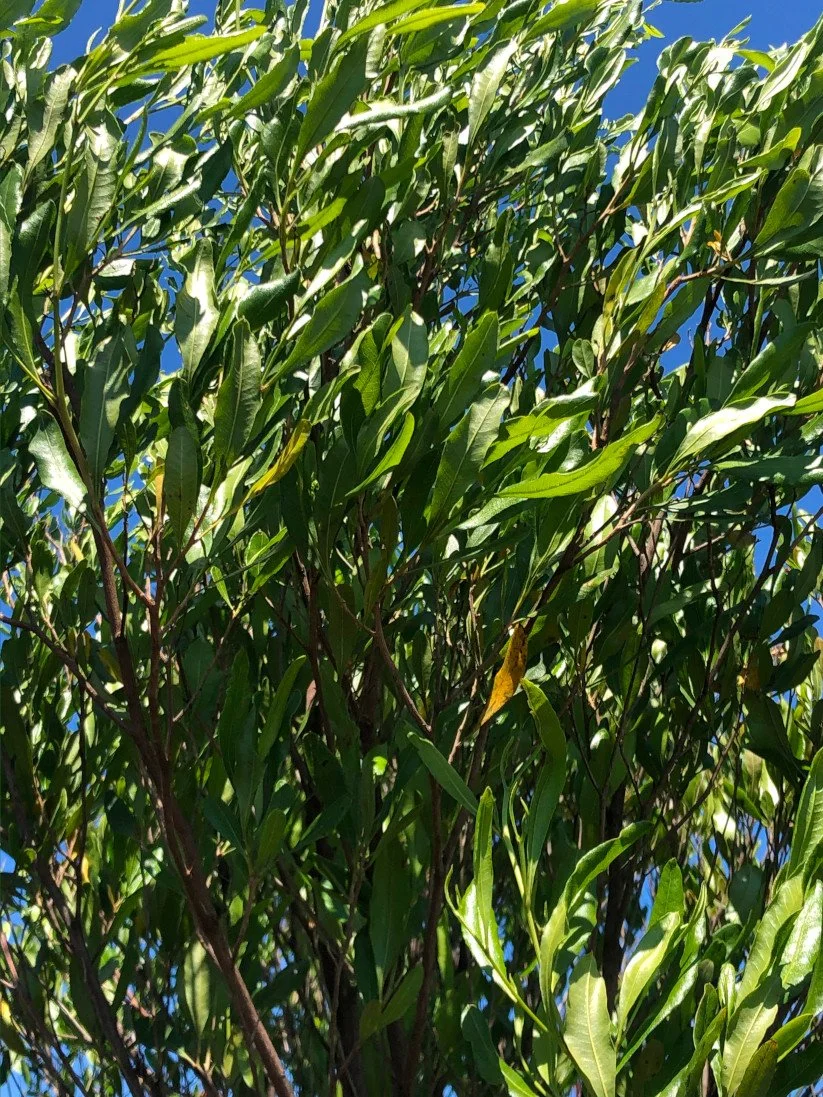
Akeake is a fast-growing, bushy shrub or small tree with narrow, often wavy leaves, sticky young growth and distinctive winged seed capsules. Its flaky reddish-brown bark, dense foliage and exceptional tolerance of wind, salt and drought make it an important coastal species. The wood is exceptionally hard, heavy and durable and was traditionally highly valued by Māori for weapons, tools and implements.
Natural habitat:
Occurs from coastal dunes, boulder beaches and exposed coastal scrub through to lowland forest. It is particularly common on warm, dry coastal sites and offshore islands, where it may occasionally form a dominant part of the forest canopy.
Growing environment:
Best grown in full sun in free-draining soil. Akeake tolerates wind, salt spray, drought, poor soils and coastal exposure but does not perform well in waterlogged ground. Young plants may be damaged by heavy frost, especially in colder inland districts.
Endemic distribution:
Indigenous but not endemic to New Zealand. It occurs naturally on the Three Kings Islands, North Island, South Island and Chatham Islands. The species has an exceptionally wide natural distribution across tropical, subtropical and warm-temperate regions of the world.
Height:
Usually 3–8 m, occasionally reaching 12 m
Width:
Approximately 2–5 m
Flowering:
August–November
Fruiting:
November–April
Uses:
• Coastal shelter and windbreak planting
• Hedging and screening
• Dune and erosion control
• Revegetation of exposed sites
• Ornamental foliage planting
• Traditional weapons and tools
• Habitat for native insects and birds
Appearance:
Growth habit:
A dense, upright shrub or small tree with a rounded to irregular crown. Young branchlets are flattened or triangular and smooth.
Trunk/Bark:
The bark is reddish-brown and flakes away in irregular strips or shards, often accumulating around the base of older trunks.
Leaves:
Leaves are 4–15 cm long and 1–4 cm wide, ranging from linear-lanceolate to elliptic or oblanceolate. They taper gradually toward the base and narrow more abruptly to a rounded or occasionally slightly notched tip. The foliage may be green, yellow-green, bronze or red-purple. Young leaves and buds are often coated with a sticky resin.
Flowers:
Small, petal-less flowers are produced in terminal branched clusters. They range from yellow-green to reddish-green and are primarily wind-pollinated. Plants may bear male and female flowers on the same plant or on separate plants.
Fruit:
Broadly oval, papery capsules with two to four prominent wings. They are initially cream, green or tinged red before drying to glossy amber or pale brown. Each capsule contains dark purple-black to black seeds.
Ecology:
Akeake is a resilient pioneer species capable of colonising open, disturbed and exposed habitats. Its wind-dispersed winged capsules allow the seed to travel away from the parent plant, while water may also aid dispersal along coastlines. Dense foliage provides shelter for native birds, lizards and invertebrates.
Associated habitats:
Coastal scrub, dune systems, boulder beaches, coastal forest, offshore islands, lowland forest margins, rocky slopes and exposed headlands.
How to grow:
Plant in a warm, sunny position with well-drained soil. Water regularly while establishing, after which the plant becomes highly drought tolerant. Light pruning encourages dense, bushy growth and makes it suitable for hedging. Avoid persistently wet soils and protect young plants from severe frost.
Propagation:
Easily propagated from fresh seed. Seeds may germinate more readily after soaking in hot water and allowing them to cool before sowing. Akeake can also be grown from semi-hardwood cuttings, particularly when a specific foliage colour or plant form is required.
Cultural use:
The exceptionally hard and durable wood was traditionally used by Māori to make taiaha, patu, digging tools, walking staffs, axe handles and other implements requiring great strength. The name akeake conveys the idea of endurance or permanence and is associated with the expression “ake ake”, meaning “for ever and ever”.
Garden value:
A highly useful and attractive native tree for exposed, coastal and dry gardens. Its coloured foliage, decorative winged capsules, flaky bark and dense growth make it valuable as a specimen, hedge, screen or windbreak. The purple-leaved cultivar ‘Purpurea’ is especially popular, although it may occasionally produce green reversions.