


Whekī
Botanical name: Dicksonia squarrosa
Synonyms: Trichomanes squarrosum, Dicksonia gracilis, Dicksonia squarrosa var. gracilis, Balantium squarrosum
Common name(s): Whekī, Rough Tree Fern, Harsh Tree Fern
About:
Dicksonia squarrosa is a distinctive, fast-growing New Zealand tree fern recognised by its slender black trunk, rough-textured fronds and ability to form extensive colonies through underground rhizomes. Unlike most tree ferns, it readily produces new trunks from underground runners and aerial buds, creating dense groves in native forests. Its untidy crown and characteristic black trunk make it one of New Zealand’s easiest tree ferns to identify.
Natural habitat:
Occurs naturally from coastal to montane forests, forest margins, regenerating bush, stream edges and damp gullies, often forming extensive colonies in disturbed forest.
Growing environment:
Thrives in moist, fertile, well-drained soils in partial shade to full shade. It tolerates a wide range of soils and conditions and is more adaptable than many other native tree ferns.
Endemic distribution:
Endemic to New Zealand. Widespread throughout the North Island, South Island, Stewart Island/Rakiura and the Chatham Islands.
Height:
Up to 8 m
Width:
1–3 m per trunk, spreading much wider by underground rhizomes.
Flowering:
Does not flower. Reproduces by spores.
Fruiting:
Produces spores on fertile fronds.
Uses:
• Native forest restoration
• Woodland gardens
• Feature tree fern
• Screening and shelter
• Erosion control on shaded banks
• Traditional Māori fencing material
Appearance:
Growth habit:
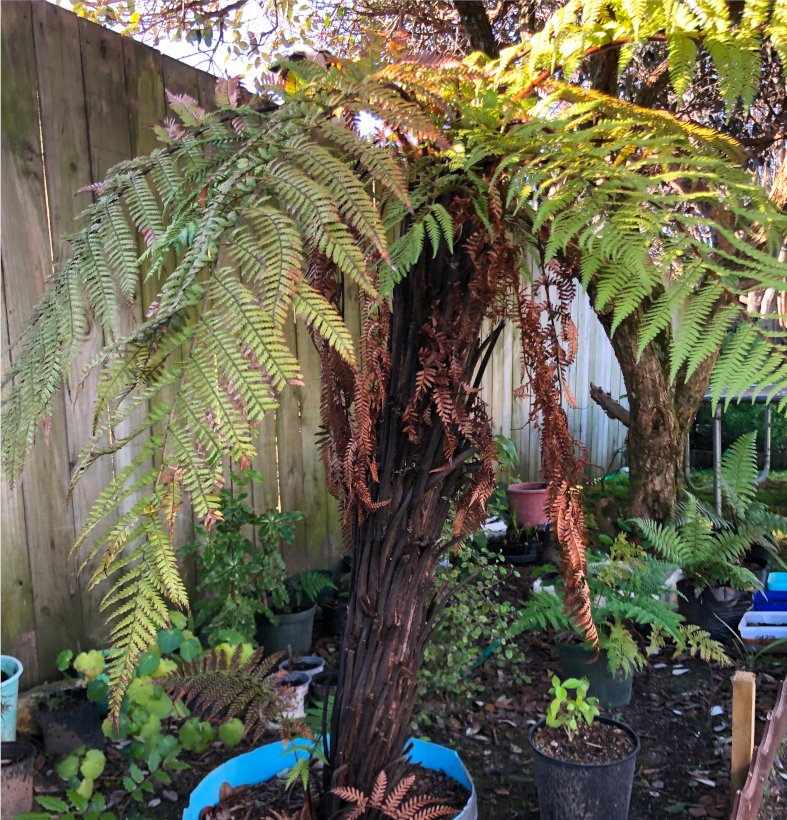
A slender tree fern that commonly forms colonies through underground rhizomes. Mature plants often develop multiple trunks from aerial buds after damage.
Trunk:
Slender, usually up to 20 cm in diameter, covered with persistent black leaf stalk bases interwoven with dark roots. The trunk frequently bears aerial buds capable of producing new crowns.
Fronds:
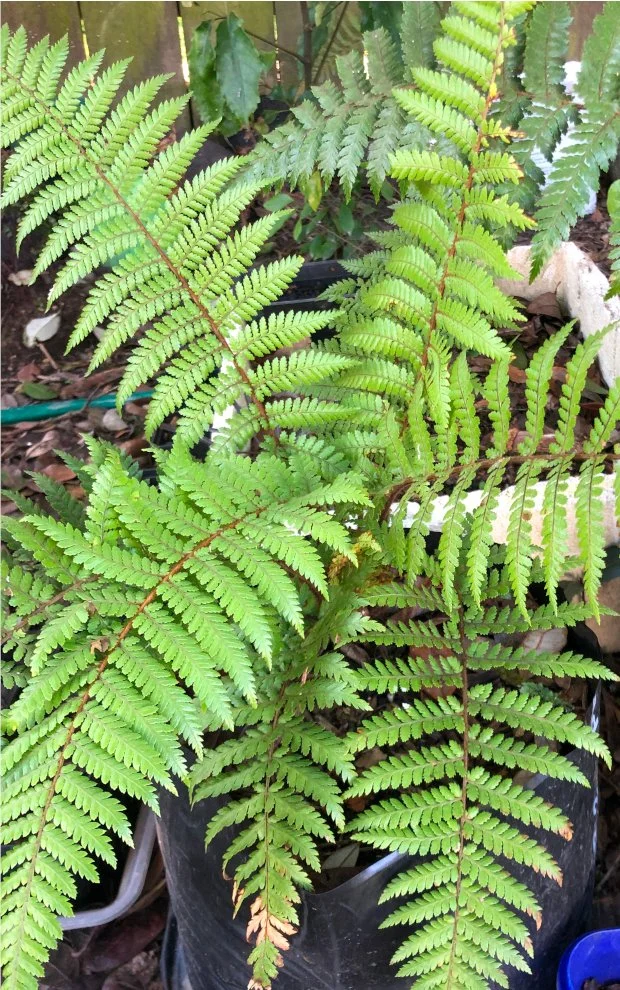
Dark green, very rough and leathery fronds 1–2.5 metres long arch from a relatively small crown. Older fronds usually fall away, although some remain temporarily as an untidy, ragged skirt.
Spores:
Golden-brown spores are produced in rounded sori along the margins of fertile leaf segments.
Ecology:
Its spreading rhizomes enable it to rapidly colonise disturbed forest and create dense groves that provide shelter for native birds, lizards, invertebrates and numerous forest plants. The trunks also provide growing sites for mosses, liverworts and epiphytes.
Associated habitats:
Podocarp forest, broadleaf forest, regenerating native bush, stream margins, damp gullies, forest margins and shaded hillsides.
How to grow:
Plant in a sheltered site with fertile, moisture-retentive but well-drained soil. It tolerates more sun than many tree ferns provided moisture is available, although partial shade produces the best foliage. Allow sufficient room for spreading colonies to develop.
Propagation:
Readily propagated from fresh spores, division of naturally produced plantlets or by transplanting established trunks. New shoots frequently arise from underground rhizomes and aerial buds.
Cultural use:
Known traditionally as whekī, the trunks were widely used by Māori as fencing material around fortified pā and for other construction purposes. The species remains an important and familiar component of New Zealand’s native forests.
Garden value:
An excellent, hardy tree fern for native gardens and restoration projects. Its rapid growth, colonial habit and tolerance of varied conditions make it ideal for creating lush woodland settings. The distinctive black trunk and rugged fronds provide year-round structure and a strong natural character.