

Fragrant Fern
Botanical name: Dendroconche scandens
Synonyms: Phymatosorus scandens, Polypodium pustulatum, Microsorium pustulatum, Phymatodes pustulata, Drynaria scandens, Microsorum scandens, Lecanopteris scandens
Common name(s): Fragrant Fern, Mokimoki, Climbing Shield Fern
About:
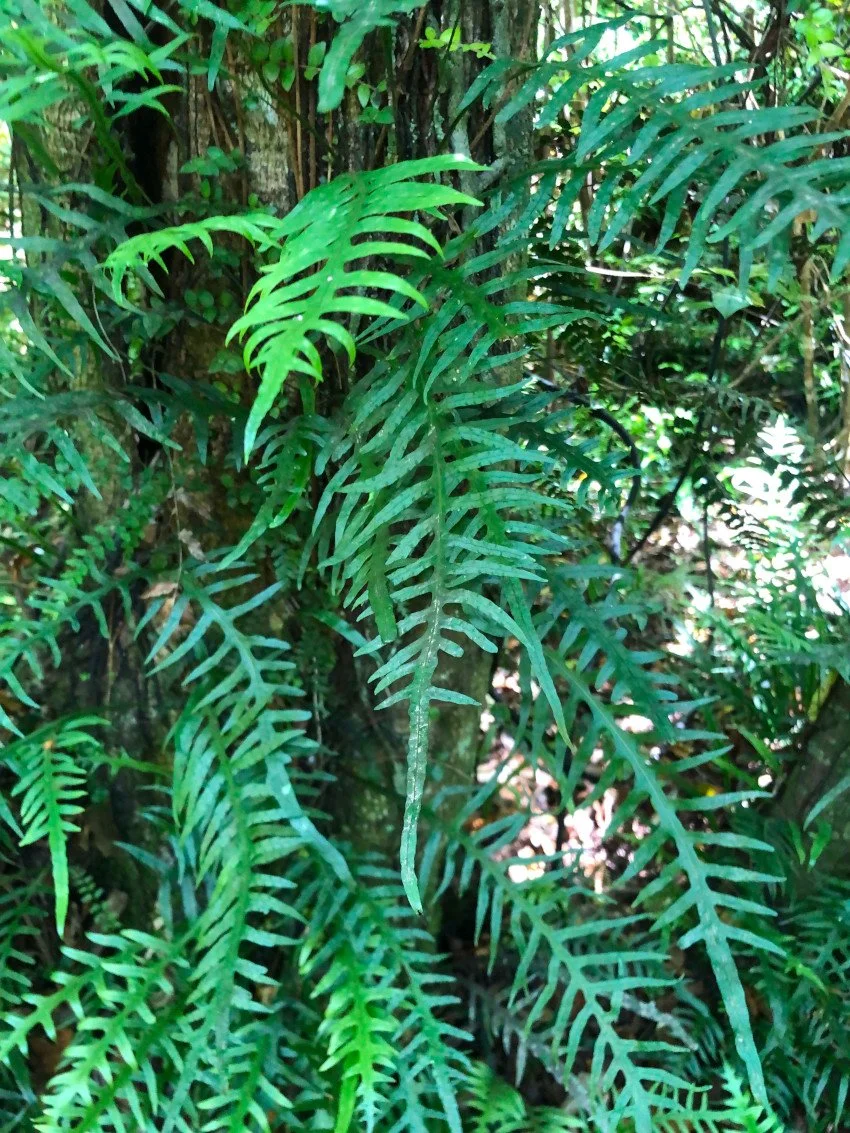
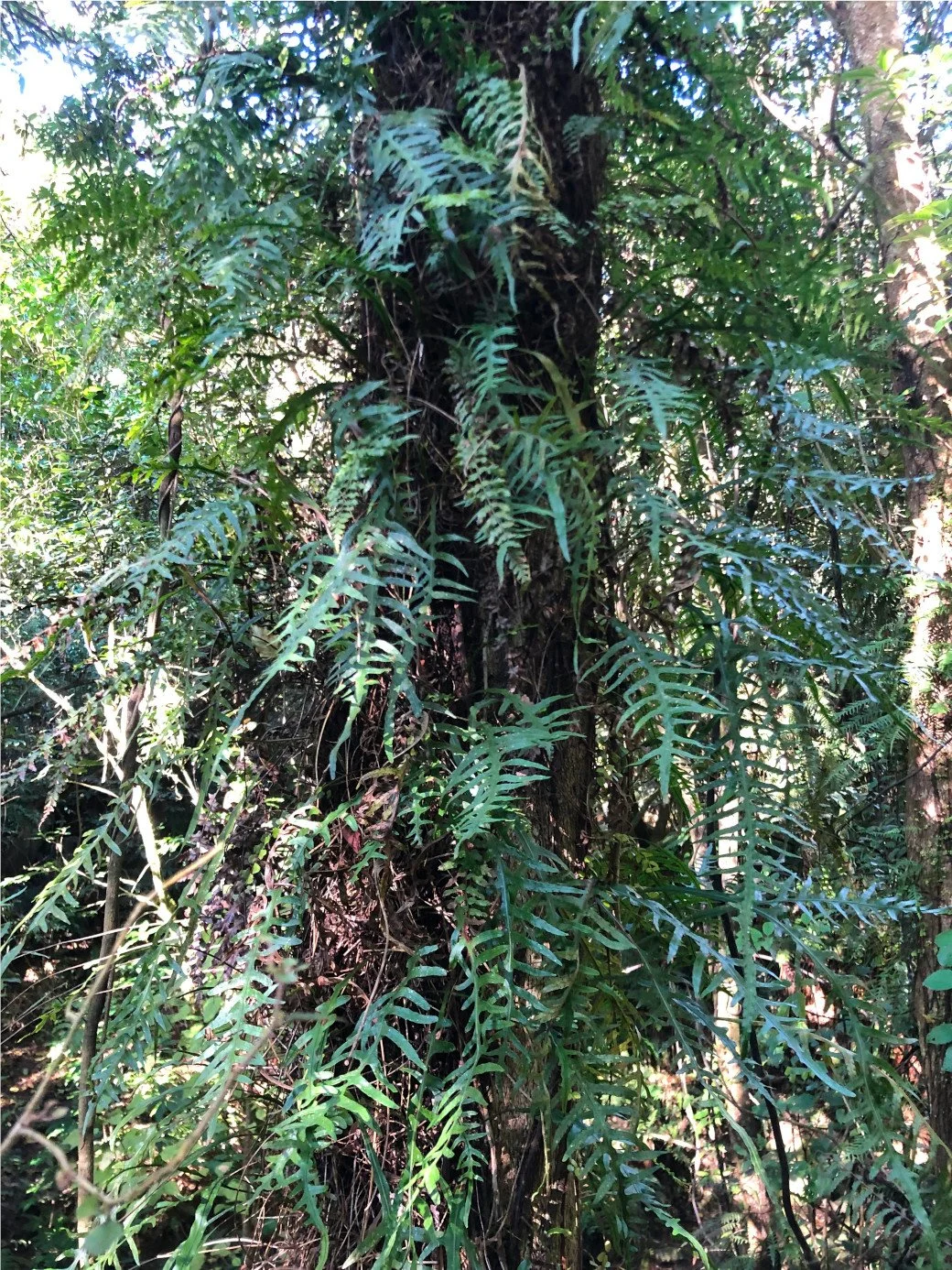
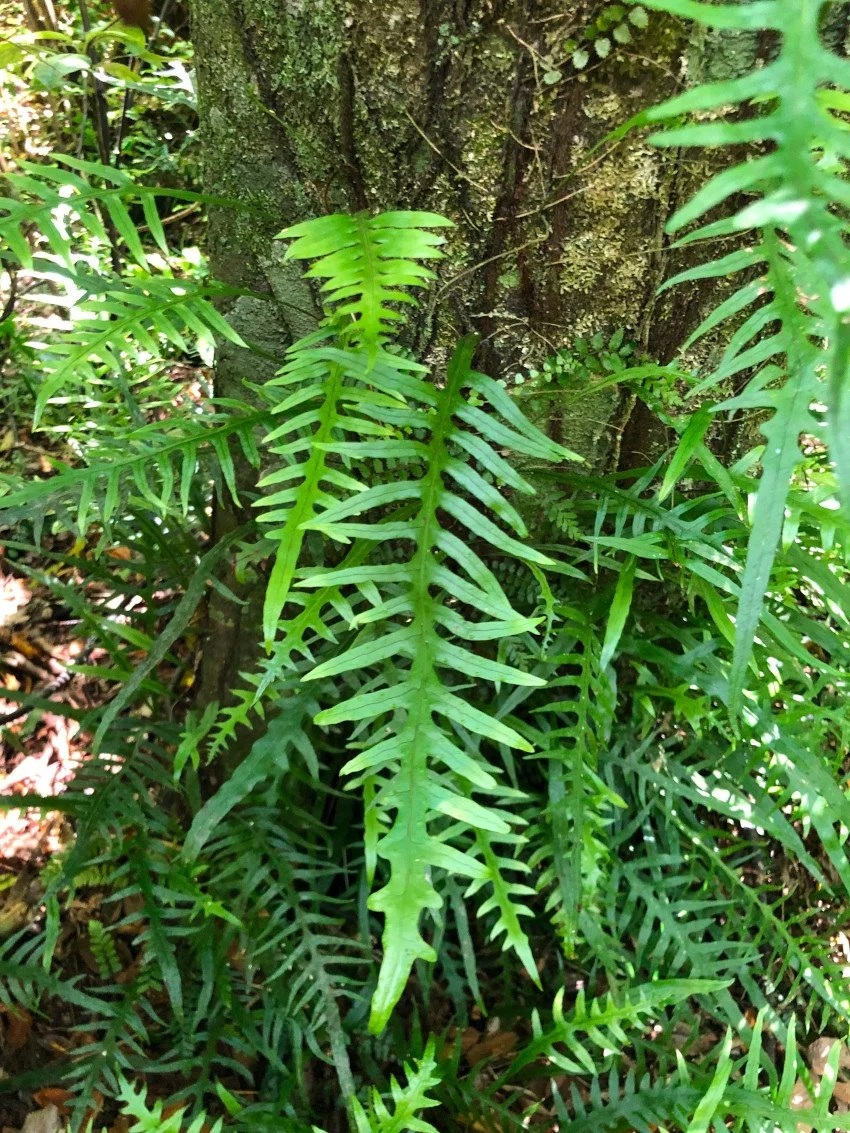
Dendroconche scandens is a distinctive scrambling and climbing fern recognised by its long, wiry rhizomes, narrow dull-green fronds and pleasant fragrance when fresh foliage is crushed. It creeps across the forest floor, rocks and fallen logs before climbing tree trunks and tree ferns, often forming extensive colonies in damp, shaded forest. Juvenile fronds are usually small and undivided, while mature climbing plants develop longer, deeply divided fronds.
Natural habitat:
Coastal to lowland native forest, shaded gullies, damp banks, rock piles, fallen logs, forest floors and the trunks of trees and tree ferns.
Growing environment:
Prefers cool, shaded or semi-shaded positions with consistently moist conditions and high humidity. It requires good drainage but is less drought tolerant than many other climbing ferns.
Endemic distribution:
Indigenous to New Zealand and eastern Australia. In New Zealand it is widespread throughout the North Island, South Island south to Franz Josef in Westland, and the Chatham Islands. It also occurs in Queensland, New South Wales, Victoria and Lord Howe Island.
Height:
Fronds 7.5–58 cm long
Width:
Spreads or climbs 1–3 m or more by creeping rhizomes.
Flowering:
N/A – ferns do not flower.
Fruiting:
Spores may be produced throughout the year when conditions are suitable.
Uses:
• Shaded ground cover
• Climbing fern for tree trunks
• Fern gardens and ferneries
• Hanging baskets and large containers
• Covering rocks and fallen logs
• Native forest restoration
• Collector’s fern
Appearance:
Growth habit:
An evergreen epiphytic or rock-growing fern with slender, long-creeping rhizomes. It scrambles across the ground and over rocks before climbing tree trunks, branches and tree ferns by means of laterally produced roots.
Rhizomes:
Rhizomes are wiry, flattened and 2–4 mm thick, densely covered with persistent dark brown to purple-brown scales. They branch freely and can travel considerable distances over suitable surfaces.
Fronds:
Fronds are dull green, thin-textured and strongly aromatic when crushed. Juvenile fronds growing near the ground are often simple and undivided. Mature fronds are deeply divided into 1–20 pairs of narrow, strongly ascending, sickle-shaped pinnae with tapered tips and sometimes wavy margins.
Stipes:
Frond stalks are slender, pale and glossy, measuring approximately 6–160 mm long. They are usually almost hairless apart from scattered scales.
Flowers:
No flowers are produced. This species reproduces by spores.
Fruit:
No fruit is produced. Orange-brown spores develop within rounded or oval sori on the undersides of fertile fronds.
Sori:
The sori occur in a single row close to the margin on each side of the central vein. They are slightly impressed into the lower frond surface and create low raised bumps on the upper surface.
Ecology:
Fragrant fern contributes to the dense vegetation of humid forest floors and tree trunks. Its spreading rhizomes provide shelter for small invertebrates and help cover exposed soil, bark and rock. Spores are dispersed by wind, while rhizomes allow established plants to spread vegetatively through suitable forest habitats.
Associated habitats:
Podocarp-broadleaf forest, coastal forest, lowland rainforest, damp gullies, shaded banks, tree fern groves, rocky forest floors and fallen timber.
How to grow:
Grow in deep shade or filtered light with consistently moist conditions. Plant in humus-rich, free-draining soil or a coarse bark-based mix, and provide a tree trunk, tree fern slab, rock or log for the rhizomes to climb. Water regularly during dry weather and protect from hot sun and drying winds.
Propagation:
Easily propagated from rooted sections of rhizome. Pin pieces of rhizome onto moist bark, logs or potting mix and keep them shaded and humid until established. It may also be grown from fresh spores, although this method is slower.
Cultural use:
Mokimoki is valued for the pleasant scent released by its fresh or recently dried fronds. Māori traditionally used the aromatic foliage as a natural fragrance and to help mask unpleasant odours.
Garden value:
A highly ornamental native fern valued for its elegant climbing habit, divided foliage and distinctive fragrance. It is ideal for shaded gardens, ferneries, hanging baskets and naturalistic forest plantings where it can scramble over logs, rocks and tree trunks. Once established, it is generally low-maintenance and largely free from serious pests and diseases.