

Kahikatea
Botanical name: Dacrycarpus dacrydioides
Synonyms: Dacrydium excelsum, Dacrydium ferrugineum, Dacrydium thuioides, Nageia excelsa, Podocarpus dacrydioides, Podocarpus thujoides, Podocarpus excelsus
Common name(s): Kahikatea, White Pine
About:
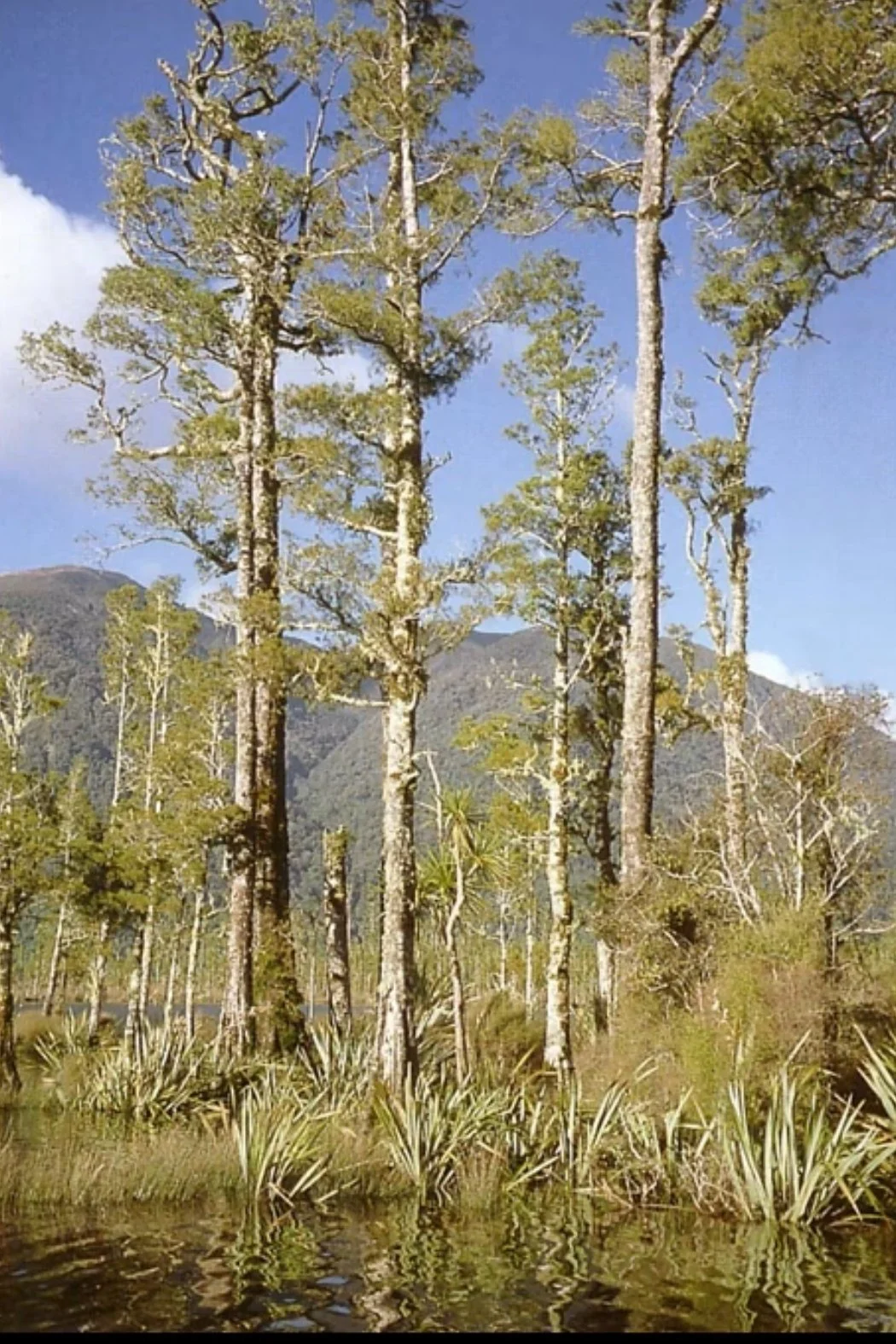
Kahikatea is New Zealand’s tallest native tree, reaching heights of up to 65 metres and living for more than 600 years. This magnificent podocarp once dominated vast swamp forests across lowland New Zealand, particularly on fertile floodplains and poorly drained alluvial soils. Today, intact kahikatea forests are uncommon, especially in the North Island, following extensive logging and wetland drainage. Kahikatea is a dioecious species, with male and female cones borne on separate trees.
Natural habitat:
Lowland swamp forests, floodplains, river terraces and poorly drained alluvial soils. It occasionally extends into lower montane forest but is most abundant in seasonally flooded wetlands.
Growing environment:
Prefers full sun and deep, fertile, moisture-retentive soils. It thrives in damp or seasonally wet conditions but will also establish in well-watered garden soils. Young plants appreciate shelter from severe frosts.
Endemic distribution:
Endemic to New Zealand and naturally occurs throughout the North Island, South Island and Stewart Island / Rakiura.
Height:
50–65 m
Width:
10–20 m
Flowering:
October–January.
Fruiting:
February–April.
Uses:
• Specimen tree for large landscapes and parks
• Wetland and riparian restoration
• Swamp forest regeneration
• Wildlife habitat
• Timber (historically)
• Shelter and ecological restoration plantings
Appearance:
Growth habit:
A towering evergreen conifer with a straight, columnar trunk in youth, later developing a broad crown and massive buttressed base. Mature trees are often fluted with bare trunks extending for much of their height.
Bark:
Grey to dark grey, rough and flaky, shedding in thick irregular plates. Older trees develop prominent buttresses around the trunk base.
Leaves:
Juvenile foliage consists of narrow, spreading leaves that are green to reddish. As the tree matures these are replaced by tiny overlapping scale-like leaves, giving adult branchlets a fine, feathery appearance.
Cones and fruit:
Male cones are slender and yellow with abundant pollen. Female trees produce a small purple-black seed seated on a fleshy orange to red receptacle that attracts native birds.
Ecology:
Kahikatea forests are among New Zealand’s richest ecosystems, providing habitat for countless native plants, fungi, insects and birds. Mature trees commonly support large communities of epiphytes, with over 100 species recorded growing on a single tree. The fleshy fruit is an important food source for kererū, tūī, bellbirds and other native birds, which disperse the seeds throughout wetlands and forests.
Associated habitats:
Swamp forests, floodplain forests, wetlands, riparian margins, alluvial terraces and mixed podocarp forests.
How to grow:
Plant in full sun on deep, fertile soil with reliable moisture. Kahikatea performs best where soils remain damp year-round, although established trees tolerate occasional dry periods. Allow plenty of room for its eventual size. Mulching around young plants helps retain soil moisture and suppress weeds.
Propagation:
Readily grown from fresh seed. Hardwood cuttings can be struck but are generally slow and less reliable than seed propagation.
Cultural use:
Kahikatea holds great cultural significance for Māori. The fruit (koroī) was an important seasonal food source, while the timber was used for waka, tools and carving. Resin was chewed as gum and used to produce a dark blue-black dye for traditional tā moko. The species remains an important taonga and a symbol of New Zealand’s ancient swamp forests.
Garden value:
Kahikatea is an outstanding specimen tree for large gardens, parks, lifestyle blocks and restoration projects. Its graceful columnar juvenile form, towering mature stature and ecological importance make it one of New Zealand’s finest native trees. Although unsuitable for small gardens, it is invaluable for recreating native forest and wetland landscapes while providing food and habitat for native wildlife.
