

Giant Umbrella Sedge
Botanical name: Cyperus ustulatus
Synonyms: Mariscus ustulatus, Cyperus ustulatus f. grandispiculosus
Common name(s): Giant Umbrella Sedge, Toetoe Upoko-Tangata, Coastal Cutty Grass
About:
Cyperus ustulatus is a striking endemic New Zealand sedge that forms bold clumps of arching foliage topped with large umbrella-like seed heads. It naturally occurs in coastal wetlands, estuaries, lagoons and stream margins, where it is an important component of wetland ecosystems. Despite its graceful appearance, the leaves and stems have extremely sharp serrated edges capable of causing deep cuts, so care should be taken when planting or handling.
Natural habitat:
Coastal wetlands, estuary margins, lagoon edges, seepages, stream banks, swamps and damp lowland sites.
Growing environment:
Thrives in full sun or partial shade in consistently moist to wet soils. It tolerates periodic flooding and a wide range of coastal and lowland conditions.
Endemic distribution:
Endemic to New Zealand. Widespread throughout the North Island and northern South Island, extending west to Fiordland, with scattered natural populations on Banks Peninsula, the Rakaia River mouth and the Chatham Islands.
Height:
0.6–2 m
Width:
1–2 m
Flowering:
July–December.
Fruiting:
July–April.
Uses:
• Wetland restoration
• Pond and stream margins
• Coastal landscaping
• Rain gardens
• Wildlife habitat
• Architectural landscape planting
Appearance:
Growth habit:
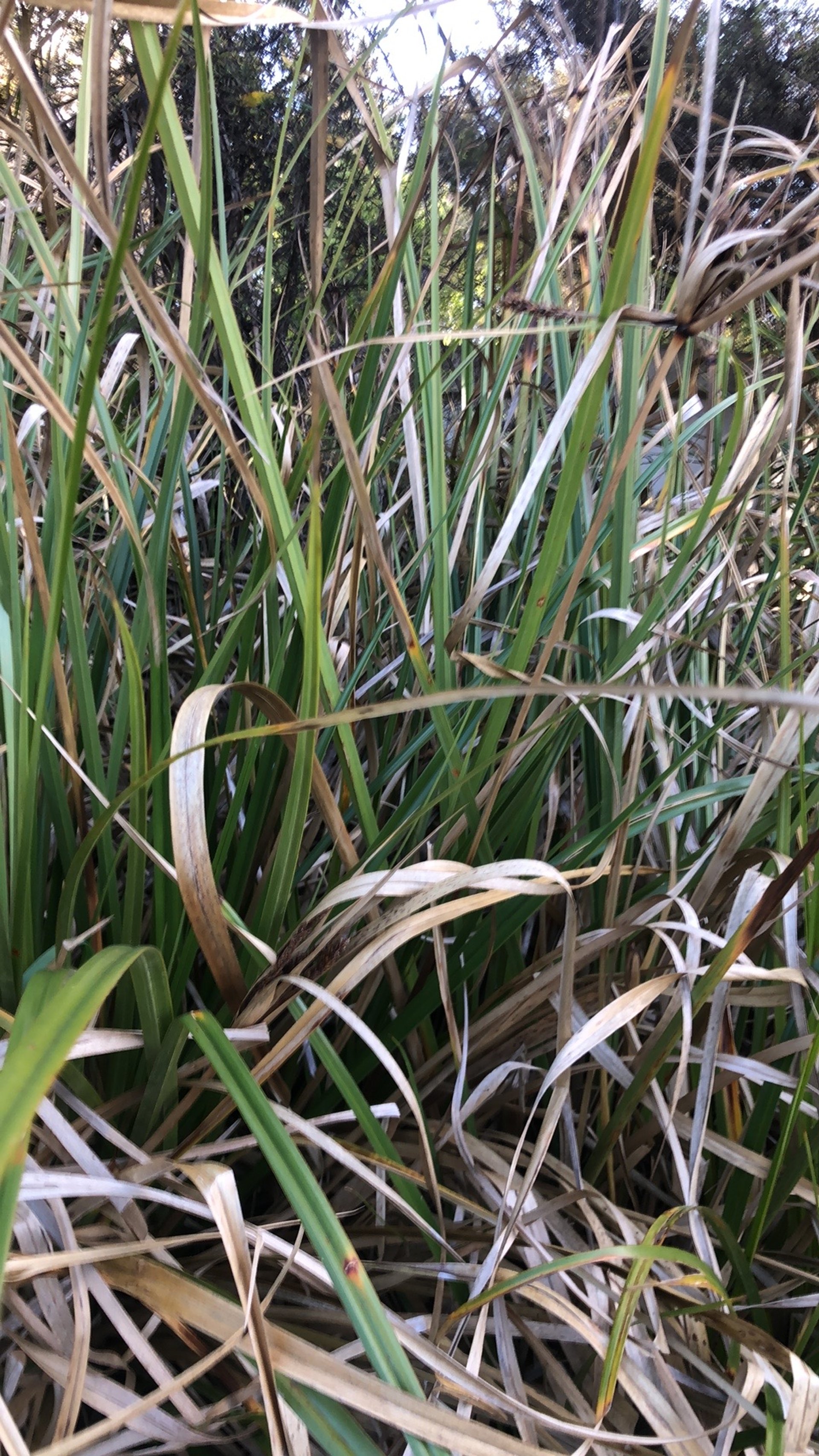
A robust, clump-forming evergreen sedge with upright triangular stems and dense basal foliage.
Leaves:
Long, leathery light green leaves up to 1.2 metres long with a pronounced keel and finely serrated edges. The brown leaf sheaths contrast with the bright green foliage.
Flowers:
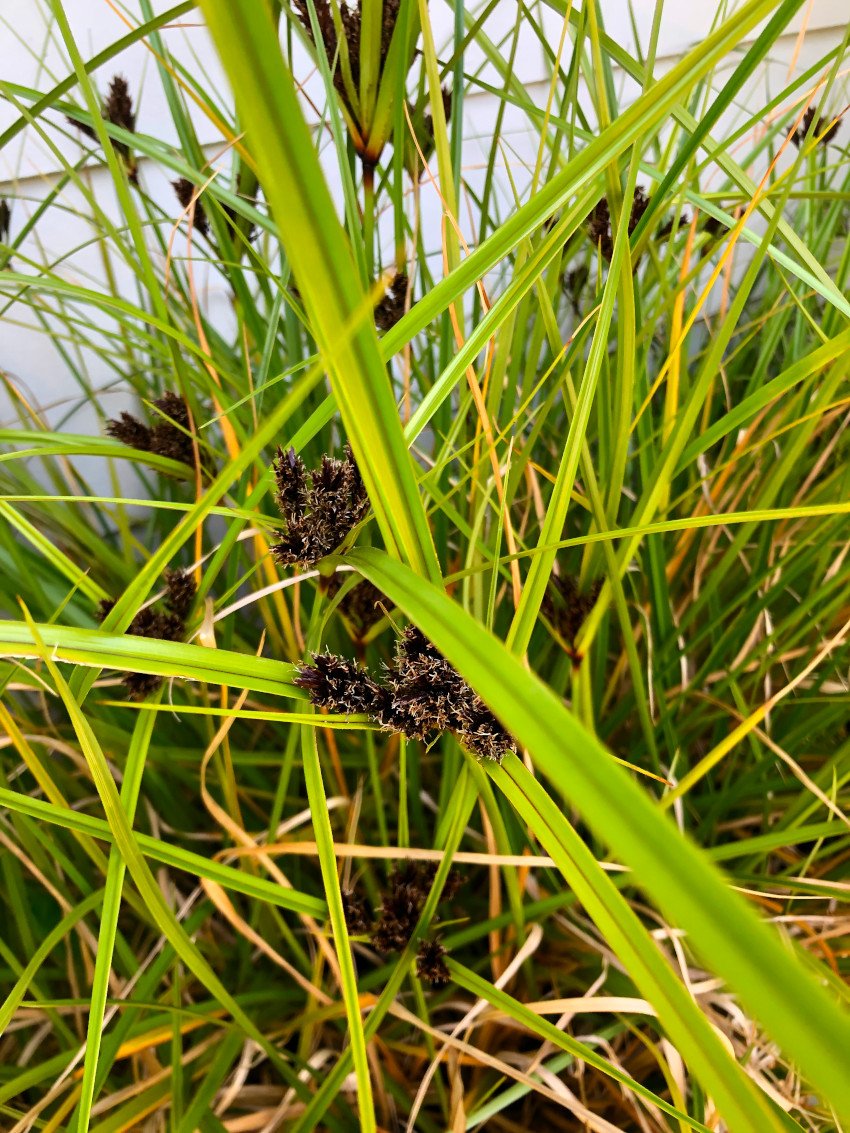
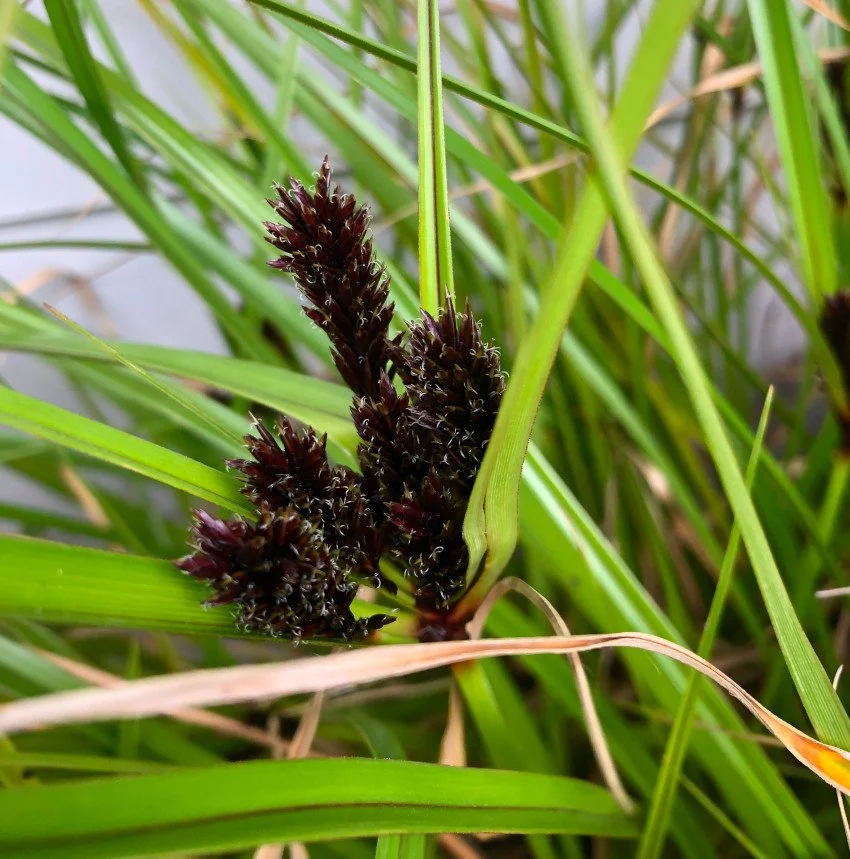
Small brown flowers are produced in dense umbrella-like clusters at the ends of tall stems, subtended by numerous long leaf-like bracts.
Fruit:
Small brown three-sided nuts develop within the dark brown seed heads and are dispersed by water, birds and attachment to animals.
Ecology:
A valuable wetland species that provides shelter for birds, insects and wetland wildlife while helping stabilise soils along waterways. Seeds are dispersed by water, animals and birds. Some populations are naturally infected by a native smut fungus that replaces the seeds with yellow powdery spores.
Associated habitats:
Raupō swamps, estuary margins, freshwater wetlands, coastal lagoons, stream edges, seepages and damp coastal grasslands.
How to grow:
Plant in full sun or light shade in permanently moist soil or shallow water. It performs best beside ponds, wetlands or rain gardens where moisture remains constant. Avoid planting beside paths or play areas because the sharp leaf margins can easily cut exposed skin.
Propagation:
Easily propagated from fresh seed or by division of mature clumps. It also readily self-seeds under suitable conditions.
Cultural use:
Known to Māori as Toetoe Upoko-Tangata, it was traditionally used alongside raupō (Typha orientalis) in the construction of Māori kites (manu tukutuku).
Garden value:
A dramatic architectural sedge that brings height, texture and movement to wetland gardens and large landscapes. Its bold umbrella-like seed heads and handsome foliage make it an excellent feature plant for ponds, swales and naturalistic native plantings, provided it is positioned safely away from areas of regular foot traffic.