


Creek Fern
Botanical name: Cranfillia fluviatilis
Synonyms: Spicanta fluviatilis, Stegania fluviatilis, Lomaria fluviatilis var. ramosa, Lomaria fluviatilis, Lomaria rotundifolia, Blechnum fluviatile
Common name(s): Creek Fern, Kiwikiwi, Kiwakiwa
About:
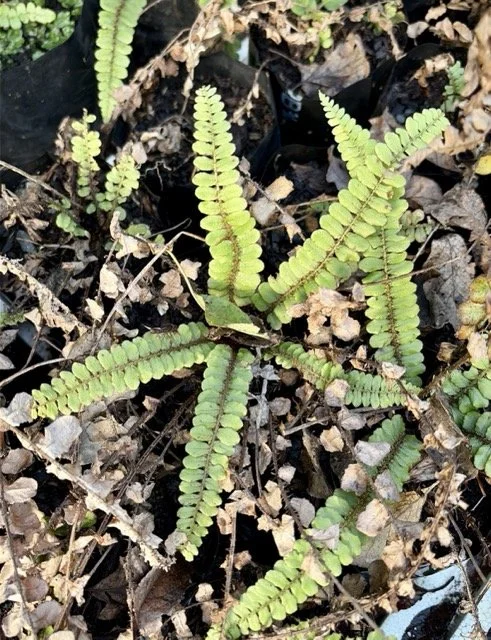
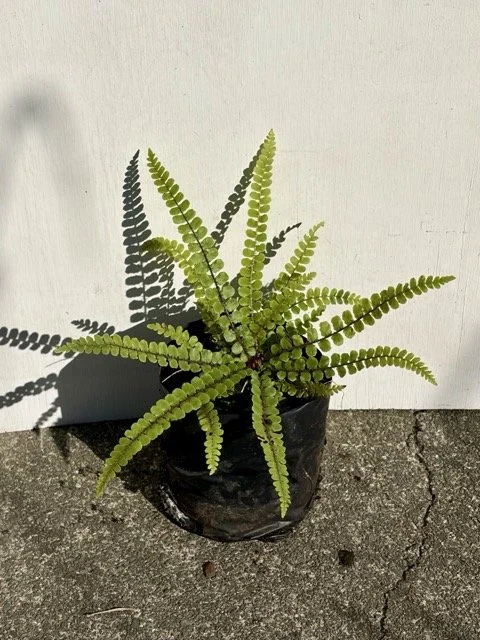
Creek fern is a small, distinctive indigenous hard fern found in New Zealand and south-eastern Australia. It forms a low rosette of spreading sterile fronds, with narrow upright fertile fronds emerging from the centre. Its preference for damp, shaded stream banks, gullies and forest floors makes it a characteristic fern of cool moist forest habitats.
Natural habitat:
Damp shaded forests, stream banks, creek margins, boggy forest floors, gullies and moist acidic soils.
Growing environment:
Prefers shade or semi-shade with consistently moist, humus-rich soil. Best suited to cool, sheltered sites with high humidity and reliable moisture.
Endemic distribution:
Indigenous to New Zealand and south-eastern Australia. In New Zealand it occurs throughout much of the North Island, South Island and Stewart Island/Rakiura.
Height:
10–50 cm
Width:
30–60 cm
Flowering:
N/A – ferns do not flower.
Fruiting:
N/A – reproduces by spores.
Uses:
• Shaded fern gardens
• Streamside planting
• Damp native garden areas
• Forest underplanting
• Fern collections
• Riparian restoration
Appearance:
Growth habit:
A compact ground fern forming a distinctive rosette. Sterile fronds spread outward close to the ground, while fertile fronds stand upright from the centre. Older plants may develop a short central trunk and form small colonies.
Leaves:
Sterile fronds are ladder-like, spreading or drooping, with rounded to nearly circular pinnae arranged along the frond. Fertile fronds are narrower, darker and more upright, with reduced pinnae bearing spores.
Flowers:
No flowers are produced. Creek fern reproduces by spores rather than flowers and seed.
Fruit:
No fruit is produced. Spores are carried on the fertile fronds, which rise above the sterile rosette.
Ecology:
Creek fern contributes to damp forest-floor communities and helps stabilise moist streamside soils. Its low rosette
provides shelter for small invertebrates and helps retain humidity close to the ground.
Associated habitats:
Podocarp-broadleaf forest, damp gullies, shaded creek banks, boggy forest margins, riparian forest and wet shaded slopes.
How to grow:
Plant in shade or semi-shade in moist, acidic, humus-rich soil. Keep consistently damp, especially during establishment and dry periods. Avoid exposed, hot or dry sites.
Propagation:
Propagated from spores or by careful division of established clumps. Young plants need constant moisture, shade and protection from drying winds.
Cultural use:
Kiwikiwi has recorded traditional Māori medicinal uses, including use of chewed fronds for soreness or ulceration of the mouth and crushed fronds during weaning.
Garden value:
An attractive small fern for damp shaded gardens, creek edges and fern collections. Its neat rosette form and contrasting upright fertile fronds make it especially useful for naturalistic forest-floor plantings.