


Korokio
Botanical name: Corokia cotoneaster
Synonyms: None
Common name(s): Korokio, Wire-netting Bush, Korokia-tarango
About:
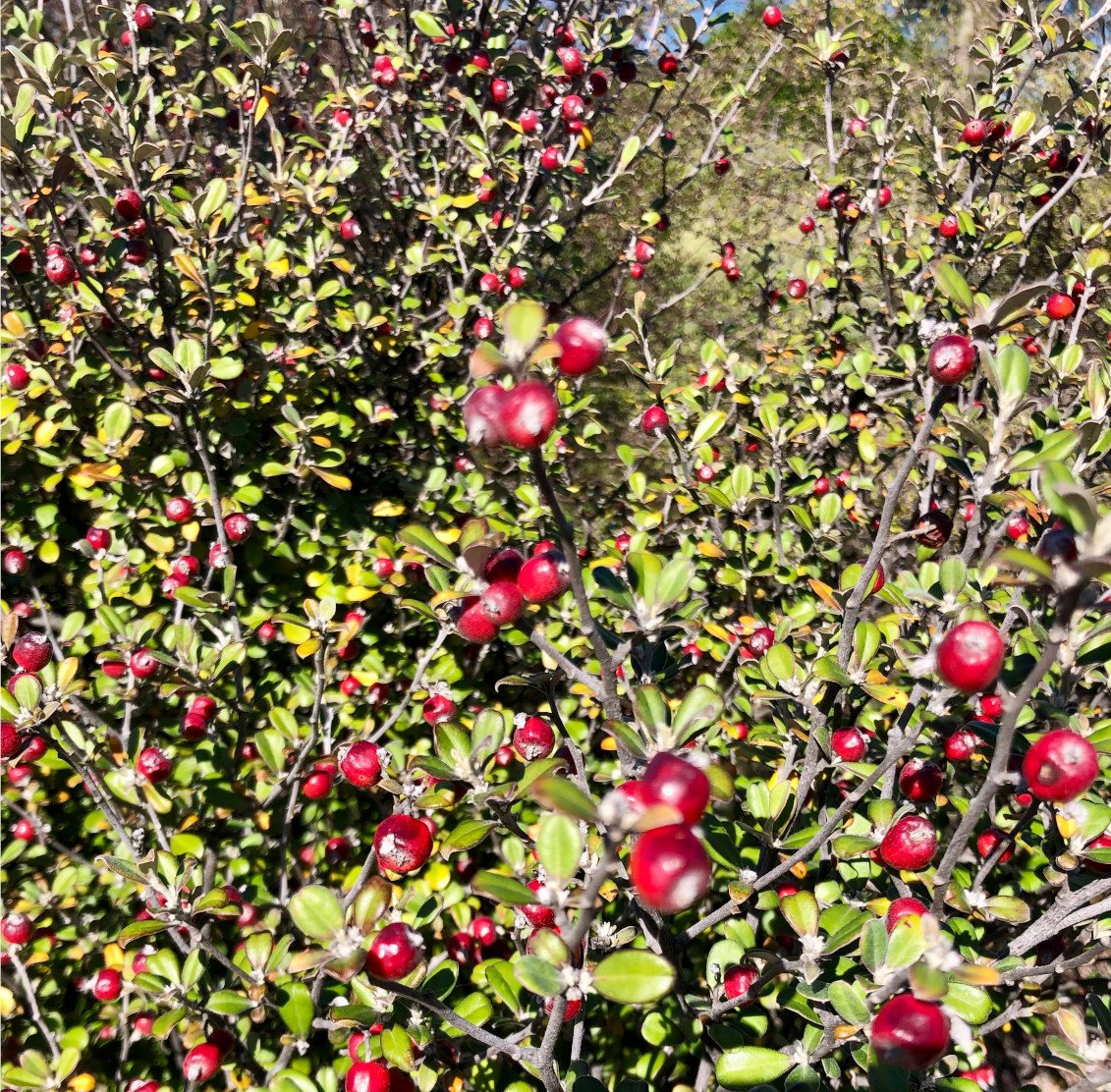
Korokio is a highly distinctive divaricating shrub endemic to New Zealand, recognised by its rigid zig-zag branching pattern, dark wiry stems and small silvery-backed leaves. It is one of New Zealand’s most characteristic dryland shrubs and occurs naturally in shrublands, river terraces and rocky habitats throughout much of the country. In spring it becomes covered in bright yellow star-shaped flowers which are followed by attractive red, orange or yellow berries.
Natural habitat:
Lowland shrublands, river flats, rocky outcrops, coastal scrub, open grasslands and dry forest margins throughout New Zealand.
Growing environment:
Thrives in full sun and free-draining soils. Tolerates drought, frost, wind and exposed conditions. Performs particularly well in dry, gravelly or rocky sites.
Endemic distribution:
Endemic to New Zealand. Found naturally throughout the North Island, South Island and the Three Kings Islands.
Height:
1–3 m
Width:
1–3 m
Flowering:
September–April, with peak flowering from October–December.
Fruiting:
February–September
Uses:
• Native hedging plant
• Shelter planting
• Coastal gardens away from direct salt spray
• Topiary and formal shaping
• Revegetation projects
• Wildlife habitat plantings
• Dry garden and rock garden specimen
Appearance:
Growth habit:
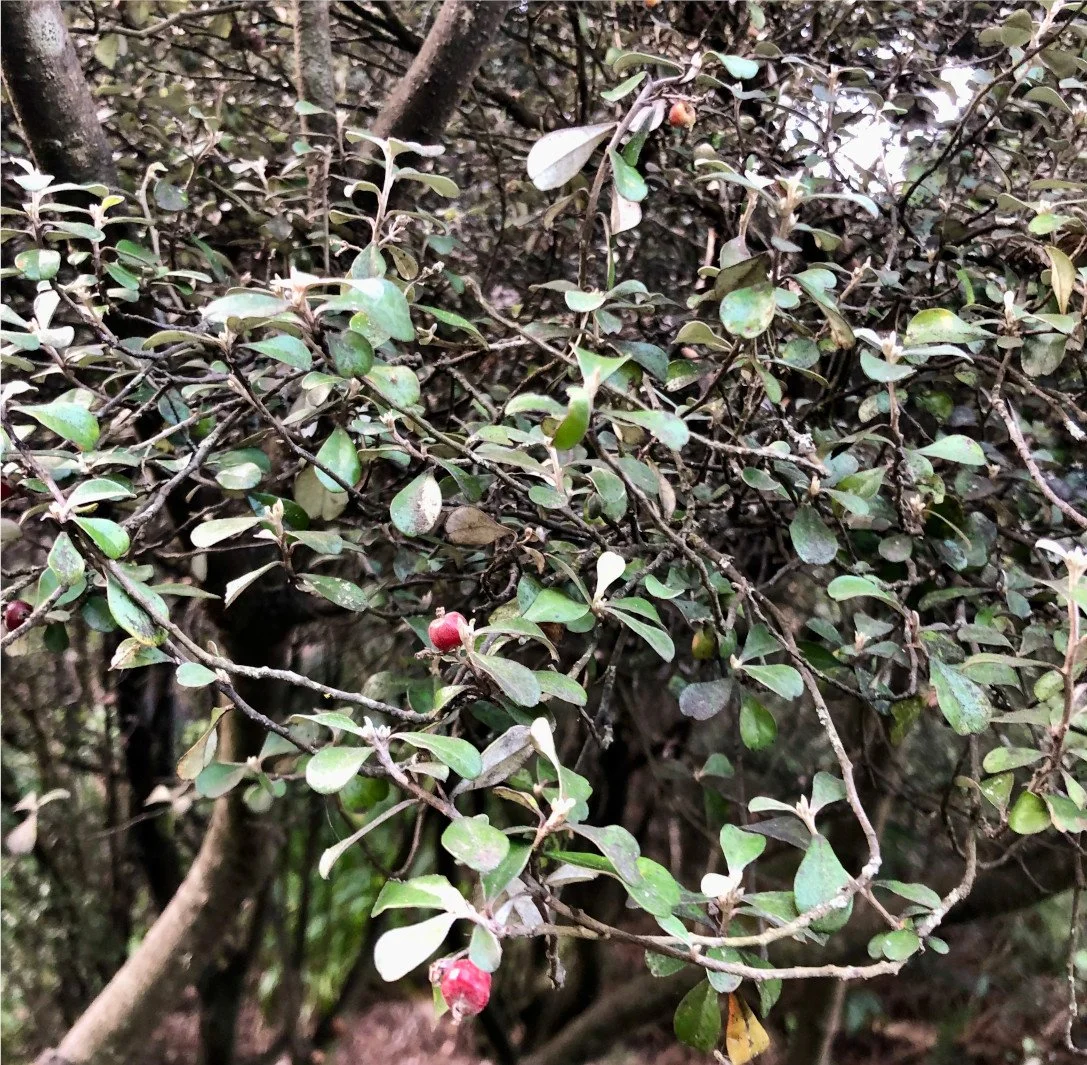
A dense, evergreen, strongly divaricating shrub with rigid grey zig-zag branchlets and rough dark bark. Mature plants develop an intricate wire-like structure that gives rise to the common name wire-netting bush.
Leaves:
Leaves are small and highly variable in size depending on exposure and growing conditions, measuring 2–15 mm long and 2–10 mm wide. They are obovate to almost circular with rounded or slightly notched tips. The upper surface is dark green to coppery-green while the underside is densely covered in silvery-white hairs. Leaves are carried on distinctive flattened dark petioles.
Flowers:
Bright yellow star-shaped flowers approximately 5–8 mm across are borne singly or in small clusters of two to four flowers along the stems and branch tips during spring and early summer.
Fruit:
The fruit is a fleshy drupe, ripening from yellow through orange to bright red. The berries measure approximately 5–8 mm long and are an important food source for native birds.
Ecology:
The flowers attract a range of insects, with native bees believed to be the primary pollinators. The fleshy fruit is dispersed by birds and other fruit-eating animals. Dense branching provides shelter and nesting habitat for small native birds and insects.
Associated habitats:
River terraces, rocky outcrops, dry shrublands, coastal scrub, grasslands, forest margins and inland valleys.
How to grow:
Plant in full sun or partial shade in free-draining soil. Korokio is extremely hardy once established and tolerates frost, drought and wind exposure. Regular pruning after flowering encourages dense growth and maintains shape if used as a hedge.
Propagation:
Easily propagated from fresh seed and semi-hardwood cuttings. Seed germinates readily after cleaning and cuttings strike well during warmer months.
Cultural use:
Korokio has long been recognised in Māori knowledge and is one of New Zealand’s most familiar native shrubs of dry open habitats.
Garden value:
An exceptionally versatile native shrub valued for its architectural branching, silvery foliage, bright yellow flowers and colourful berries. Suitable for hedging, screening, topiary and wildlife gardens and one of the best native shrubs for difficult dry sites.