


Tutu
Botanical name: Coriaria arborea var. arborea
Synonyms: None
Common name(s): Tutu, Tree Tutu, Tūpākihi, Tāweku, Tāwehu, Pūhou, Pukou, Puho, Tuturākau
About:
Tutu is a fast-growing, much-branched shrub or small tree endemic to New Zealand and one of the country’s most distinctive pioneer species. It commonly colonises slips, river terraces, stream margins and disturbed ground where it quickly forms dense stands. Despite its attractive foliage and berries, tutu is also one of New Zealand’s most poisonous native plants, containing the potent neurotoxin tutin in almost all parts of the plant.
Natural habitat:
Stream margins, river terraces, slips, alluvial fans, forest margins, cliffs, regenerating scrub and disturbed ground from coastal to montane environments.
Growing environment:
Prefers full sun to partial shade and moist, fertile, well-drained soils. Tolerates frost, periodic flooding and exposed conditions and thrives in recently disturbed habitats.
Endemic distribution:
Endemic to New Zealand and widespread throughout the North, South, Stewart and Chatham Islands. A separate variety occurs naturally on the Kermadec Islands.
Height:
3–7 m
Width:
2–5 m
Flowering:
October–March
Fruiting:
November–April
Uses:
• Ecological restoration plantings
• Erosion control and soil stabilisation
• Nitrogen fixation and soil improvement
• Traditional Māori medicine
• Traditional beverages prepared from the carefully filtered fruit juice
• Habitat and food source for native wildlife
Appearance:
Growth habit:
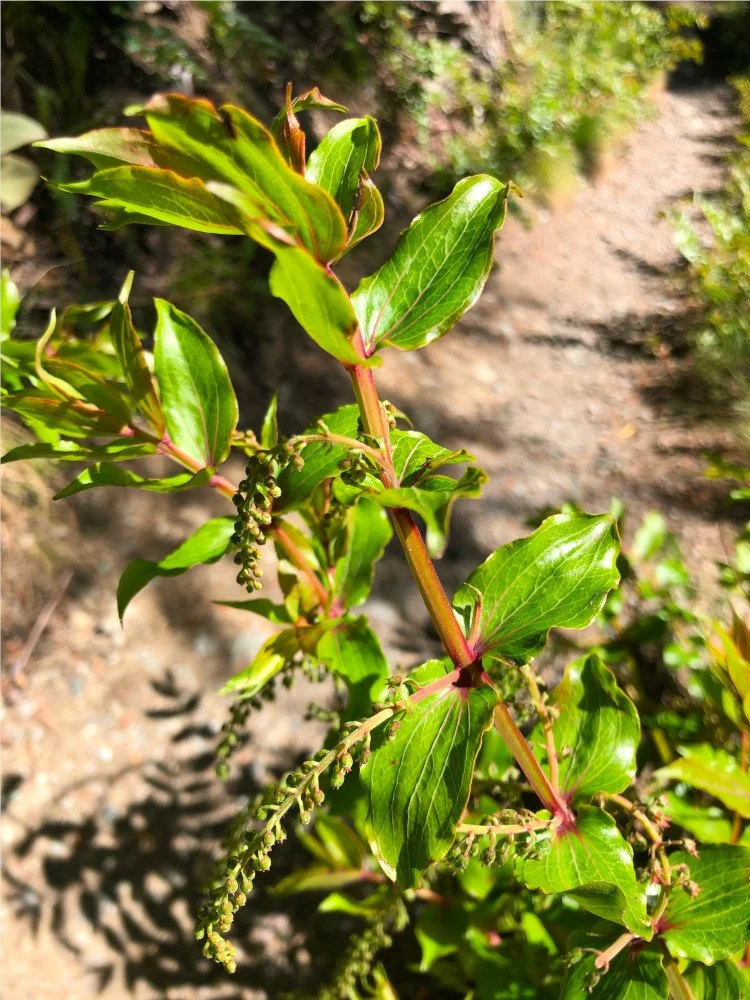
A robust, spreading shrub or small tree with numerous erect to arching branches forming dense thickets. Young stems are distinctly square in cross-section and bright green, becoming woody and grey-brown with age.
Leaves:
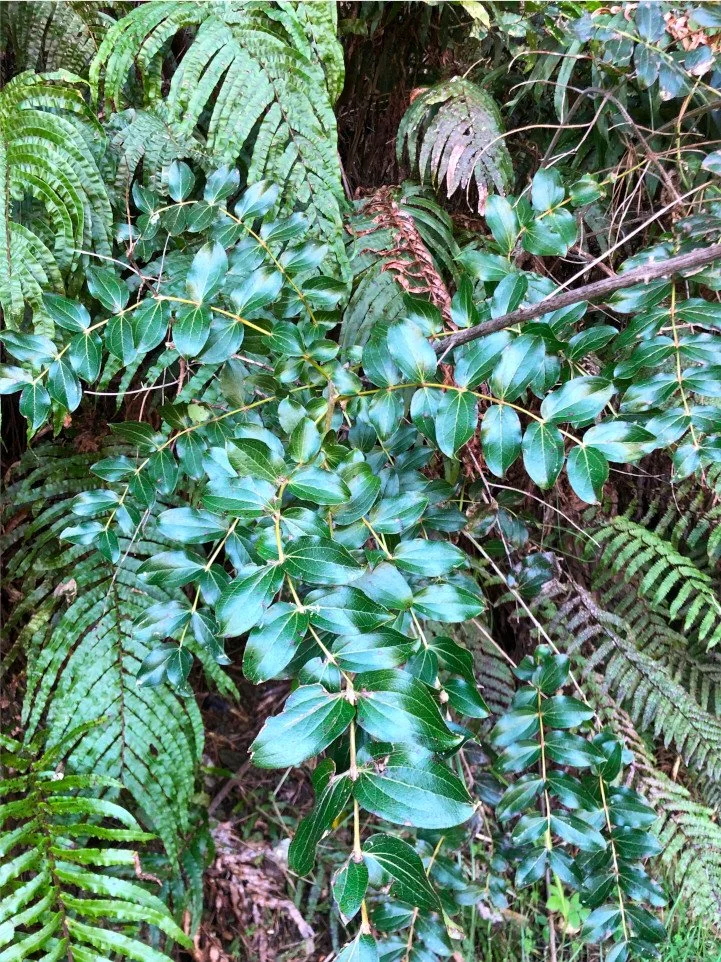
Leaves occur in opposite pairs arranged in two rows along the stems. They are glossy dark green above and paler beneath, elliptic to ovate in shape and measure approximately 50–80 mm long. Leaves lack a distinct stalk and attach directly to the stem.
Flowers:
Small greenish-yellow flowers are produced in long, drooping spikes up to 30 cm long during spring and summer. Individual flowers are tiny but collectively form conspicuous hanging clusters.
Fruit:
The fruit consists of glossy black to deep purple fleshy structures surrounding the true fruit and seeds. While the fleshy outer portions can be eaten once separated from the seeds, the seeds themselves are highly poisonous.
Ecology:
Tutu is an important pioneer species and one of New Zealand’s few native nitrogen-fixing shrubs, enriching soils through a symbiotic relationship with Frankia bacteria in root nodules. The fruits are dispersed by birds such as kererū, tūī, silvereyes and blackbirds while the dense growth provides shelter for native wildlife.
Associated habitats:
Riparian shrublands, regenerating forest margins, slips, river terraces, gullies, cliff faces and disturbed lowland and montane habitats.
How to grow:
Plant in full sun or light shade in moist, fertile, well-drained soil. Tutu establishes rapidly and is highly suitable for restoration projects and erosion-prone sites. Care should be taken when planting near children, pets or livestock because of its toxicity.
Propagation:
Readily propagated from fresh seed or semi-hardwood cuttings. Seed germinates freely in disturbed soils and young plants establish rapidly in open conditions.
Cultural use:
Māori carefully extracted the sweet juice from ripe fruits by filtering out the poisonous seeds through toetoe flower heads. This beverage, known as waitutu, was consumed fresh or fermented into a traditional wine. Leaves and shoots were also used medicinally for wounds, sprains and broken bones.
Garden value:
An excellent native restoration shrub valued for its rapid growth, soil stabilisation properties and importance for native wildlife. Due to its extreme toxicity it is generally unsuitable for family gardens but is highly valuable in ecological restoration projects.