

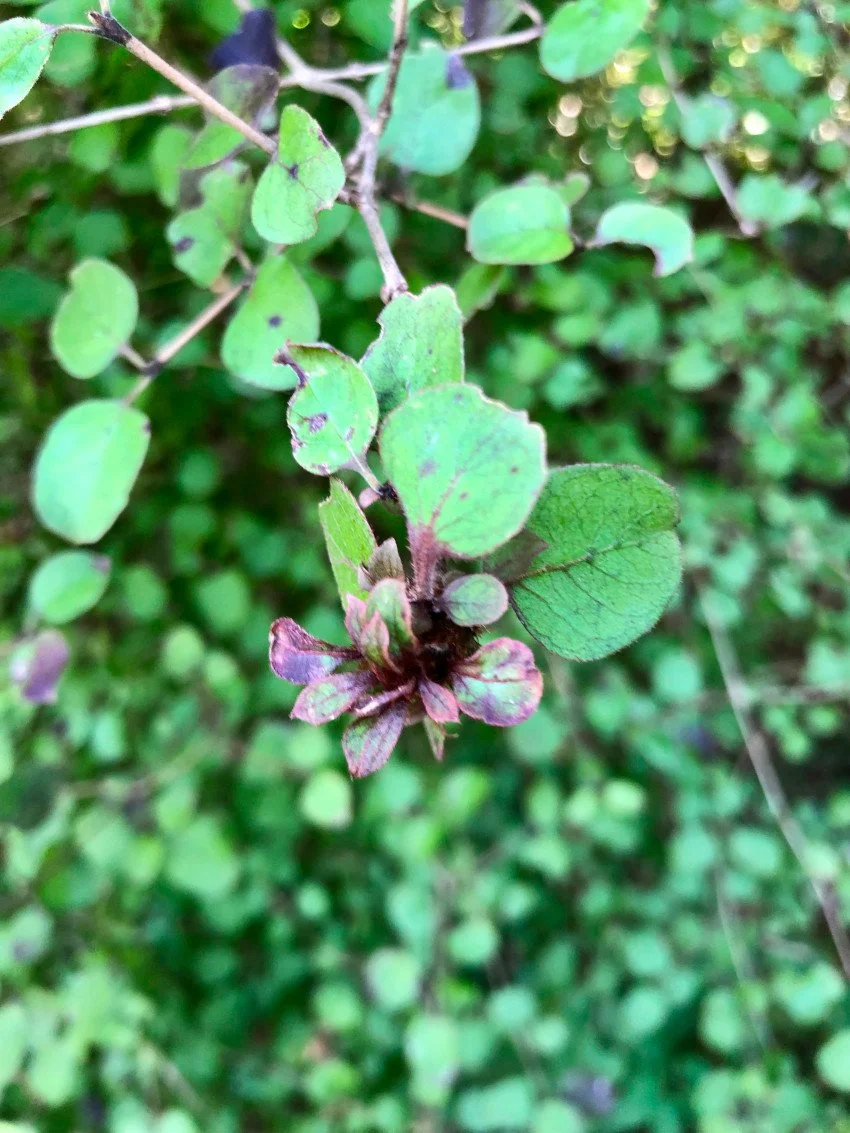

Round-leaved Coprosma
Botanical name: Coprosma rotundifolia
Synonyms: Coprosma rufescens
Common name(s): Round-leaved Coprosma, Mikimiki
About:
Coprosma rotundifolia is an attractive native shrub or small tree recognised by its rounded, softly hairy leaves, wide-angled branching habit and colourful orange to red fruit. The foliage is often marked with purple or brown blotches, giving the plant additional visual interest. It is one of New Zealand’s most distinctive small-leaved coprosmas and is commonly found in moist forest and riparian habitats.
Natural habitat:
Occurs naturally in lowland to montane forests, riparian margins, shrublands and damp alluvial habitats, particularly on fertile soils derived from limestone or other calcareous parent materials.
Growing environment:
Prefers moist, fertile, free-draining soils in sheltered locations. Grows well in dappled shade or partial sun and tolerates cool conditions and seasonal moisture.
Endemic distribution:
Endemic to New Zealand. Found from Kaitaia south throughout the North, South and Stewart Islands.
Height:
2–6 m
Width:
1.5–4 m
Flowering:
September–November
Fruiting:
September–August
Uses:
• Revegetation and restoration planting
• Riparian and streamside planting
• Native wildlife gardens
• Understorey forest planting
• Ornamental shrub for foliage and fruit interest
Appearance:
Growth habit:
A bushy evergreen shrub or small tree with spreading to divaricating branches. Plants may form dense thickets or develop into small trees in favourable conditions.
Trunk and branches:
Branches are slender, spreading and often widely angled. Young branchlets are covered with fine hairs, becoming less hairy with age.
Leaves:
Leaves are borne in opposite pairs and are broadly rounded to ovate, 15–25 mm long and 10–20 mm wide. They are thin-textured, dull green to reddish-green and frequently marked with purple or brown blotches. The leaf margins and surfaces are covered in soft hairs, while the veins are clearly visible on both surfaces. The leaf tip narrows abruptly into a short sharp point.
Flowers:
Flowers are small and inconspicuous, occurring in clusters of two to four in the leaf axils. Male and female flowers are borne on separate plants.
Fruit:
The fruit is a small fleshy drupe, orange-red, red or occasionally white when ripe. Fruits are approximately 4–5 mm in diameter and are borne on very short stalks.
Ecology:
The fleshy fruit is dispersed by birds (frugivory), which play an important role in spreading the seed. The dense branching structure provides shelter for small birds and invertebrates, while the fruit provides a seasonal food source for native wildlife.
Associated habitats:
Riparian forest, lowland forest, montane forest, shrubland, stream margins, alluvial terraces, limestone forest and damp woodland.
How to grow:
Plant in moist, fertile, free-draining soil in partial shade or dappled light. It performs best in sheltered situations with
reliable moisture but adapts well to a range of garden conditions once established.
Propagation:
Easy from fresh seed and semi-hardwood cuttings. Seed germinates readily when fresh, while cuttings root successfully under suitable conditions.
Cultural use:
As a widespread native forest species, round-leaved coprosma contributes to the ecological diversity and resilience of New Zealand forests and forms part of traditional Māori knowledge of native plants and forest ecosystems.
Garden value:
Round-leaved coprosma is valued for its attractive foliage, colourful fruit and graceful branching habit. The combination of softly hairy, often purple-blotched leaves and bright berries makes it an excellent choice for native gardens, woodland plantings and ecological restoration projects.