

Mingimingi
Botanical name: Coprosma rhamnoides
Synonyms: None
Common name(s): Mingimingi, Twiggy Coprosma, Red-currant Coprosma
About:
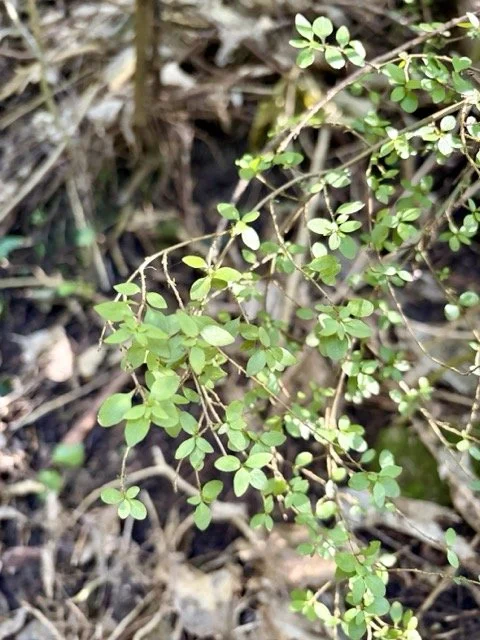
Coprosma rhamnoides is a densely branched evergreen shrub with a distinctive divaricating growth habit, giving it a twiggy and intricate appearance. It is one of New Zealand’s most common small-leaved coprosmas and is characterised by its rigid reddish-brown branches and tiny, highly variable leaves. The species is extremely hardy and often dominates the understorey of shrublands and regenerating forests.
Natural habitat:
Occurs naturally in lowland and lower montane forests, shrublands, forest margins and open scrub. It is commonly found beneath mānuka and kānuka canopies and may also grow amongst rocks and on exposed sites.
Growing environment:
Prefers well-drained soils in full sun to partial shade. Tolerates drought, wind, frost and poor soils, making it suitable for a wide range of garden situations.
Endemic distribution:
Endemic to New Zealand. Widespread throughout the North Island and much of the South Island, though less common or absent from parts of Otago, Southland and Fiordland.
Height:
0.5–2 m
Width:
0.5–2 m
Flowering:
Spring (September–October).
Fruiting:
Summer to winter, with fruit ripening from March to June.
Uses:
• Revegetation and restoration planting
• Shelter and low hedging
• Habitat planting for birds and insects
• Native shrubland and woodland gardens
• Erosion control on difficult sites
Appearance:
Growth habit:
A densely branched evergreen shrub with a strongly divaricating form. Branches spread at wide angles and interlace to create a fine, twiggy appearance. Plants may occasionally sprawl over rocks or form loose mounds.
Trunk and branches:
Branches are slender, rigid and numerous, with reddish-brown bark and yellow-green underbark exposed when scratched. Young twigs are covered with fine hairs and remain noticeably fuzzy near the growing tips.
Leaves:
Leaves are borne in opposite pairs, often clustered on short branchlets. They are leathery and variable in shape, ranging from narrow elliptic to almost circular. Typically 7–12 mm long, one pair is often noticeably smaller and narrower than the other. The upper surface is dark green and dull, while the underside is paler and may be slightly hairy with visible reticulation. Tiny stipules with a sharp denticle are present between leaf bases.
Flowers:
Flowers are very small, greenish to cream and borne singly or in small clusters in the leaf axils. Plants are dioecious, with male and female flowers produced on separate plants. The flowers are believed to be wind pollinated.
Fruit:
The fruit is a small fleshy drupe borne singly along the branchlets. It ripens from green to bright crimson or ruby red and may darken to deep red or black as it ages.
Ecology:
The fleshy fruit is dispersed by birds and likely also by native lizards. The dense divaricating branches provide shelter for small birds and insects while protecting the foliage from browsing animals. Numerous native insects, including leaf beetles, moth caterpillars, scale insects, gall mites and gall midges, are associated with this species.
Associated habitats:
Lowland forest, regenerating forest, shrubland, mānuka scrub, kānuka forest, rocky slopes, forest margins and open scrub.
How to grow:
Grow in full sun or partial shade in well-drained soil. Extremely hardy and tolerant of exposed conditions, frost and drought once established. Minimal maintenance is required.
Propagation:
Propagated easily from fresh seed or semi-hardwood cuttings. Seed germinates readily when sown fresh.
Cultural use:
Mingimingi is a widespread and familiar component of New Zealand shrublands and forests. Its dense growth habit contributes to the structure and biodiversity of native ecosystems.
Garden value:
Although less showy than larger-leaved coprosmas, mingimingi is valued for its intricate branching pattern, hardiness and ecological benefits. It is an excellent choice for restoration projects, naturalistic plantings and gardens where a fine-textured native shrub is desired.