
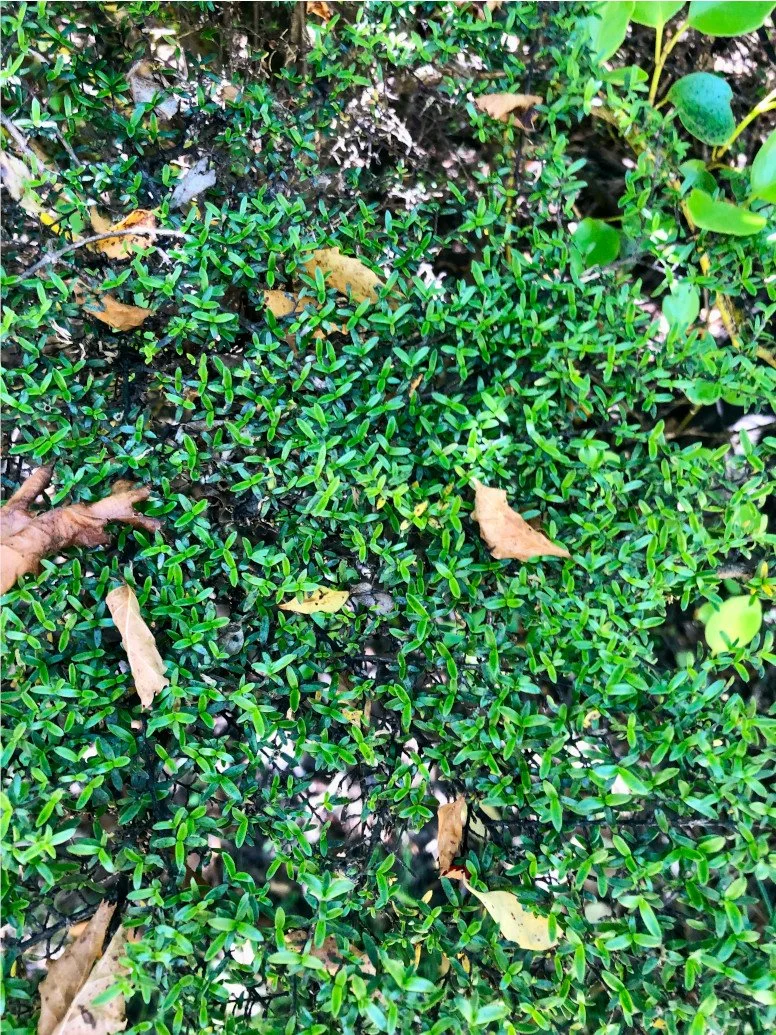
Variable coprosma
Botanical name: Coprosma pseudocuneata
Synonyms:
Common name(s): Variable coprosma
About:
A small to medium-sized endemic shrub of upland and alpine habitats, notable for its dense branching, narrow dark green leaves and variable growth form. The species was formally described in 1996 and is considered closely related to Coprosma cuneata and possibly Coprosma solandri. Its appearance varies considerably depending on altitude and habitat.
Natural habitat:
Subalpine shrubland, alpine herbfields, bog margins, montane scrub and open forest. Occasionally found in lowland bogs.
Growing environment:
Prefers cool climates and well-drained soils in full sun to partial shade. Thrives in montane and alpine conditions and tolerates frost, wind and occasional snow.
Endemic distribution:
Endemic to New Zealand. Found on both the North and South Islands from Mount Hikurangi and Maungapōhatu southwards. Common in montane to alpine regions, including Mount Taranaki and the Southern Alps.
Height:
0.5–2 m
Width:
0.5–1.5 m
Flowering:
Spring to early summer
Fruiting:
Summer to autumn
Uses:
• Alpine and rock gardens
• Revegetation of montane and subalpine habitats
• Native shrub plantings
• Habitat restoration
Appearance:
An erect, scrambling or suberect shrub with slender, often divaricating branches and dark brown bark. Young branchlets are very fine and covered in short hairs. Leaves are crowded on short branchlets and arranged in opposite pairs. They are rigid and leathery, dark green above and paler beneath, usually narrow-cuneate to narrowly elliptic, 5–20 mm long and 1–3.5 mm wide. The leaves are often curved, with thickened recurved margins and pointed or occasionally rounded tips. Stipules form a small hair-fringed sheath at the base of each leaf pair, ending in a conspicuous tuft of hairs. Flowers are solitary and yellow-green. Fruits are globose drupes, 3–6 mm in diameter, varying from bright red and orange-red to bluish or yellowish.
Ecology:
The fleshy fruits are dispersed by birds (frugivory). In the South Island it is commonly associated with mountain beech (Nothofagus solandri) in species-poor subalpine forests. Its dense branching provides shelter for alpine insects and small birds.
Associated habitats:
Subalpine shrubland, mountain beech forest margins, alpine herbfields, bog margins, rocky slopes and montane scrub.
How to grow:
Best grown in full sun or light shade in a cool climate with free-draining soil. Suitable for rock gardens and alpine plantings. Avoid prolonged heat and humidity. Once established it is very hardy and tolerates frost, wind and exposed conditions.
Propagation:
Can be grown from fresh seed or semi-hardwood cuttings. Seed germination is generally reliable but may be slow in cool conditions.
Cultural use:
Although not known to have widespread traditional uses, it is an important component of New Zealand’s upland shrub communities and contributes to the diversity of alpine ecosystems.
Garden value:
A tough and attractive small shrub valued for its neat habit, dark foliage and colourful fruits. Particularly suited to alpine gardens, native rockeries and cool-climate landscapes where its intricate branching and compact form can be appreciated