


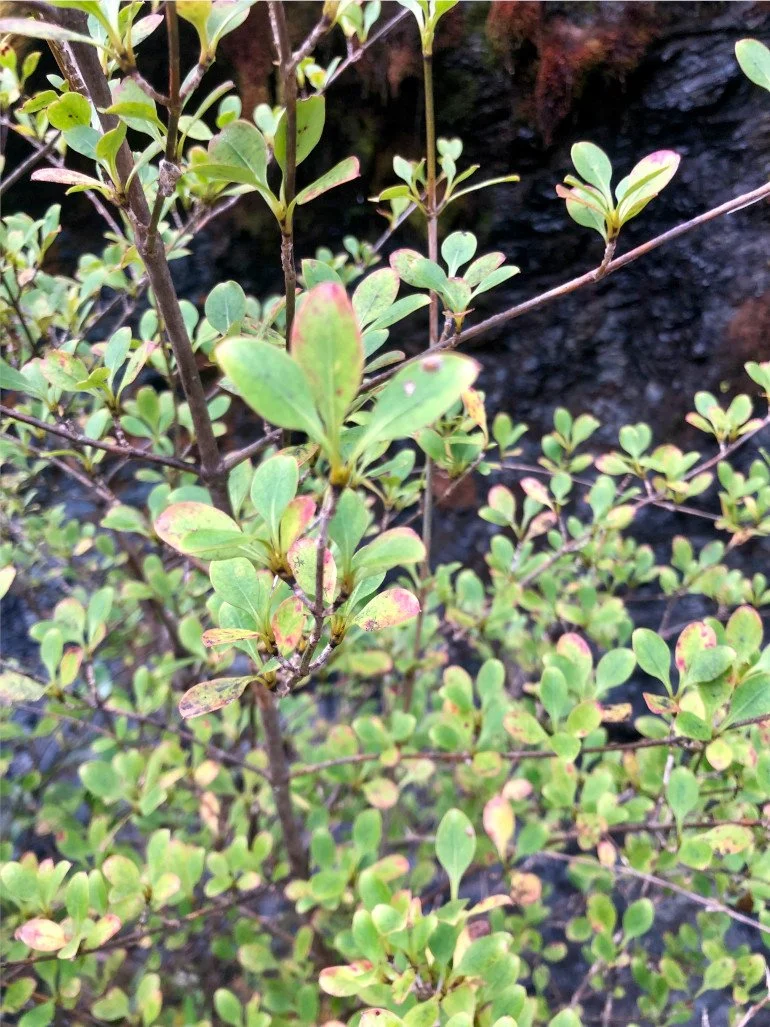
Stinkwood
Botanical name: Coprosma foetidissima
Synonyms: None
Common name(s): Stinkwood, Shitshrub, Hūpiro
About:
Coprosma foetidissima is a distinctive shrub or small tree endemic to New Zealand, best known for the strong unpleasant smell released when its leaves are crushed. The odour, often compared to rotten cabbage, is caused by the sulphur compound methanethiol and inspired both the species name foetidissima (“most foul-smelling”) and the name of the genus Coprosma, derived from the Greek words for “dung” and “smell”. Despite its reputation, hūpiro is an attractive native species with elegant foliage, colourful fruit and an important ecological role in forest ecosystems.
Natural habitat:
Coastal to subalpine forest and shrubland, often occurring along forest margins, stream edges and open scrub communities.
Growing environment:
Prefers moist, fertile, free-draining soils in full sun to partial shade. Tolerates frost, cool climates and exposed sites, making it well suited to montane gardens and restoration plantings.
Endemic distribution:
Endemic to New Zealand. Found from the Coromandel Peninsula southwards throughout the North and South Islands to Stewart Island/Rakiura, and also on the Auckland Islands.
Height:
3–6 m
Width:
2–4 m
Flowering:
October–November
Fruiting:
March–July
Uses:
• Native revegetation and ecological restoration
• Shelter and understorey planting
• Food source for native birds
• Suitable for cool-climate and montane gardens
• Educational and botanical collections due to its unusual scent
Appearance:
Growth habit:
An open-branched evergreen shrub or small tree, typically reaching 3 m tall but occasionally growing to 6 m or more in favourable conditions. Plants have an airy, spreading form.
Trunk and bark:
The trunk may reach up to 45 cm in diameter. Bark is dark brown and relatively smooth, while young branchlets are hairless.
Leaves:
Leaves are thin yet somewhat leathery, arranged in opposite pairs and lying in a single plane along the branchlets. They are broadly ovate to oblong or obovate, 30–50 mm long and 14–20 mm wide, with rounded or slightly pointed tips. The underside bears small pits called domatia at the junctions of veins. When crushed, the foliage emits a powerful odour resembling rotten cabbage.
Flowers:
Plants are dioecious, with male and female flowers borne on separate plants. The small greenish flowers are solitary and appear at the ends of branchlets. Male flowers possess large protruding anthers, while female flowers have long, prominent styles.
Fruit:
The fruit is an oblong drupe, 7–10 mm long, ripening from yellow to orange-red. The fleshy fruit is attractive to birds, which disperse the seeds.
Ecology:
The fruit is dispersed primarily by birds. Coprosma foetidissima supports a wide variety of native invertebrates including gall mites, scale insects, caterpillars, gall flies and weevils. The leaves are also eaten by the Wellington tree wētā (Hemideina crassidens). It is an important component of many native forest and shrubland communities.
Associated habitats:
Coastal forest, montane forest, subalpine scrub, forest margins, stream edges and regenerating shrublands.
How to grow:
Grow in full sun or partial shade in fertile, well-drained soil that retains some moisture. Plants are hardy, frost tolerant and relatively easy to establish. They are suitable for cooler climates and exposed sites.
Propagation:
Propagates readily from fresh seed and semi-hardwood cuttings. Seed germinates best when cleaned and sown fresh. Cuttings taken from firm new growth root reliably under humid conditions.
Cultural use:
Known to Māori as hūpiro, meaning “bad smell” or “stinking”, this species has long been recognised for its distinctive scent. Its unusual odour and wide distribution have made it one of the most well-known members of the genus.
Garden value:
Although its crushed leaves are famously foul-smelling, hūpiro is an attractive and hardy native shrub or small tree with graceful foliage, colourful fruit and excellent wildlife value. It is particularly useful in ecological restoration, cool-climate gardens and naturalistic native plantings.