
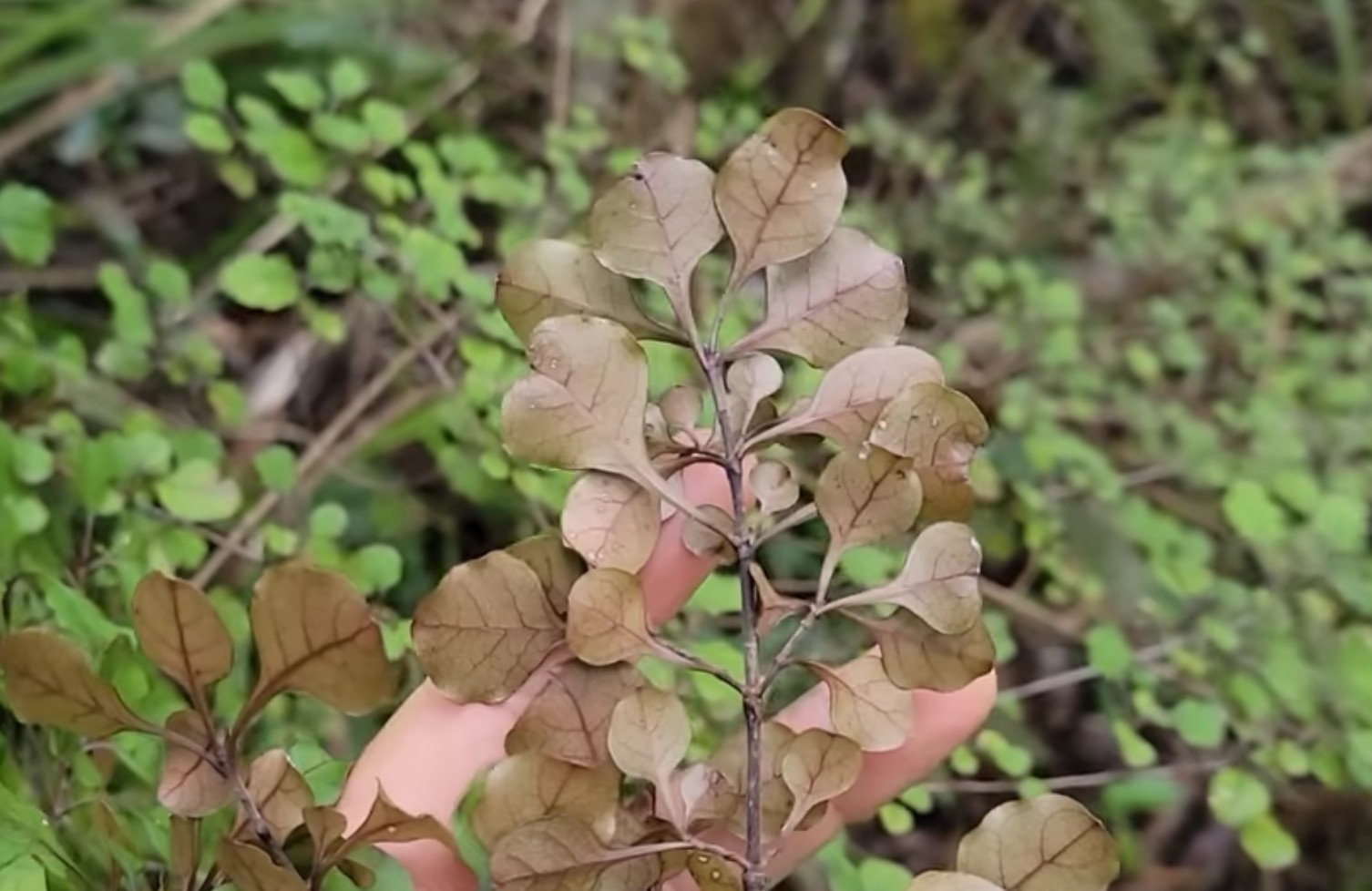


Māmāngi
Botanical name: Coprosma arborea
Synonyms: None known
Common name(s): Māmāngi, Tree Coprosma
About:
A handsome small tree endemic to northern New Zealand, recognised by its rounded crown, glossy mottled leaves and white berries. Māmāngi is one of the largest members of the coprosma genus and commonly forms part of the subcanopy in coastal and lowland forests. Its colourful foliage, often flushed maroon or purple, and attractive fruit make it an excellent ornamental native tree.
Natural habitat:
Coastal to lower montane forests, especially coastal kauri forest and mixed pōhutukawa-hardwood forest. Occasionally forms almost pure stands, particularly on offshore islands.
Growing environment:
Prefers semi-shade to full sun in fertile, free-draining soils. Young plants appreciate shelter and moisture, while established trees tolerate dry conditions and exposed sites.
Endemic distribution:
Endemic to New Zealand. Found naturally on the Three Kings Islands and throughout the upper North Island from Te Paki south to Waitomo in the west and Gisborne in the east.
Height:
8–12 m
Width:
4–8 m
Flowering:
September–December
Fruiting:
January–December
Uses:
• Specimen tree
• Coastal and lowland forest restoration
• Shelter and screening
• Native bird habitat
• Urban and park plantings
• Ornamental foliage tree
Appearance:
Growth habit:
A bushy evergreen tree with a noticeable trunk and a dense rounded crown. Branches are closely spaced, spreading to sub-erect, with slender young branchlets covered in fine hairs.
Leaves:
Leaves occur in opposite pairs and are thin to leathery, broadly oval to almost circular, measuring 5–8 cm long. The upper surface is glossy dark green or yellow-green and often beautifully mottled with maroon or purple, while the undersides are pale wine-red. Small pits called domatia occur where the veins meet on the underside of the leaf.
Flowers:
Tiny greenish-yellow flowers are produced in spring. Male flowers are borne in dense clusters while female flowers occur in smaller groups of two to four. The flowers are wind pollinated and inconspicuous.
Fruit:
The fruit is a fleshy white drupe, broadly oblong and 6–8 mm long. The berries are produced over an extended period and provide food for native birds.
Ecology:
Māmāngi is an important component of northern New Zealand forests, particularly coastal ecosystems. Its fruits are eaten and dispersed by birds, while the dense canopy provides shelter for insects and small forest animals. The species is dioecious, with male and female flowers produced on separate trees.
Associated habitats:
Coastal kauri forest, pōhutukawa forest, mixed hardwood forest, lowland forest, island forests and forest margins.
How to grow:
Plant in a free-draining soil enriched with organic matter. Young plants prefer some shelter and regular watering while establishing. Once mature, māmāngi is reasonably drought tolerant and copes well with coastal exposure.
Propagation:
Easily grown from fresh seed and semi-hardwood cuttings. Growth is often slow at first but accelerates as plants mature.
Cultural use:
Known traditionally as māmāngi, this species is a familiar component of northern New Zealand forests and coastal landscapes. Its berries are an important food source for native birds and it contributes significantly to forest diversity.
Garden value:
A beautiful native small tree prized for its glossy, maroon-mottled foliage, white berries and elegant form. Ideal as a specimen tree or for creating structure and shelter in native gardens and coastal landscapes.