

Sand Coprosma
Botanical name: Coprosma acerosa
Synonyms: None known
Common name(s): Sand Coprosma, Tātaraheke
About:
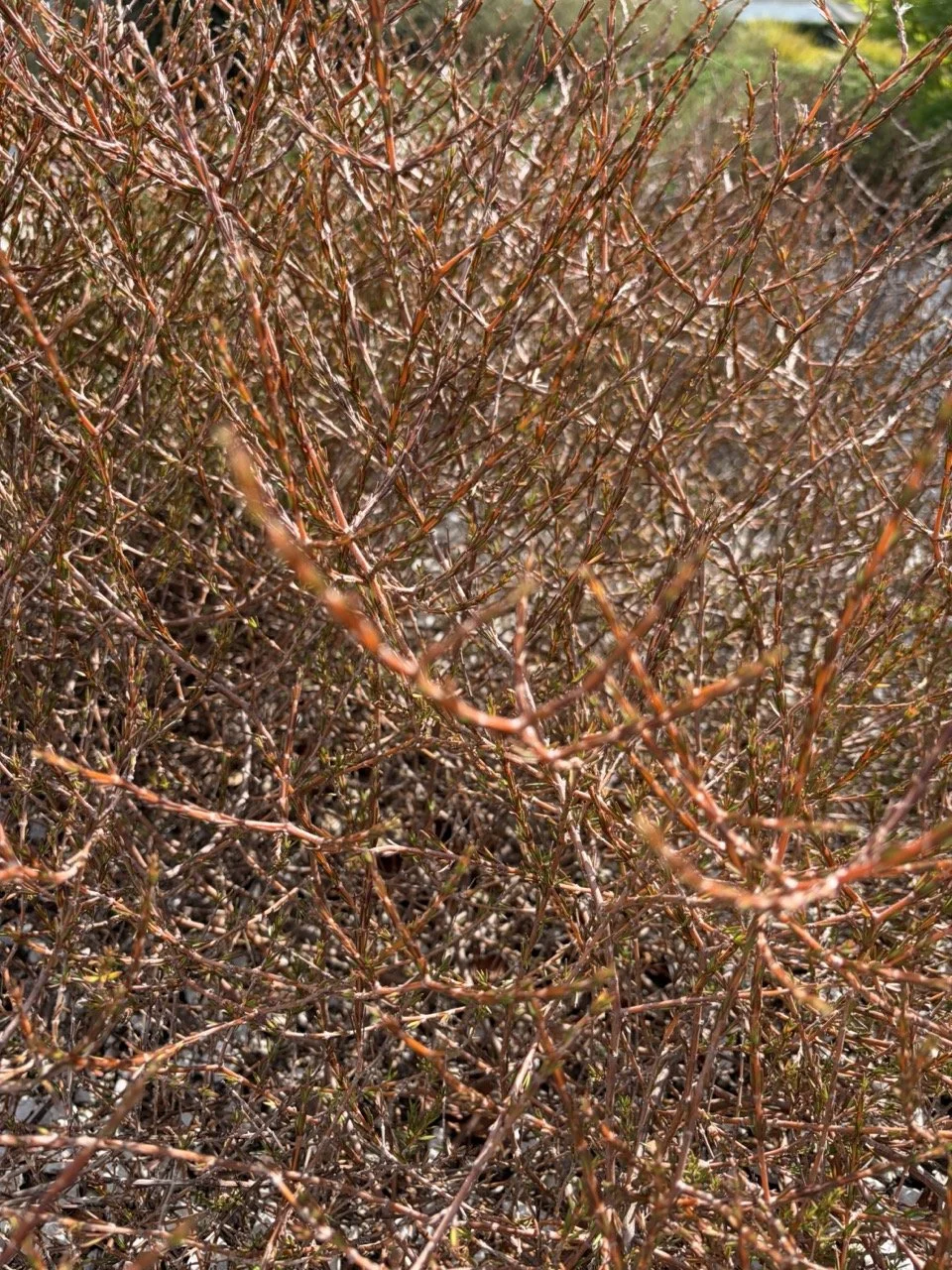
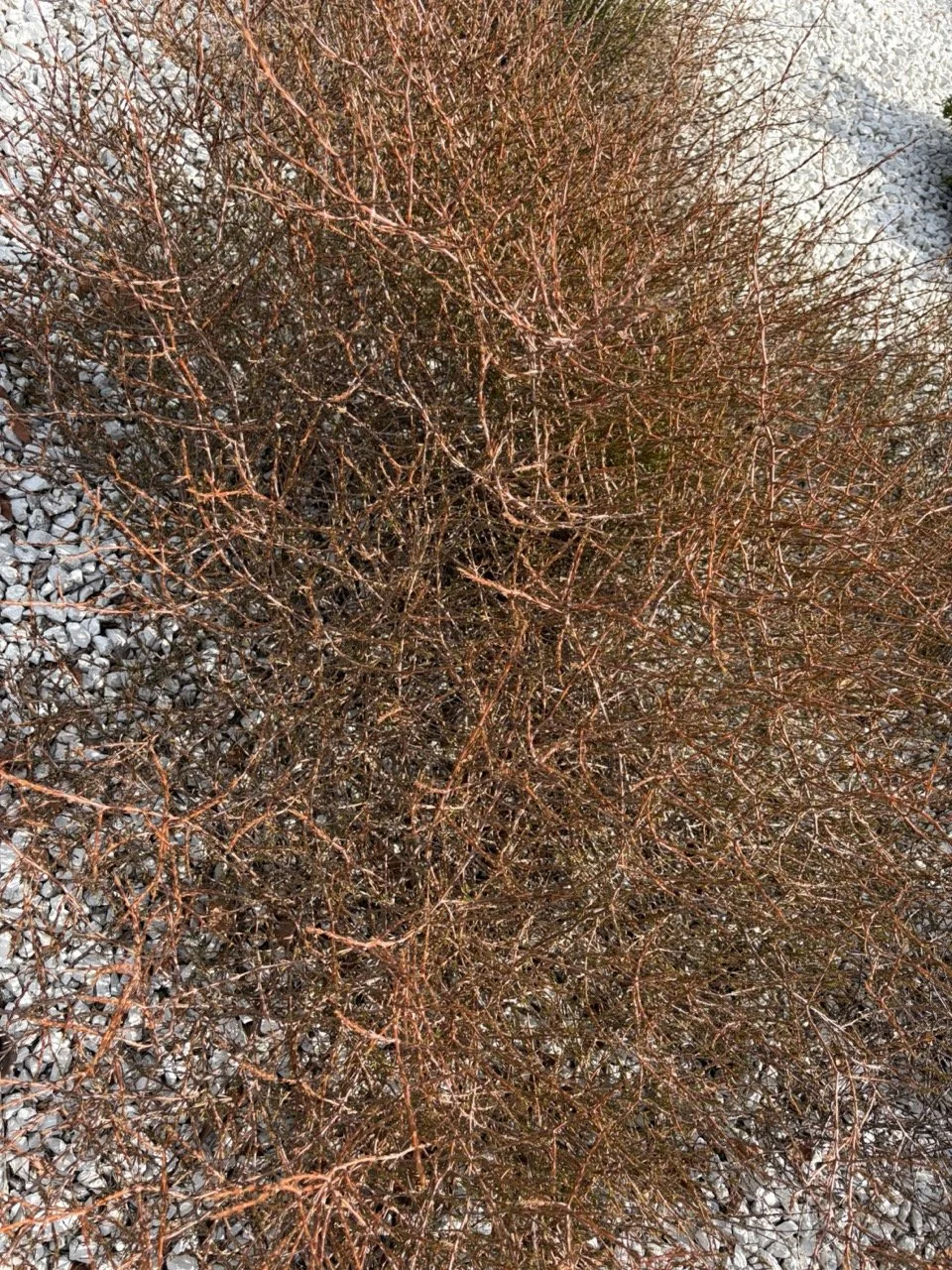
A distinctive low-growing coastal shrub endemic to New Zealand, valued for its tangled orange-brown branches, narrow yellow-green leaves and pale blue berries. Sand coprosma forms sprawling cushions or mounds that stabilise dunes and provide shelter for coastal wildlife. Once widespread around New Zealand’s coastlines, it has declined in many areas due to habitat loss and the spread of invasive marram grass.
Natural habitat:
Coastal sand dunes and sandy flats, particularly on the landward side of foredunes and within stable dune systems.
Growing environment:
Thrives in full sun and free-draining sandy soils. Extremely tolerant of salt spray, drought and strong coastal winds. Best suited to open coastal gardens and exposed sites.
Endemic distribution:
Endemic to New Zealand. Found naturally throughout the North Island, South Island, Stewart Island/Rakiura and the Chatham Islands.
Height:
0.2–1 m, occasionally to 2 m when supported
Width:
1–2 m
Flowering:
September–November
Fruiting:
February–July
Uses:
• Coastal restoration plantings
• Dune stabilisation
• Ground cover for dry sites
• Coastal gardens
• Habitat and food source for native birds
• Erosion control
Appearance:
Growth habit:
A low, sprawling shrub with numerous slender, flexible branches that interlace to form dense cushion-like mats or mounds. Branches are orange-brown to reddish-brown and slightly hairy when young.
Leaves:
Leaves are small, narrow and leathery, measuring 7–12 mm long and 1–2 mm wide. They occur in opposite pairs or clusters along the stems and are yellow-green with a single prominent midrib. Small stipules at the leaf bases are broad, hairy and often bear tiny dark glands.
Flowers:
Tiny greenish flowers are borne singly at the tips of short branchlets. Male and female flowers occur on separate plants. The flowers are inconspicuous but are followed by attractive fruits.
Fruit:
The fruits are fleshy drupes, translucent white to pale blue, often marked with darker flecks. They are typically globose or broadly oval and measure around 5–7 mm across.
Ecology:
The fleshy fruits are dispersed by birds, which consume and spread the seeds. Sand coprosma is an important stabiliser of coastal dune systems and provides shelter for insects, lizards and nesting birds. The species is declining in parts of its range due to dune modification, competition from introduced marram grass and browsing by rabbits and hares.
Associated habitats:
Coastal dune systems, sand plains, foredunes, stable back dunes and coastal shrublands.
How to grow:
Plant in full sun in well-drained sandy or gravelly soil. Once established it requires very little care and tolerates drought, salt spray and strong winds. Avoid poorly drained or shaded sites.
Propagation:
Usually propagated from fresh seed or semi-hardwood cuttings. Seed is best cleaned from the fruit before sowing. Cuttings strike readily under warm conditions.
Cultural use:
Tātaraheke is an important component of traditional coastal ecosystems and is valued in restoration projects aimed at recreating indigenous dune landscapes throughout New Zealand.
Garden value:
An excellent low-maintenance shrub for coastal gardens, prized for its intricate orange branching, soft yellow-green foliage and pale blue berries. Its sprawling habit and exceptional tolerance of harsh conditions make it one of New Zealand’s finest native ground covers for sandy and exposed sites.