
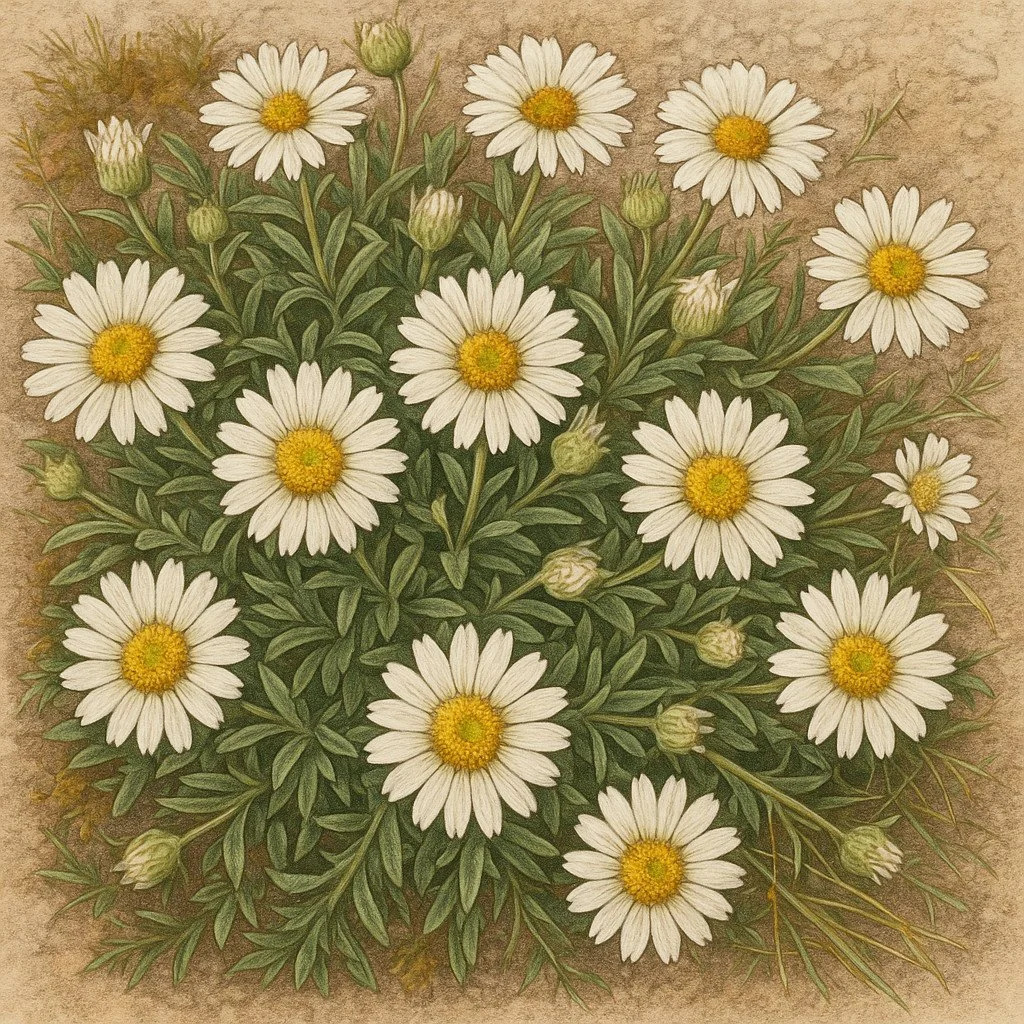
Sticky Mountain Daisy
Botanical name: Celmisia viscosa
Synonyms: None known
Common name(s): Sticky Mountain Daisy
About:
A robust alpine subshrub forming low spreading patches of rigid, sticky leaves and white daisy flowers. Its thick, viscid foliage, bright green upper leaf surface and white felted underside make it a distinctive South Island mountain daisy. It is closely related to Celmisia angustifolia but has longer, more strongly ribbed and much stickier leaves.
Natural habitat:
Upper montane to alpine grasslands, herbfields, fellfields, rock outcrops, stable talus, boulderfields and occasional scree slopes.
Growing environment:
Prefers cool, open conditions with full sun to light shade, steady moisture and very free-draining soil. Dislikes high humidity, waterlogging and prolonged drying out.
Endemic distribution:
Endemic to New Zealand. Found in the South Island from Marlborough southwards, mostly east of the Main Divide.
Height:
150–300 mm in flower
Width:
Forms spreading patches up to 2 m across.
Flowering:
November–March
Fruiting:
December–May
Uses:
• Alpine gardens
• Rock gardens
• Scree and gravel gardens
• Native plant collections
• High-country restoration planting
• Specialist container growing
Appearance:
Growth habit:
Stout low-growing subshrub with numerous woody branches, forming broad patches. Branchlets are erect to ascending and carry subrosettes of rigid leaves.
Leaves:
Rigid, thick, leathery leaves 60–150 mm long and 6–9 mm wide. Upper surfaces are bright green, coarsely grooved and very sticky, while undersides are densely covered in soft white felted tomentum. Leaves taper gradually to a subacute tip.
Flowers:
White daisy flowers 30–40 mm across with yellow centres. Flower stems are stout, sticky and densely glandular-hairy, rising above the foliage.
Fruit:
Produces narrow wind-dispersed achenes with fine white pappus hairs.
Ecology:
A high-country species adapted to exposed rocky habitats, wind, frost and strong sunlight. Its sticky leaves and tough foliage help protect it from harsh alpine conditions, while flowers provide nectar and pollen for native insects.
Associated habitats:
Alpine grassland, herbfield, fellfield, stable talus, boulderfields, rock outcrops, scree margins and dry mountain slopes.
How to grow:
Plant in a cool, sunny or lightly shaded position with gritty, moist but sharply draining soil. Best suited to alpine gardens, troughs, raised beds or south-facing rockeries. Avoid humid sites and never allow the soil to become stagnant or waterlogged.
Propagation:
Best grown from fresh seed. Germination may be slow and is likely to benefit from cool conditions. Cuttings may be possible but are not well documented.
Cultural use:
A distinctive member of New Zealand’s alpine daisy flora, valued for its unusual sticky foliage and adaptation to harsh high-country environments.
Garden value:
An attractive specialist alpine plant with bold sticky foliage and bright white flowers. Best suited to rock gardens, alpine troughs and native plant collections where its unusual texture and compact spreading habit can be appreciated.