
Scented Broom
Botanical name: Carmichaelia odorata
Synonyms: Carmichaelia pilosa, Carmichaelia glabrata, Carmichaelia angustata, Carmichaelia angustata var. pubescens
Common name(s): Scented broom, Leafy broom
About:
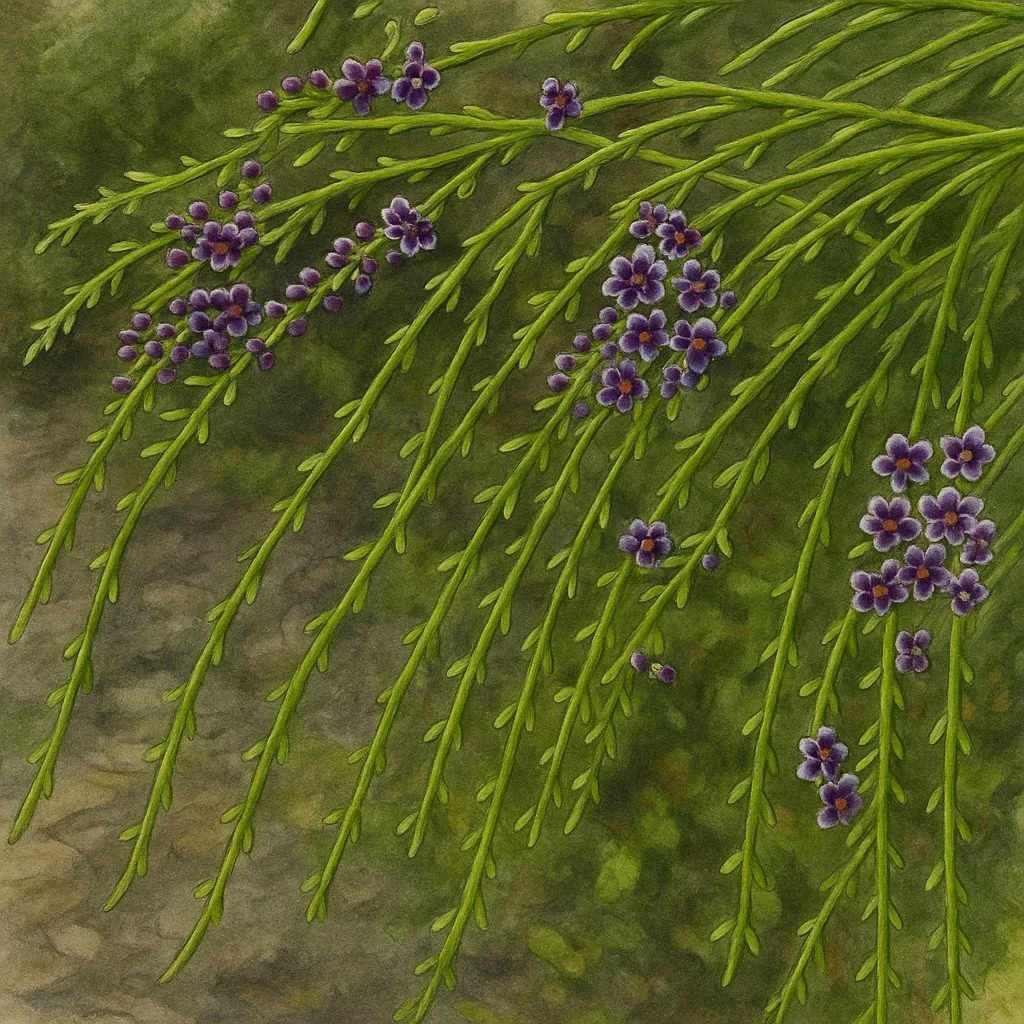
A graceful native broom distinguished by its fragrant flowers, flattened green stems and small compound leaves. Unlike many native brooms, it often retains foliage on younger growth and shaded plants. During spring and summer it produces masses of sweetly scented white and purple pea flowers that attract pollinating insects.
Natural habitat:
River terraces, stream margins, river flats, forest margins and open shrubland.
Growing environment:
Prefers full sun to partial shade in free-draining soil. Tolerates frost, drought and exposed conditions once established and grows well in a range of soil types.
Endemic distribution:
Endemic to New Zealand. Found in the southern North Island and throughout northern and western parts of the South Island.
Height:
3–8 m
Width:
2–3 m
Flowering:
September – February
Fruiting:
January – September
Uses:
• Feature shrub or small tree
• Native shelter planting
• River and stream restoration
• Forest margin planting
• Pollinator gardens
• Native revegetation
• Dryland landscaping
Appearance:
Growth habit:
Erect to spreading shrub or small tree with many slender, slightly drooping branchlets forming an airy canopy.
Leaves:
Small compound leaves with 1–7 fleshy leaflets. Leaves are more common on young plants and shaded growth, becoming reduced on mature stems.
Stems:
Flattened green branchlets with slightly wavy edges, often interlacing and forming fan-like sprays.
Flowers:
Small, fragrant pea flowers arranged in dense upright racemes. Flowers are white with purple or red-purple markings and veins.
Fruit:
Small pointed pods that split near the tip when mature, containing one to three hard pale brown seeds.
Ecology:
As a member of the pea family, it contributes nitrogen to the soil through symbiotic root bacteria. The scented flowers provide an important nectar source for native insects and pollinators.
Associated habitats:
River terraces, stream banks, alluvial flats, forest margins, shrublands and open woodland.
How to grow:
Plant in full sun or light shade in well-drained soil. It responds well to open conditions and benefits from good airflow. Once established it is relatively hardy and drought tolerant.
Propagation:
Easily propagated from fresh seed and hardwood cuttings.
Cultural use:
Part of New Zealand’s diverse native broom flora and valued for its fragrant flowers and ecological contribution as a nitrogen-fixing species.
Garden value:
A highly attractive native shrub or small tree valued for its sweetly scented flowers, elegant green stems and long flowering season. Excellent for native gardens, shelter plantings and restoration projects where fragrance and wildlife value are desired.