
Pukio
Botanical name: Carex secta
Synonyms: Carex virgata var. secta, Carex paniculata var. secta, Carex appressa var. secta
Common name(s): Pukio, Pūrei
About:
One of New Zealand’s largest and most distinctive wetland sedges. Pukio forms impressive elevated tussocks with trunk-like bases created from layers of old leaves, roots and rhizomes. These raised platforms provide valuable habitat for native wildlife and are a defining feature of many wetlands throughout New Zealand.
Natural habitat:
Freshwater wetlands, swamps, lake margins, pond edges, stream banks and wet seepages from coastal to montane environments.
Growing environment:
Thrives in moist to permanently wet soils and tolerates prolonged inundation. Performs best in full sun but adapts to a range of moisture conditions once established.
Endemic distribution:
Endemic to New Zealand. Found throughout the North, South and Stewart Islands, and locally on the Chatham Islands.
Height:
1–1.5 m tall, occasionally reaching 3 m including mature flowering stems.
Width:
Up to 800 mm wide, with mature trunk-like bases reaching 1 m tall and 500 mm in diameter.
Flowering:
September – December
Fruiting:
October – March
Uses:
• Wetland restoration
• Riparian planting
• Stream bank stabilisation
• Erosion control
• Wildlife habitat creation
• Waterway enhancement
• Native landscaping
• Pond and lake margins
Appearance:
Growth habit:
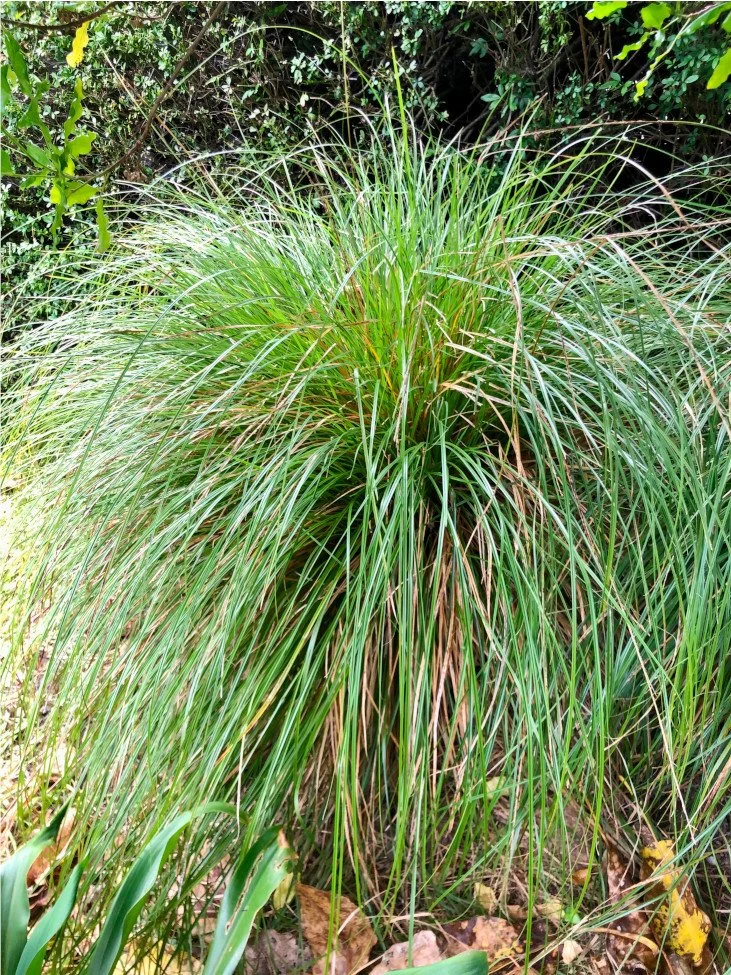
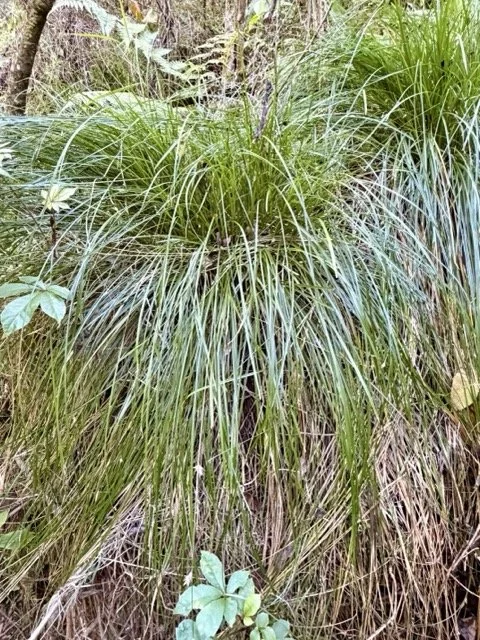
Large tussock-forming sedge with elevated trunk-like bases formed from matted roots, rhizomes and old leaf bases.
Leaves:
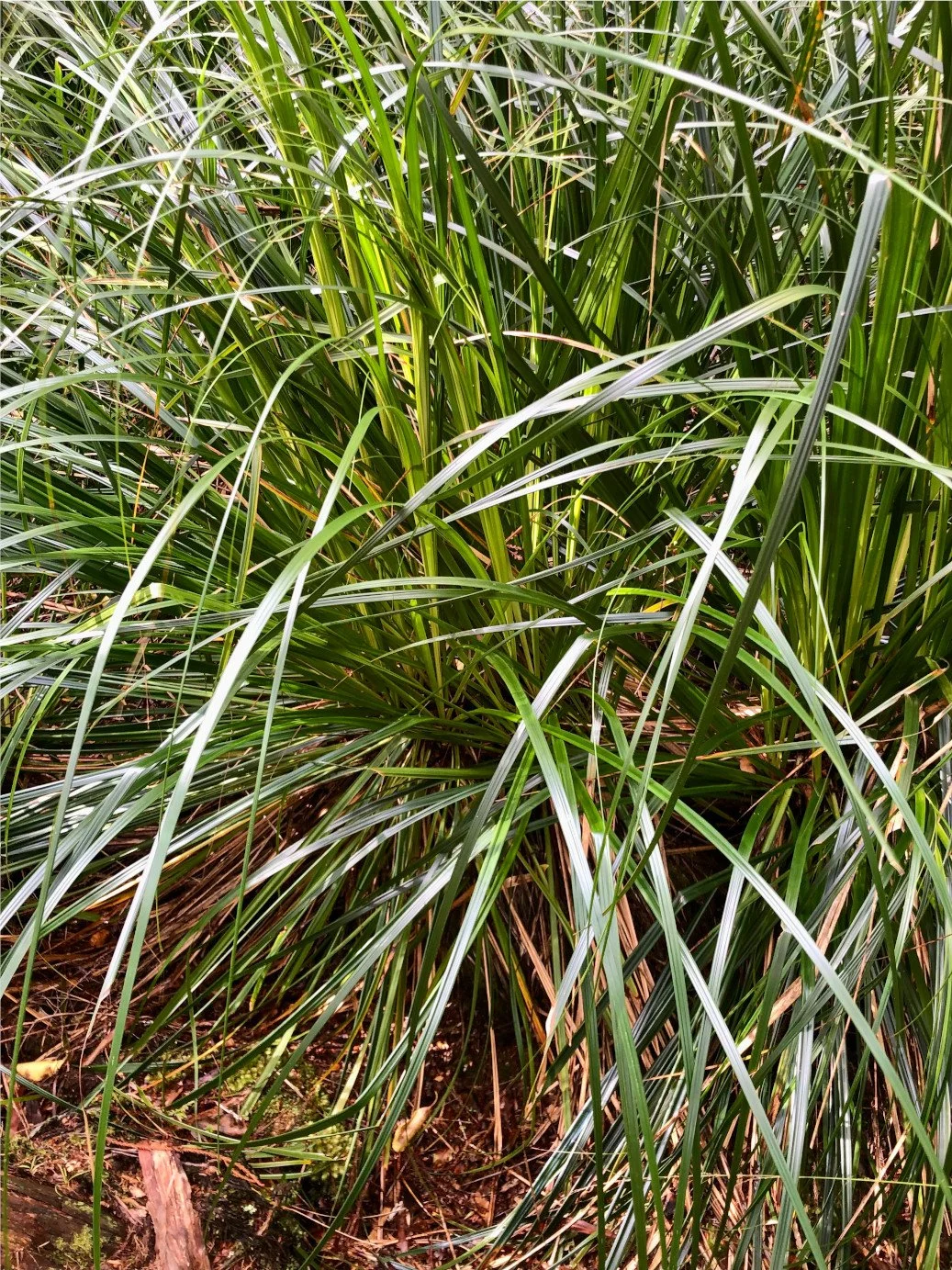
Light green to yellow-green, long, arching and drooping, with rough margins and a channelled form.
Flowers:
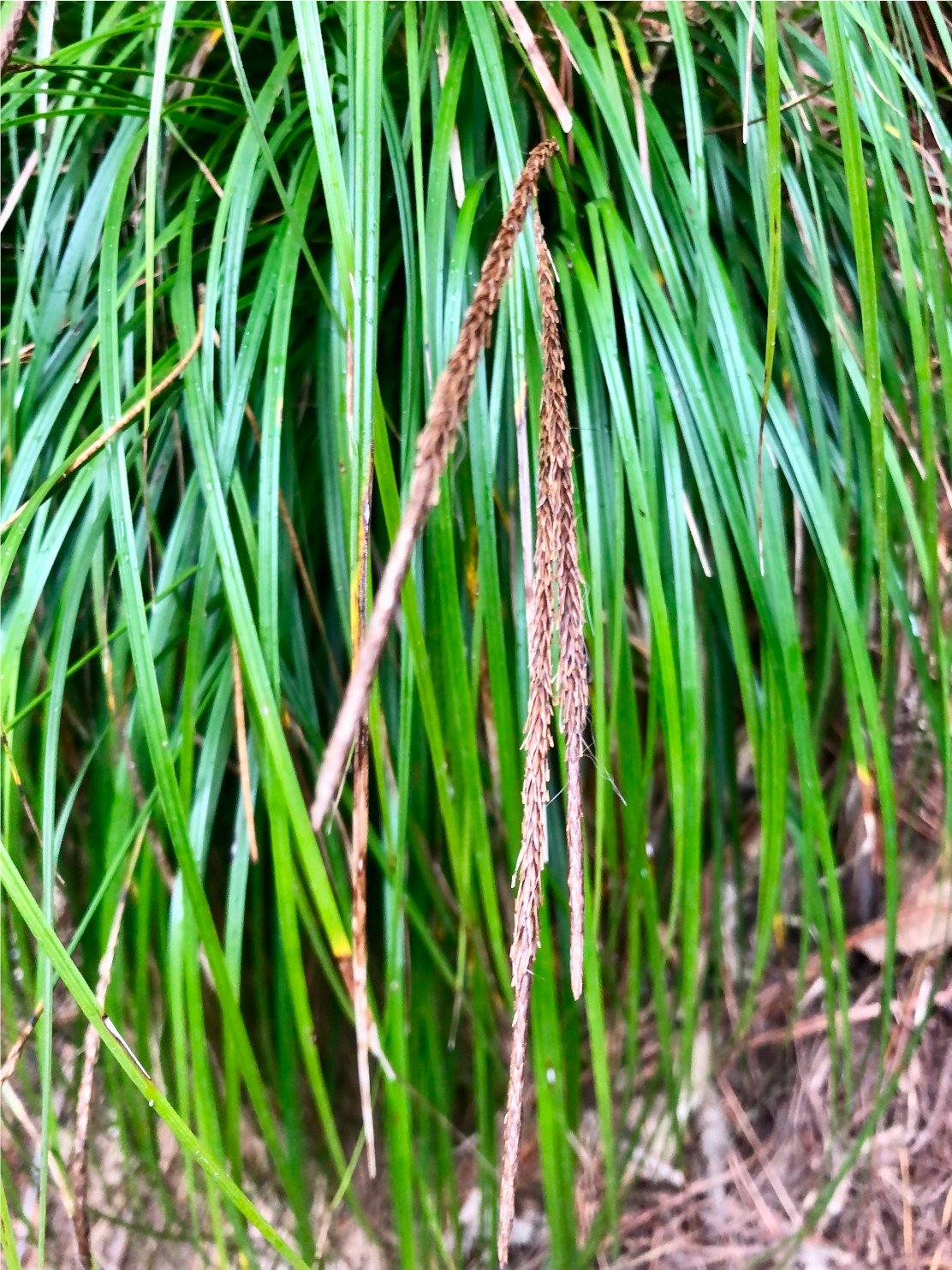
Produces large drooping branched flower panicles up to 1 m long, carrying numerous pale brown spikelets along slender branchlets.
Fruit:
Forms chestnut-brown to dark brown utricles with slightly winged margins containing small seeds dispersed by wind, water and animals.
Ecology:
A keystone wetland species that stabilises wet soils, improves water quality and creates habitat for birds, lizards and invertebrates. The raised tussocks provide nesting and refuge sites above water level and are frequently used by wetland birds.
Associated habitats:
Swamps, marshes, peatlands, lake margins, riverbanks, wet meadows, seepages and riparian corridors.
How to grow:
Easy to grow from seed or division. Plant in full sun in consistently moist or wet soil. Suitable for ponds, wetlands and rain gardens. Although naturally a wetland plant, it can tolerate a range of moisture levels once established.
Propagation:
Readily propagated from fresh seed and by division of established tussocks.
Cultural use:
Traditionally used by Māori as a thatching material for roofing. The species is referenced in Māori proverb and tradition as a dependable resting place in wetland environments, reflecting its importance within the landscape.
Garden value:
An outstanding structural plant for wetlands and large native gardens. Its dramatic trunk-forming habit, arching foliage and ecological benefits make it one of New Zealand’s most important and recognisable native sedges.