

Forster’s Sedge
Botanical name: Carex forsteri
Synonyms: Carex recurva, Carex punctulata, Carex semiforsteri
Common name(s): Forster’s sedge
About:
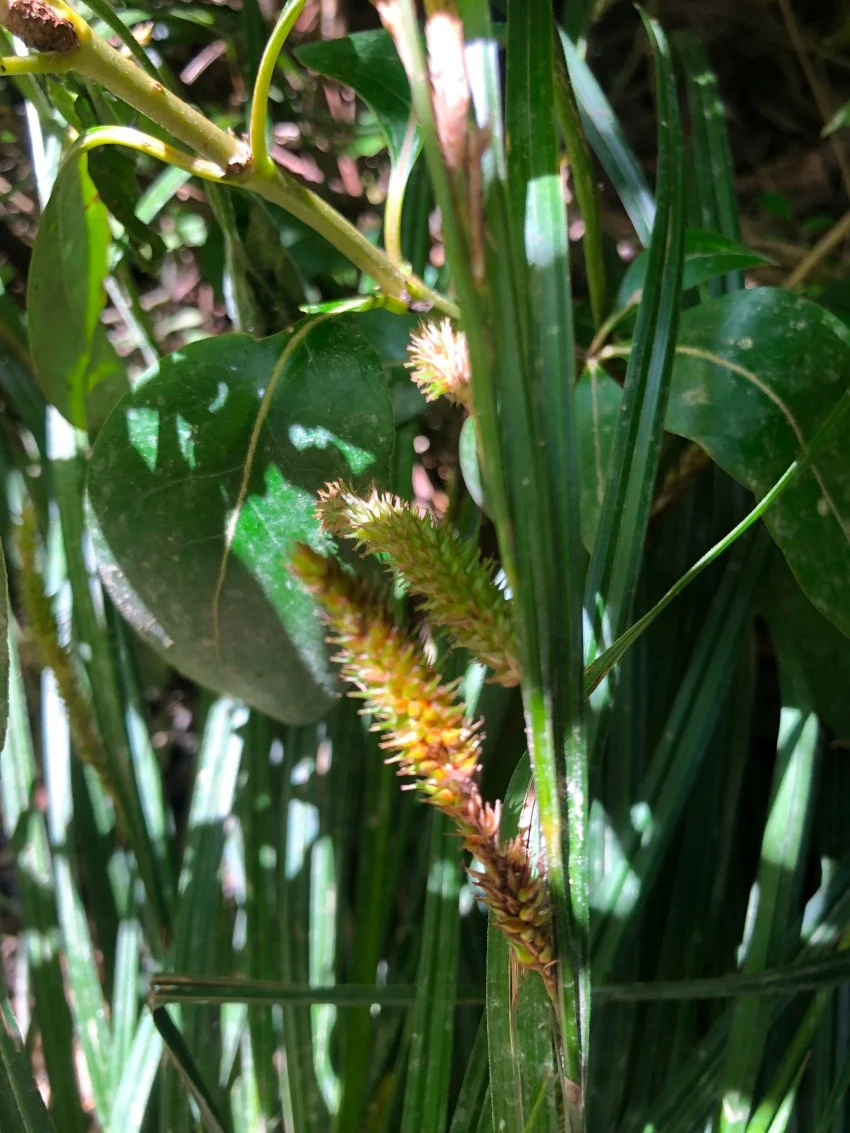
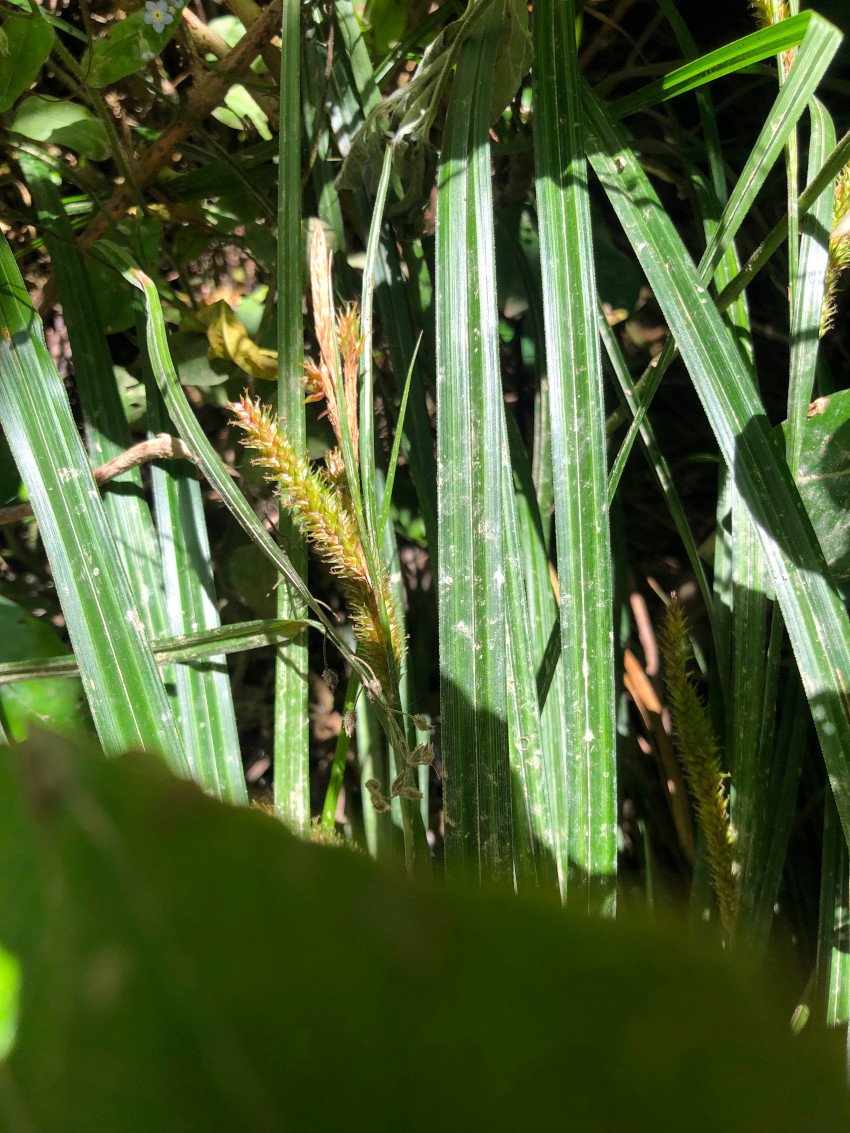
A large broad-leaved forest sedge forming lush leafy tussocks in damp shaded habitats. Recognised by its long drooping flower spikes and wide arching foliage, this is one of New Zealand’s most impressive woodland sedges.
Natural habitat:
Wet forest seepages, stream banks, cave entrances, sinkholes and damp depressions within coastal to montane forest.
Growing environment:
Prefers permanently damp fertile soils in shaded or semi-shaded sites. Particularly suited to high rainfall areas and moist woodland gardens.
Endemic distribution:
Endemic to New Zealand. Common south of Auckland in the North Island and widespread though scattered through parts of the South Island, especially Marlborough Sounds and Banks Peninsula.
Height:
Up to 1.2 m tall
Width:
Forms large leafy tussocks
Flowering:
September – November
Fruiting:
October – May
Uses:
• Riparian planting
• Forest restoration
• Shaded rain gardens
• Wet woodland gardens
• Rural planting
• Cave and karst restoration
• Stream margin stabilisation
Appearance:
Large tuft-forming sedge with broad double-folded leaves emerging from dark reddish-brown basal sheaths. Flower spikes are long, green to grey-green and often drooping from slender peduncles.
Ecology:
An important sedge of damp forest ecosystems where it stabilises wet soils and provides habitat structure in shaded riparian environments.
Associated habitats:
Broadleaf forest, podocarp forest, karst landscapes, stream gullies, cave entrances and tall tussock seepages.
How to grow:
Easy to cultivate from seed or division. Performs best in rich permanently damp soil with protection from prolonged drying. Ideal for shaded stream edges and moist woodland plantings.
Propagation:
Readily propagated from fresh seed and division of established clumps.
Cultural use:
Part of New Zealand’s indigenous wet forest flora associated with freshwater and shaded forest ecosystems.
Garden value:
An outstanding native foliage plant for moist shaded gardens. The broad leaves and elegant drooping seed heads create strong texture and movement in woodland and riparian plantings.