
Carex dissita
Botanical name: Carex dissita
Synonyms: Carex dissita var. monticola
Common name(s): Forest Sedge, Purei
About:
A graceful native forest sedge forming lush green arching clumps with distinctive dark seed heads. This adaptable species is widely used in revegetation and ornamental planting, particularly in damp shaded environments.
Natural habitat:
Riparian forest, stream margins, swamp forest, damp scrub and shaded lowland to montane habitats.
Growing environment:
Thrives in permanently damp soils in shaded or semi-shaded positions. Tolerates full sun and periods of dryness once established. Well suited to wetland and forest-edge planting.
Endemic distribution:
Endemic to New Zealand. Occurs throughout the North, South and Stewart Islands.
Height:
0.15–1 m tall
Width:
Forms spreading leafy clumps over time
Flowering:
August – November
Fruiting:
October – May
Uses:
• Riparian planting
• Wetland restoration
• Forest understory planting
• Stream edge stabilisation
• Rain gardens
• Erosion control
• Native landscaping
• Ground cover in damp shade
Appearance:
Growth habit:
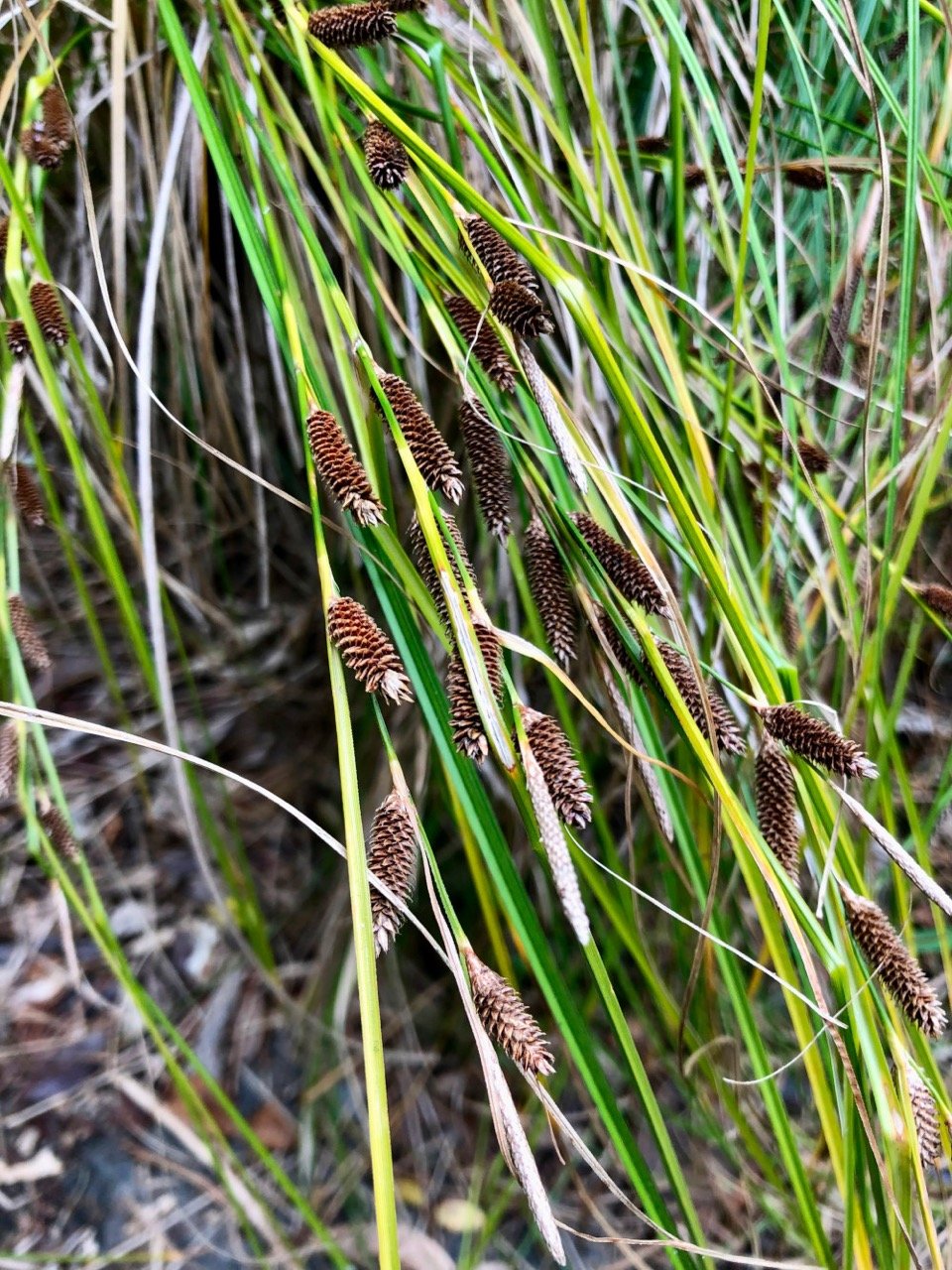
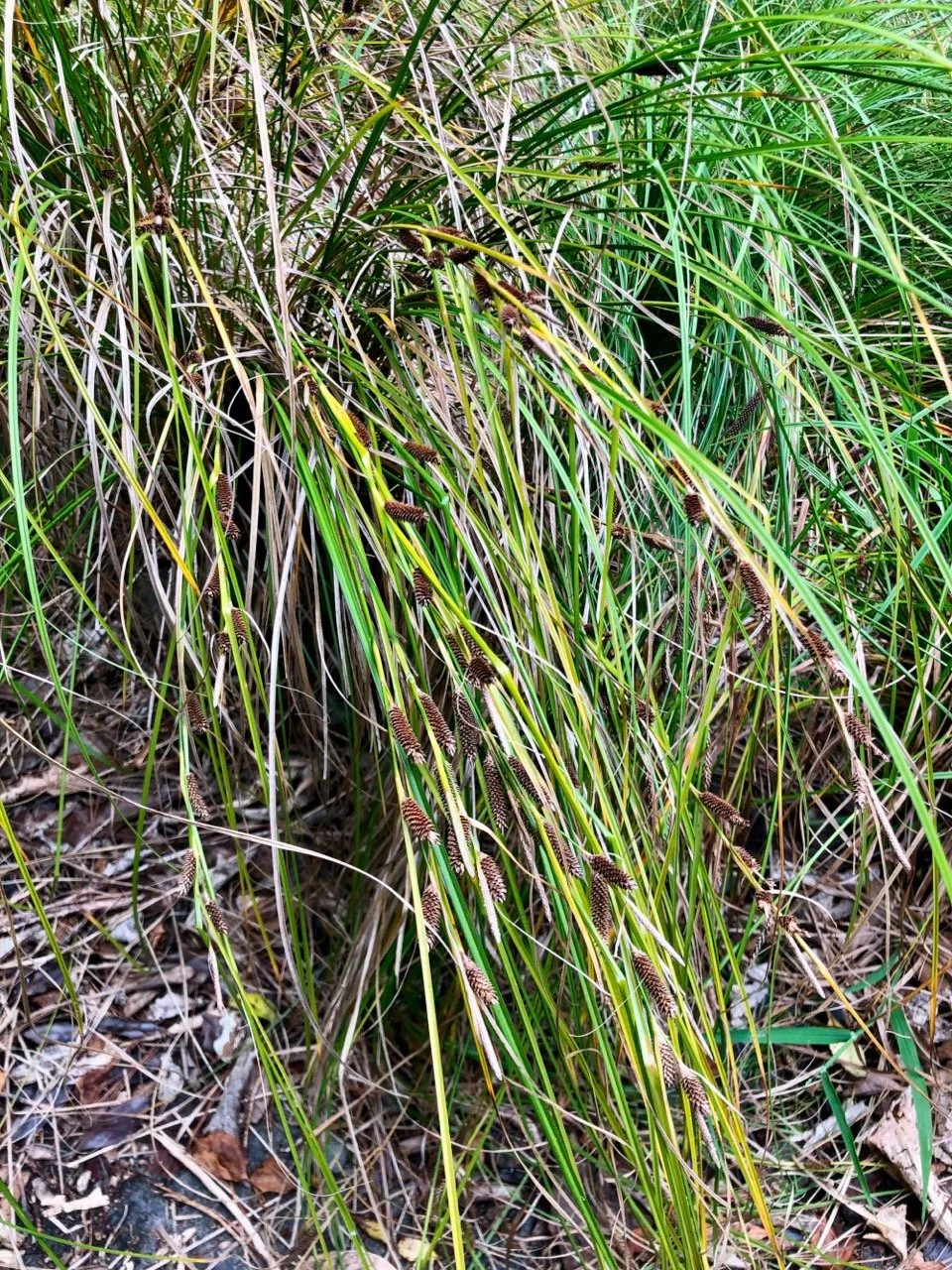
Shortly rhizomatous perennial sedge forming soft leafy tufts with arching foliage and drooping upper growth.
Foliage:
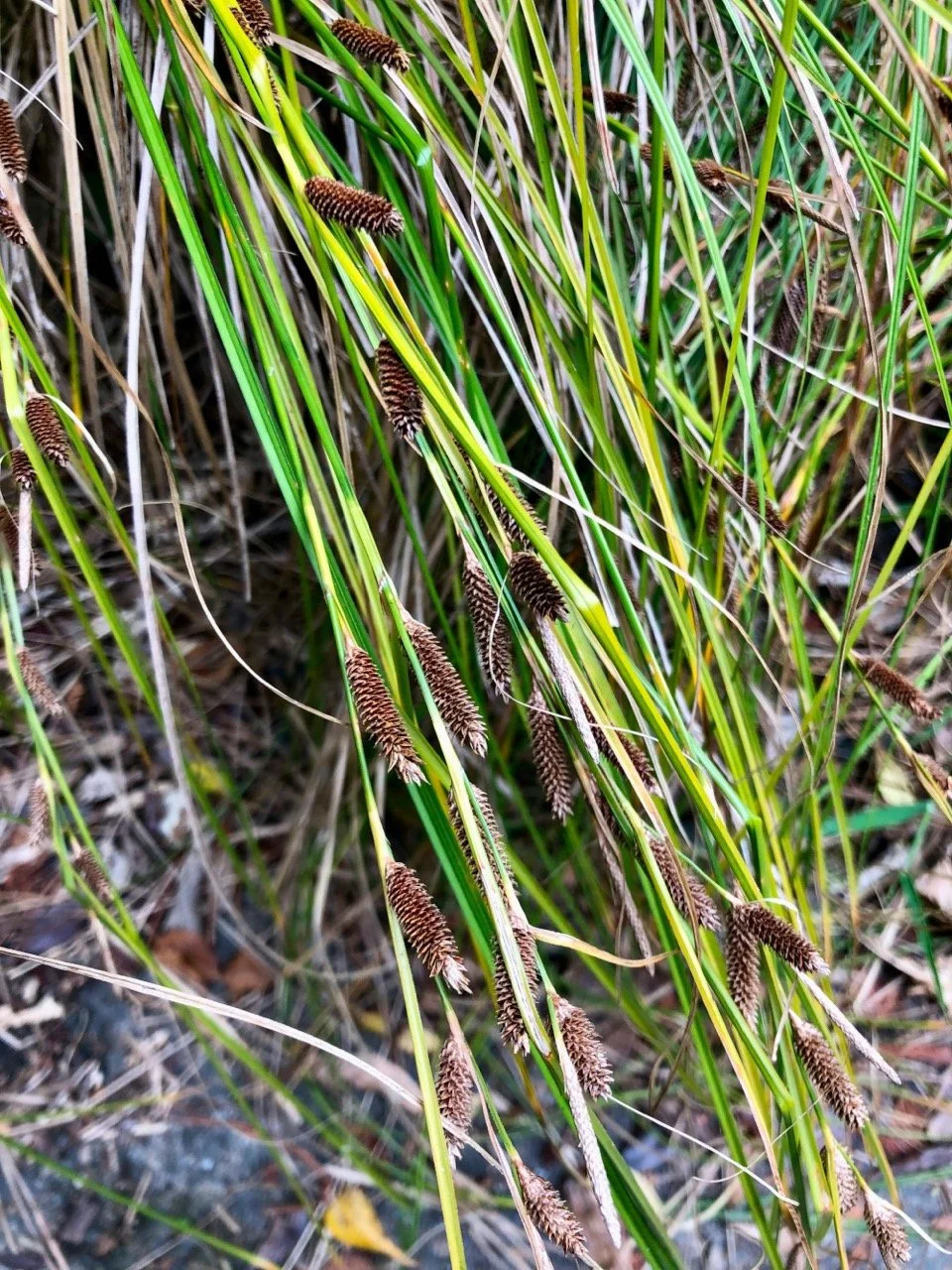
Leaves bright green, yellow-green or sometimes flushed red-green with reddish margins and undersides. Foliage narrow, double-folded and softly arching.
Flowers:
Small dark brown to reddish-brown spikes carried amongst or just below the foliage. Lower spikes often drooping on slender stalks.
Flower colours:
Brown, Red/Brown
Fruit:
Tiny light brown nuts enclosed within glossy bicoloured utricles which are cream at the base and dark red-purple to black above.
Ecology:
A common forest-edge and riparian sedge that provides shelter and stabilisation along waterways and damp habitats. Nuts enclosed within utricles are dispersed naturally through granivory and water movement.
Associated habitats:
Frequently found beside forest streams, seepages, swamp margins, shaded wetlands and damp gullies.
How to grow:
Very easy to grow from seed or division. Best planted in moist soils with partial shade, though established plants tolerate a wide range of conditions including occasional dry periods and full sun.
Propagation:
Easily propagated from fresh seed and by division of established clumps.
Cultural use:
Known traditionally as purei and recognised as a useful indigenous wetland and forest sedge within New Zealand ecosystems.
Garden value:
An excellent low-maintenance sedge for damp shady gardens, stream edges and restoration planting. Its arching foliage and contrasting dark seed heads provide texture and movement throughout the year.