
Grassland Sedge
Botanical name: Carex breviculmis
Synonyms: None
Common name(s): Grassland sedge, Asian shortstem sedge
About:
A low-growing grass-like sedge forming dense bright green patches in open grassland and sparsely vegetated habitats. This hardy and adaptable species flowers early and thrives across a wide range of conditions.
Natural habitat:
Open grassland, gumland scrub, clay pans, talus slopes, rock outcrops and sparsely vegetated coastal to montane sites.
Growing environment:
Drought tolerant, Frost tolerant, Wind tolerant & Free-draining soil tolerant.
Prefers full sun and open sites with well-drained soils but tolerates a wide range of growing conditions.
Endemic distribution:
Indigenous to New Zealand, Australia, New Guinea, Lord Howe Island and Norfolk Island. Found throughout both the North and South Islands of New Zealand.
Height:
3–30 cm tall
Width:
Forms spreading low-growing patches
Flowering:
August – December
Fruiting:
October – May
Uses:
• Lawn alternative plantings
• Groundcover for dry areas
• Rock gardens and banks
• Native meadow plantings
• Erosion control
• Coastal and alpine landscaping
Appearance:
Growth habit:
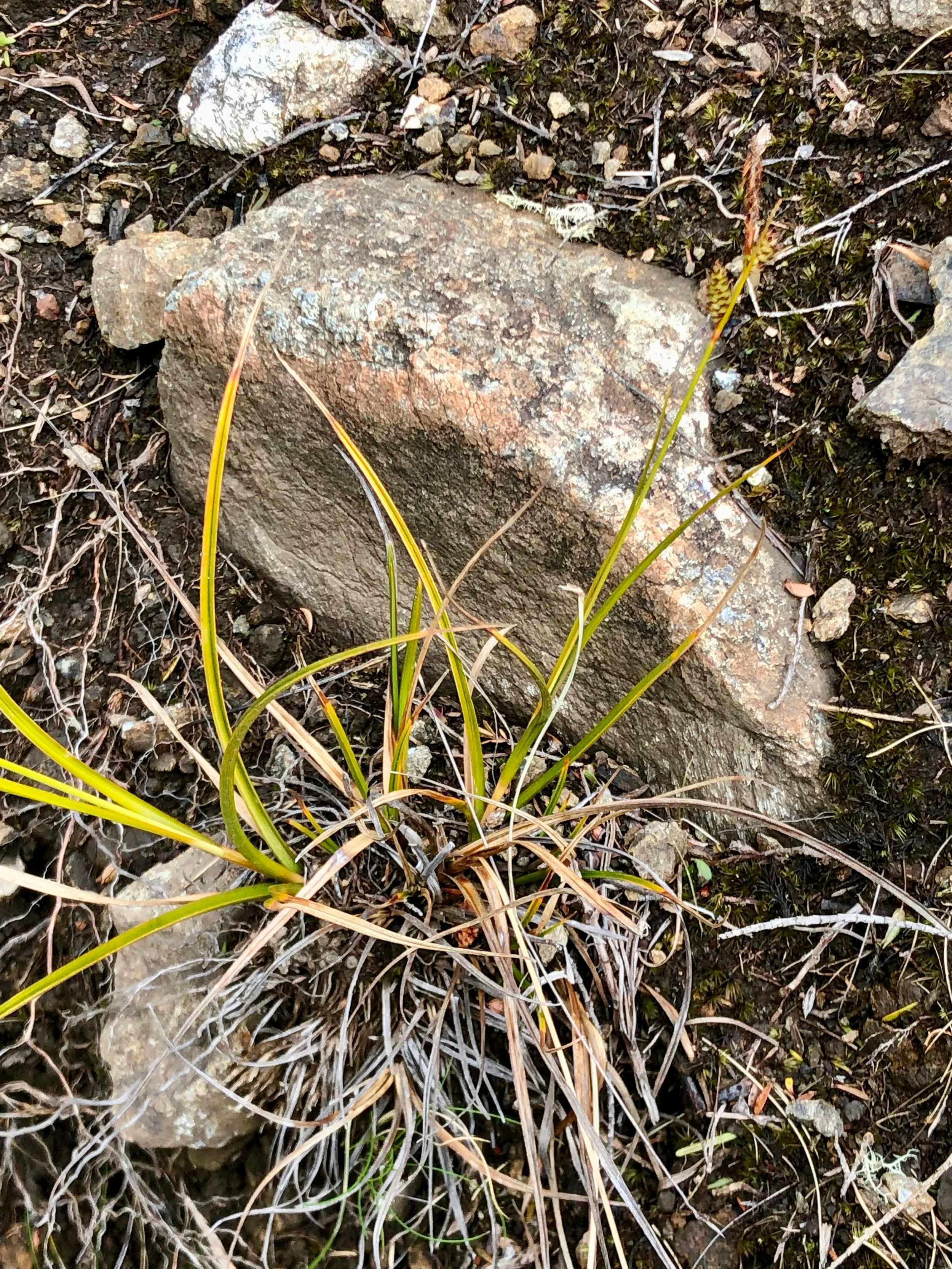
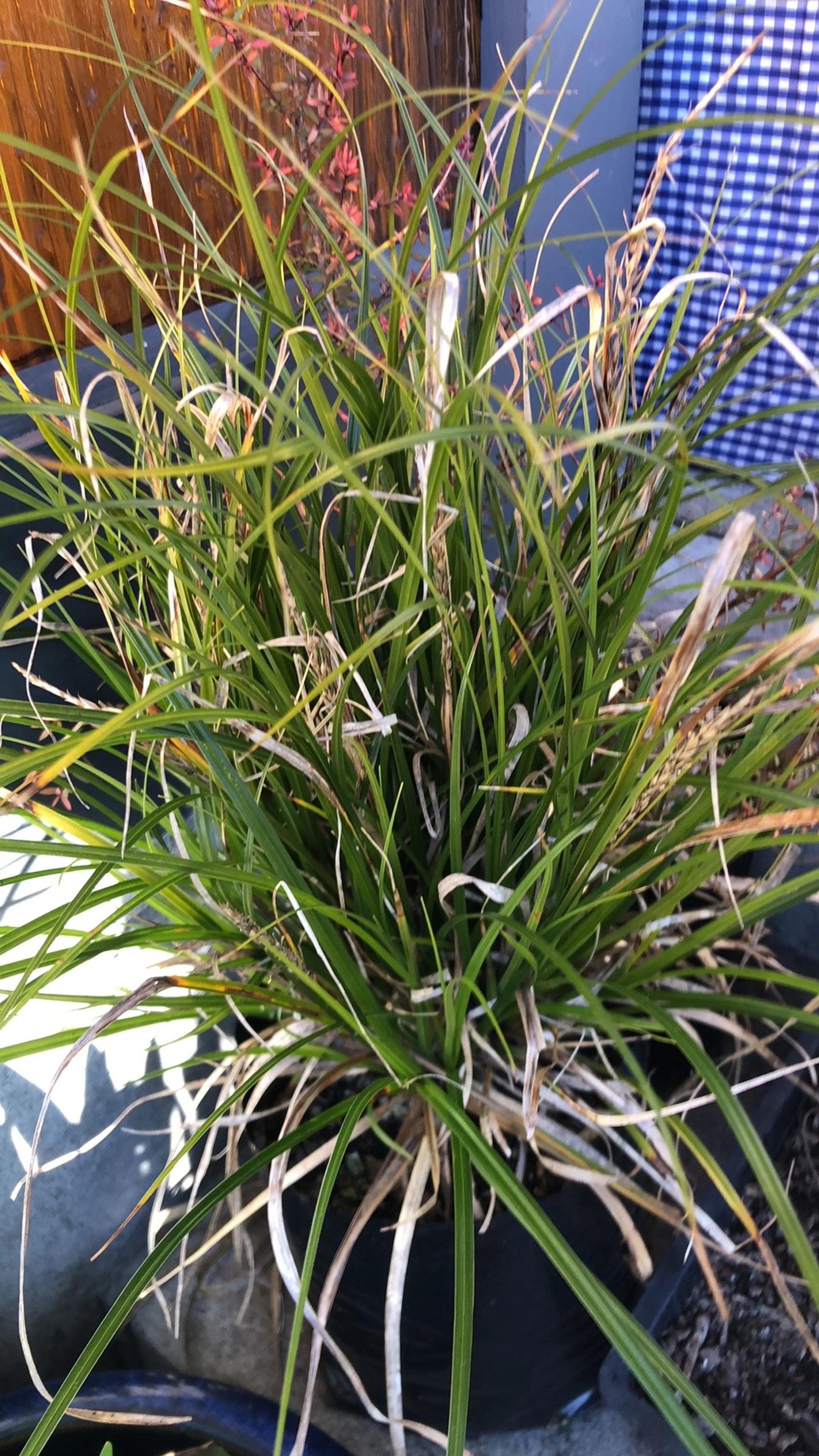
Low tufted sedge forming dense compact patches with short hidden stems.
Leaves:
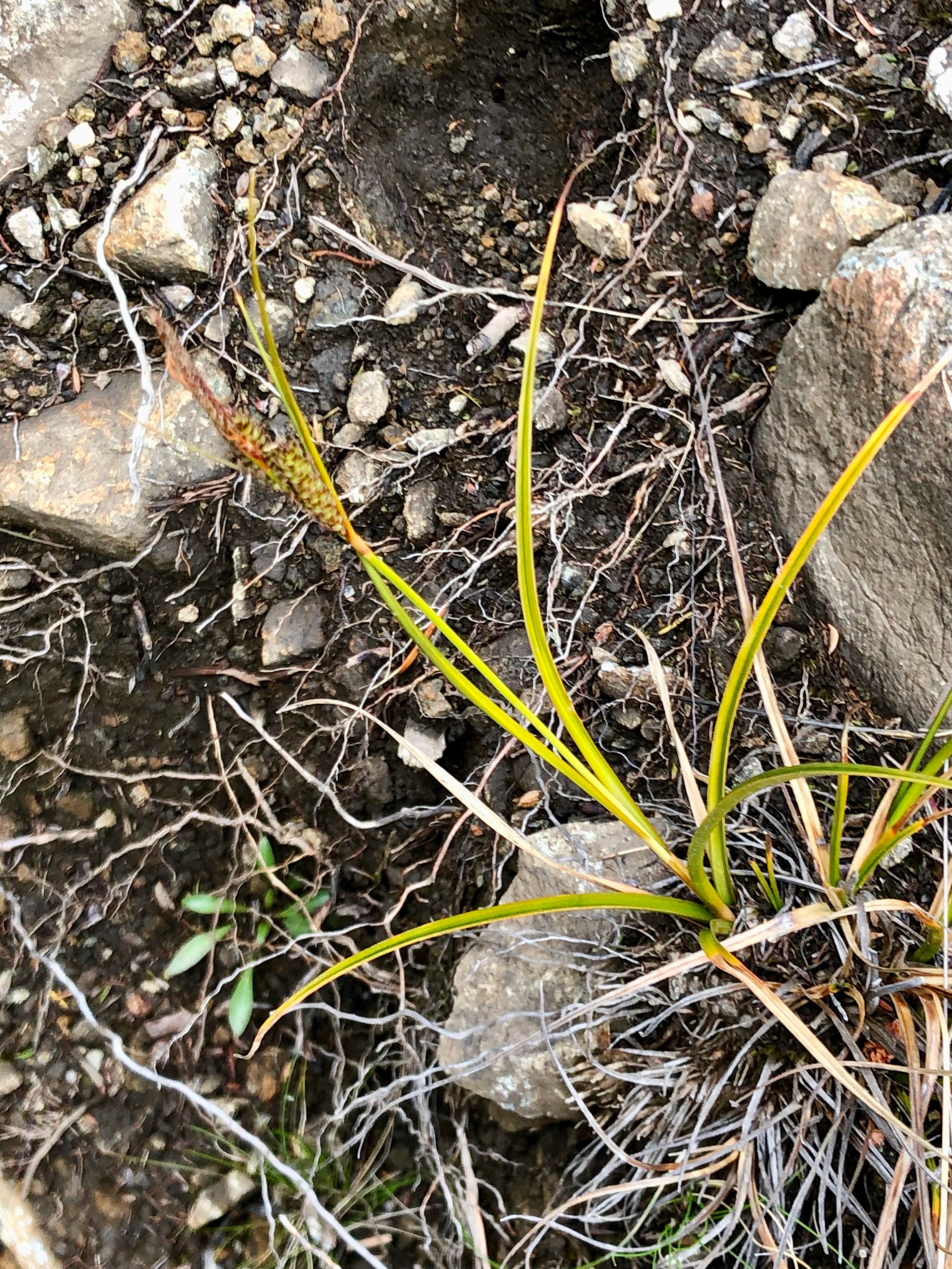
Bright green grass-like leaves, narrow and recurved with finely roughened edges.
Flowers:
Tiny pale green flower spikes clustered low within the foliage.
Fruit:
Small pale utricles covered in fine hairs surrounding light brown nuts.
Ecology:
An adaptable species occupying open disturbed habitats from coastal areas to montane zones. Seeds are dispersed by wind and animals.
Associated habitats:
Occurs in native grasslands, gumland scrub, rocky slopes, clay pans, coastal turf and open alpine vegetation.
How to grow:
Easy to grow in full sun with free-draining soil. Tolerates drought, light shade and seasonal dry conditions but dislikes permanently waterlogged soils.
Propagation:
Readily propagated from fresh seed or by division of mature clumps.
Cultural use:
No specific traditional cultural uses are widely recorded for this species.
Garden value:
An excellent low-maintenance native sedge for naturalistic plantings, pathways and dry gardens. Valued for its neat form, bright green foliage and adaptability.