
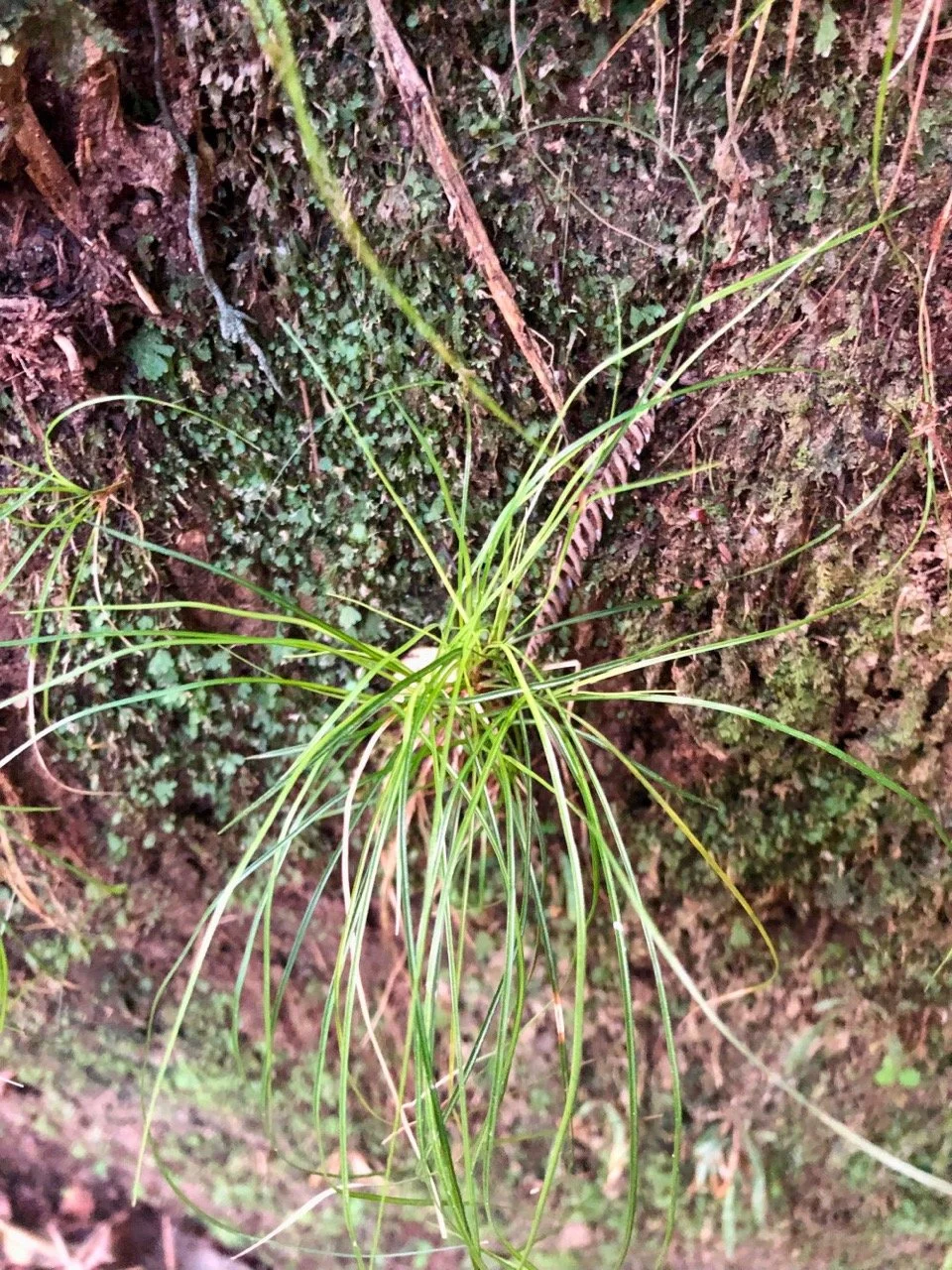
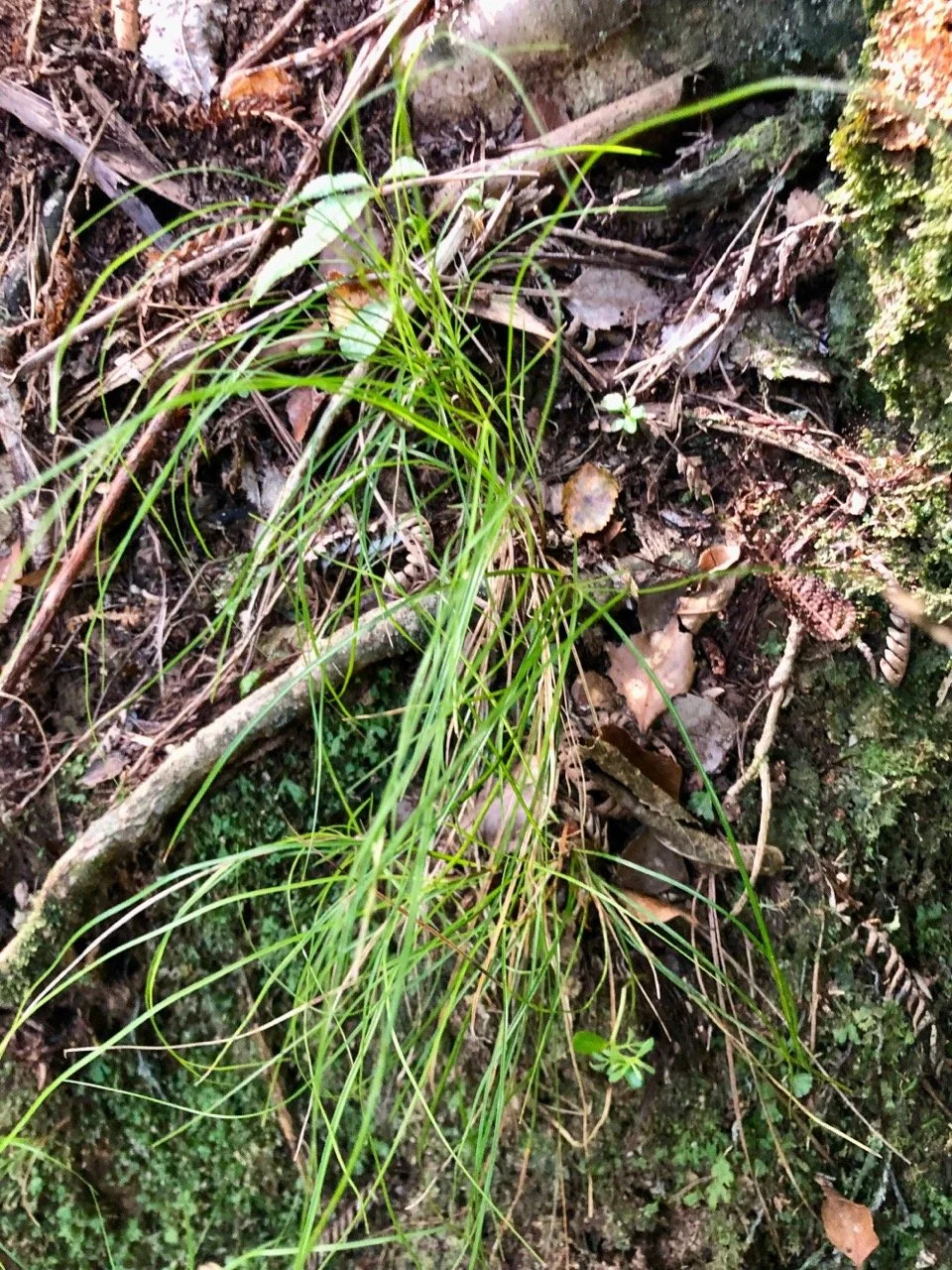
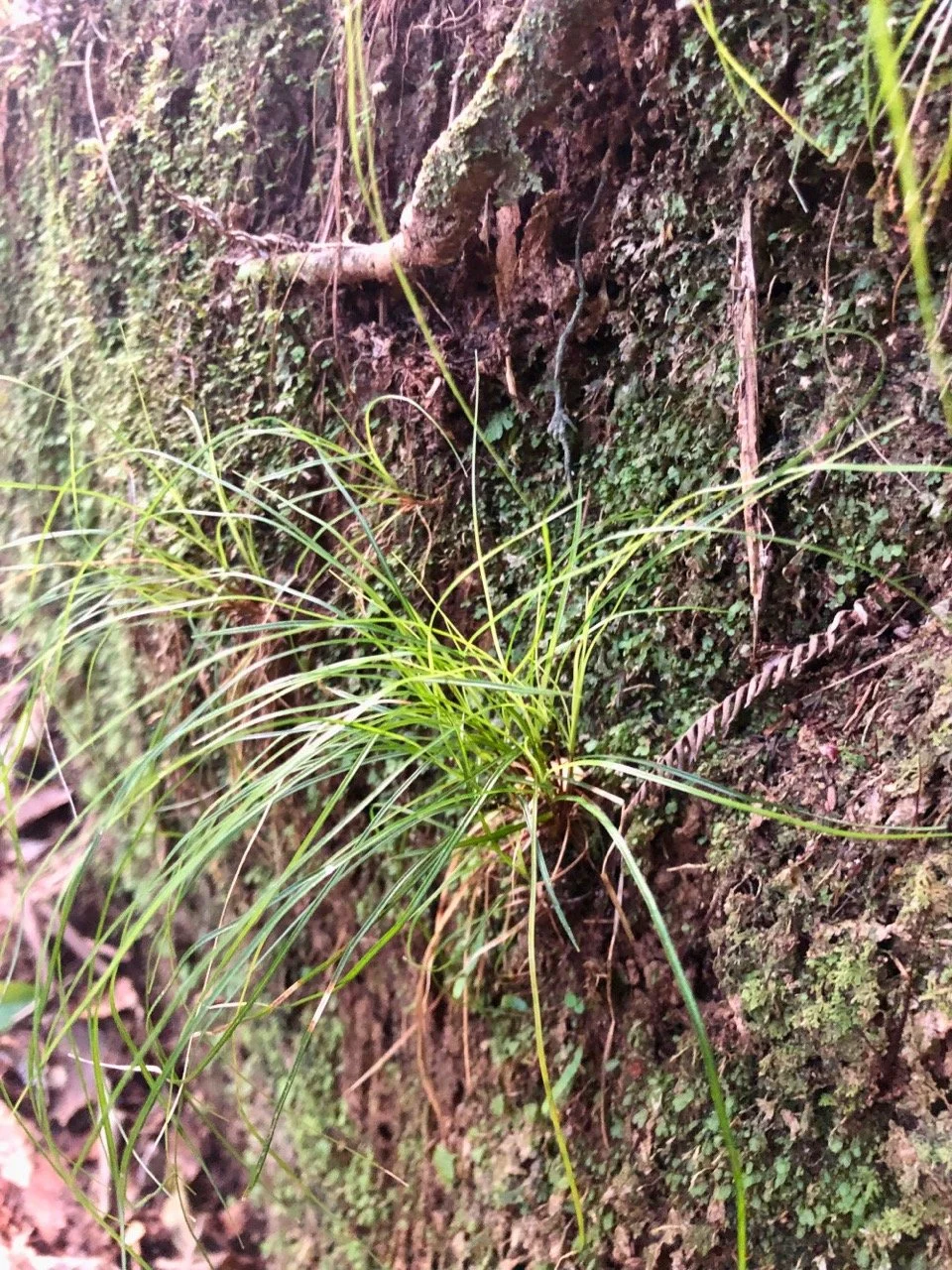
Fine-leaved Hook Sedge
Botanical name: Carex banksiana
Synonyms: Uncinia banksii, Uncinia riparia var. banksii, Uncinia capillaris
Common name(s): Fine-leaved hook sedge, Fine-leaved bastard grass
About:
A graceful fine-leaved endemic sedge forming dense tufts of soft blue-green to bright green foliage. One of the most common sedges of northern lowland forest and scrub, valued for its delicate texture and adaptability.
Natural habitat:
Coastal and lowland forest, scrub margins and shaded open ground.
Growing environment:
Shade tolerant, Coastal tolerant, Moisture tolerant & Free-draining soil tolerant.
Prefers semi-shaded conditions with reliable moisture and good drainage.
Endemic distribution:
Endemic to New Zealand. Found in the North Island from Te Paki south to Wellington, and in the South Island from North-West Nelson through Marlborough, Canterbury and Otago.
Height:
10–35 cm tall
Width:
30–60 cm wide
Flowering:
October – November
Fruiting:
November – April
Uses:
• Woodland groundcover plantings
• Native forest restoration
• Shaded garden borders
• Erosion control on banks
• Fine-textured landscaping
• Container and understory planting
Appearance:
Growth habit:
Densely tufted evergreen sedge with fine arching foliage and slender flowering stems.
Leaves:
Very narrow soft leaves, bright green to blue-green, with rough margins and long thread-like tips.
Flowers:
Tiny inconspicuous flowers borne in slender spaced spikes with distant female florets.
Fruit:
Small narrow utricles that remain close to the stem and mature pale green to light brown.
Ecology:
An important understory sedge of northern forest ecosystems, providing ground cover and habitat within coastal and lowland native vegetation communities.
Associated habitats:
Frequently grows with coastal scrub, lowland podocarp forest, regenerating bush margins and shaded streamside vegetation.
How to grow:
Best grown in semi-shade with moist but free-draining soil. Tolerates coastal exposure and responds well to regular moisture without becoming waterlogged.
Propagation:
Easily propagated from fresh seed or by division of established clumps.
Cultural use:
No widely recorded traditional cultural uses are specifically documented for this species.
Garden value:
A refined and elegant native sedge ideal for softening shaded gardens and naturalistic plantings. Its fine foliage adds movement, texture and year-round structure.