
Hook Sedge
Botanical name: Carex uncinata
Synonyms: Uncinia uncinata, Uncinia australis, Uncinia alopecuroides, Uncinia bractata, Uncinia pedicellata, Uncinia uncinata var. pedicellata, Uncinia australis var. pedicellata, Uncinia uncinata var. laxior
Common name(s): Hook sedge, Bastard grass, Kamu, Matau-a-Māui
About:
A widespread and highly variable native sedge found throughout New Zealand. Formerly known as Uncinia uncinata, it is recognised by its long narrow flower spikes densely packed with hooked fruits. The species ranges from green forms through to attractive dark wine-red forms found mainly in southern regions.
Natural habitat:
Indigenous forest, shrubland, forest margins, riverbanks, wetland edges and open disturbed habitats from coastal to montane environments.
Growing environment:
Adaptable to a wide range of conditions. Prefers moist, fertile soils in partial shade but will grow in full sun or deeper shade. Tolerates frost and occasional dry periods once established.
Endemic distribution:
Indigenous to New Zealand, occurring throughout the North, South, Stewart, Chatham and Auckland Islands. Also naturally present in Hawaii and parts of eastern Polynesia.
Height:
100–900 mm tall
Width:
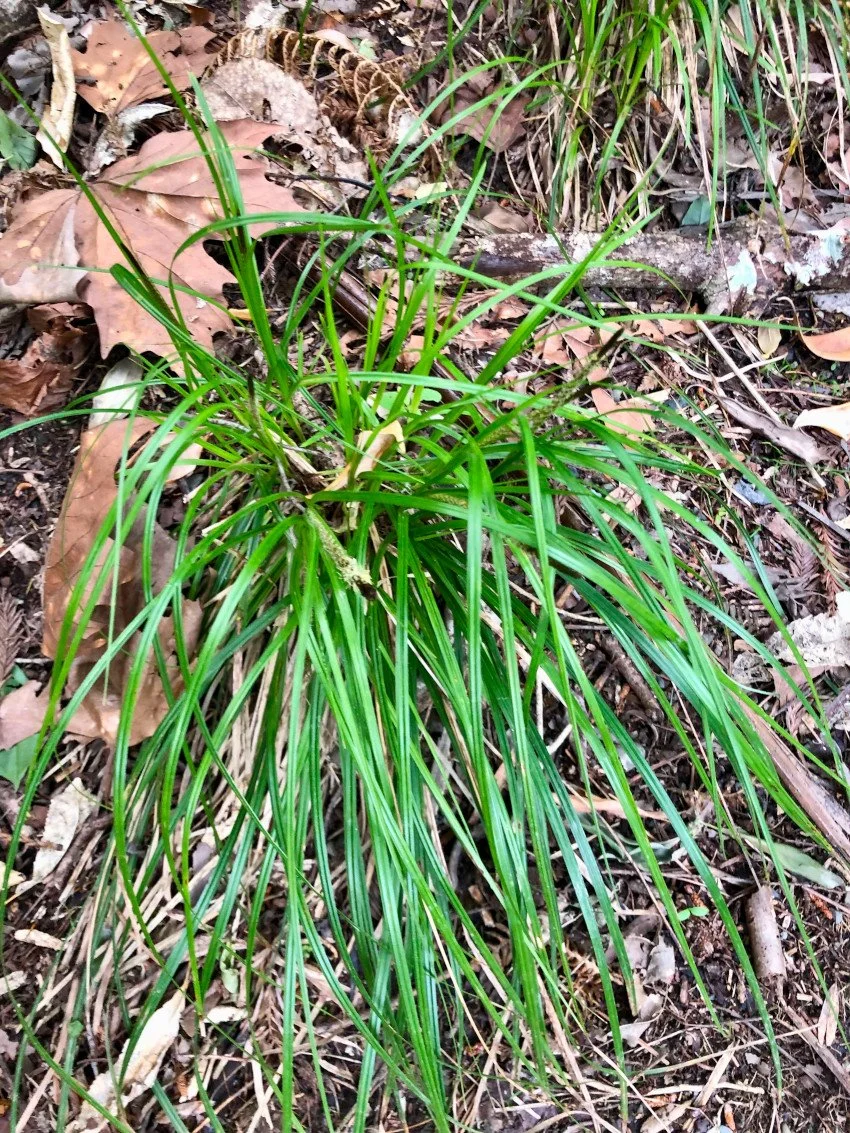
Forms dense clumps up to 500 mm wide.
Flowering:
August – December
Fruiting:
Throughout the year
Uses:
• Native forest restoration
• Woodland planting
• Riparian planting
• Shade gardens
• Biodiversity enhancement
• Ground layer planting
• Erosion control
• Native landscaping
Appearance:
Growth habit:
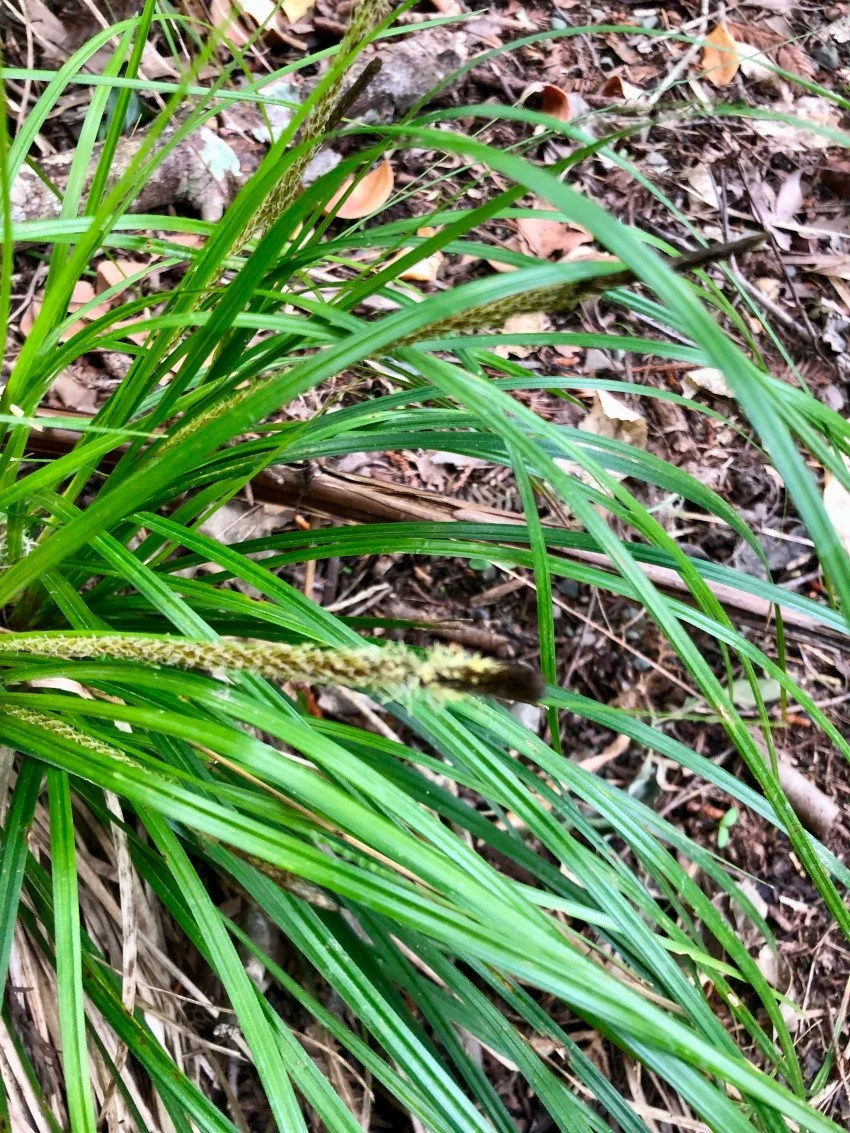
Dense tuft-forming sedge with upright to arching foliage and long slender flower spikes.
Leaves:
Dark green, yellow-green or occasionally reddish-green, 2–5 mm wide, with rough margins and a slightly arching habit.
Flowers:
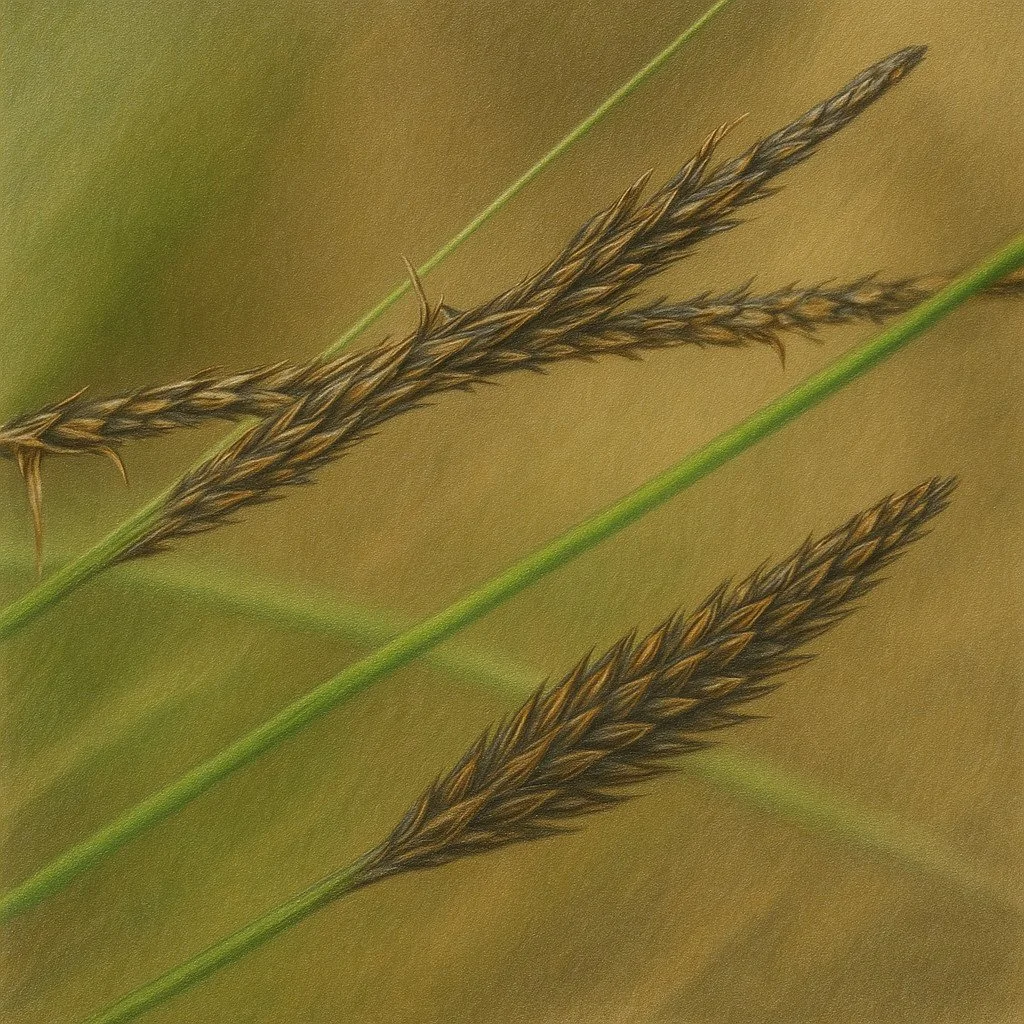
Produces slender spikes densely packed with numerous female flowers, often numbering more than one hundred per spike.
Fruit:
Forms hooked utricles along the length of the spike. These hooks readily attach to feathers, fur and clothing, aiding dispersal and giving rise to the common name hook sedge.
Ecology:
One of New Zealand’s most widespread hook sedges, occurring across a wide range of ecosystems. The hooked fruits are adapted for dispersal by animals, helping the species colonise new habitats.
Associated habitats:
Forest understorey, shrubland, stream margins, forest clearings, wetland edges, riverbanks and urban green spaces.
How to grow:
Easy to cultivate from seed or division. Plant in moist, well-drained soil in partial shade for best results, though it adapts readily to a variety of garden conditions.
Propagation:
Readily propagated from fresh seed and by division of established clumps. Divisions may take some time to re-establish after transplanting.
Cultural use:
Known traditionally as Kamu and Matau-a-Māui. The hooked fruits are characteristic of the former Uncinia group and were familiar features of New Zealand forests and shrublands.
Garden value:
A reliable and adaptable native sedge valued for its fine texture, shade tolerance and ecological usefulness. The dark wine-red southern forms are particularly attractive and are often cultivated for their ornamental foliage colour.