


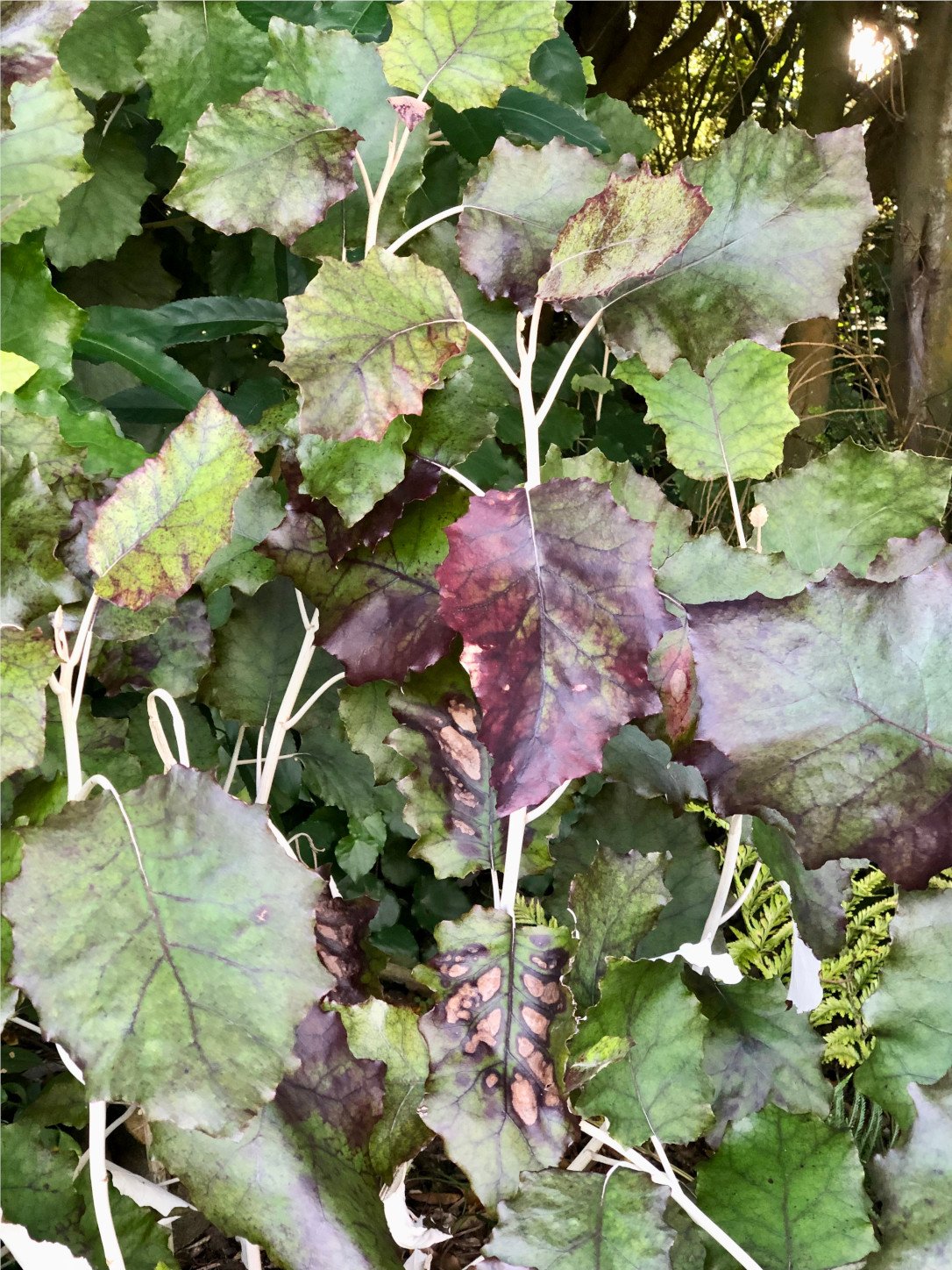

Rangiora
Botanical name: Brachyglottis repanda
Synonyms: Cineraria repanda; Senecio georgii; Senecio forsteri; Brachyglottis rangiora; Brachyglottis repanda var. fragrans; Brachyglottis repanda var. repanda
Common name(s): Bushman’s friend, Kōuaha, Pukapuka, Rangiora
About:
A fast-growing native shrub or small tree with very large leathery leaves that are dark green above and densely white-felted underneath. The broad foliage and large cream flower sprays make it one of New Zealand’s most distinctive native shrubs.
Natural habitat:
Coastal forest margins, regenerating scrub, open forest, slips, stream edges and disturbed lowland to lower montane habitats.
Growing environment:
Wind tolerant, Coastal tolerant, Frost tolerant, Dry tolerant once established, Fast growing & Adaptable to a wide range of soils.
Prefers full sun to partial shade with free-draining soil.
Endemic distribution:
Endemic to New Zealand. Common throughout the North Island and northern South Island, extending south to Greymouth and Kekerengu. Naturalised in parts of Otago and Stewart Island.
Height:
Up to 6 m or more tall
Width:
Up to 4–6 m wide
Flowering:
Late winter – Spring ((July-) August–October (-November))
Fruiting:
Spring – Summer ((October-) November–December (-January))
Uses:
• Shelter and revegetation planting
• Pioneer species for regeneration projects
• Large foliage specimen plant
• Native bird and insect habitat
• Coastal and exposed gardens
• Screening and background planting
Appearance:
Growth habit:
Large spreading shrub or small tree with stout somewhat brittle branches and corky bark.
Leaves:
Very large leathery leaves with scalloped or lobed margins, dark glossy green above and densely white-felted underneath. Young growth covered in pale buff to white tomentum.
Flowers:
Small cream to greenish-white discoid flower heads carried in large branched terminal panicles.
Fruit:
Small ribbed cypselae with buff-yellow pappus hairs aiding wind dispersal.
Ecology:
An important pioneer species in disturbed forest and scrub habitats. Fast growth and wind-dispersed seed allow rapid colonisation of slips, clearings and regenerating forest.
Associated habitats:
Occurs naturally within coastal scrub, regenerating broadleaf forest, lowland forest margins and open disturbed habitats.
How to grow:
Easy to grow in full sun or partial shade. Tolerates coastal exposure, wind and poor soils. Benefits from space to spread naturally.
Propagation:
Very easy from fresh seed and semi-hardwood or hardwood cuttings. Fast growing but often short-lived. Responds well to hard pruning after flowering.
Cultural use:
Leaves were traditionally used medicinally for wounds and sores, and also used to wrap food for cooking in hāngī. The white undersides of leaves were used as trail markers, and the plant is strongly associated with health and wellbeing in Māori tradition.
Garden value:
An outstanding foliage plant valued for its huge tropical-looking leaves with striking white undersides. Excellent for fast shelter, revegetation and bold native garden structure.