
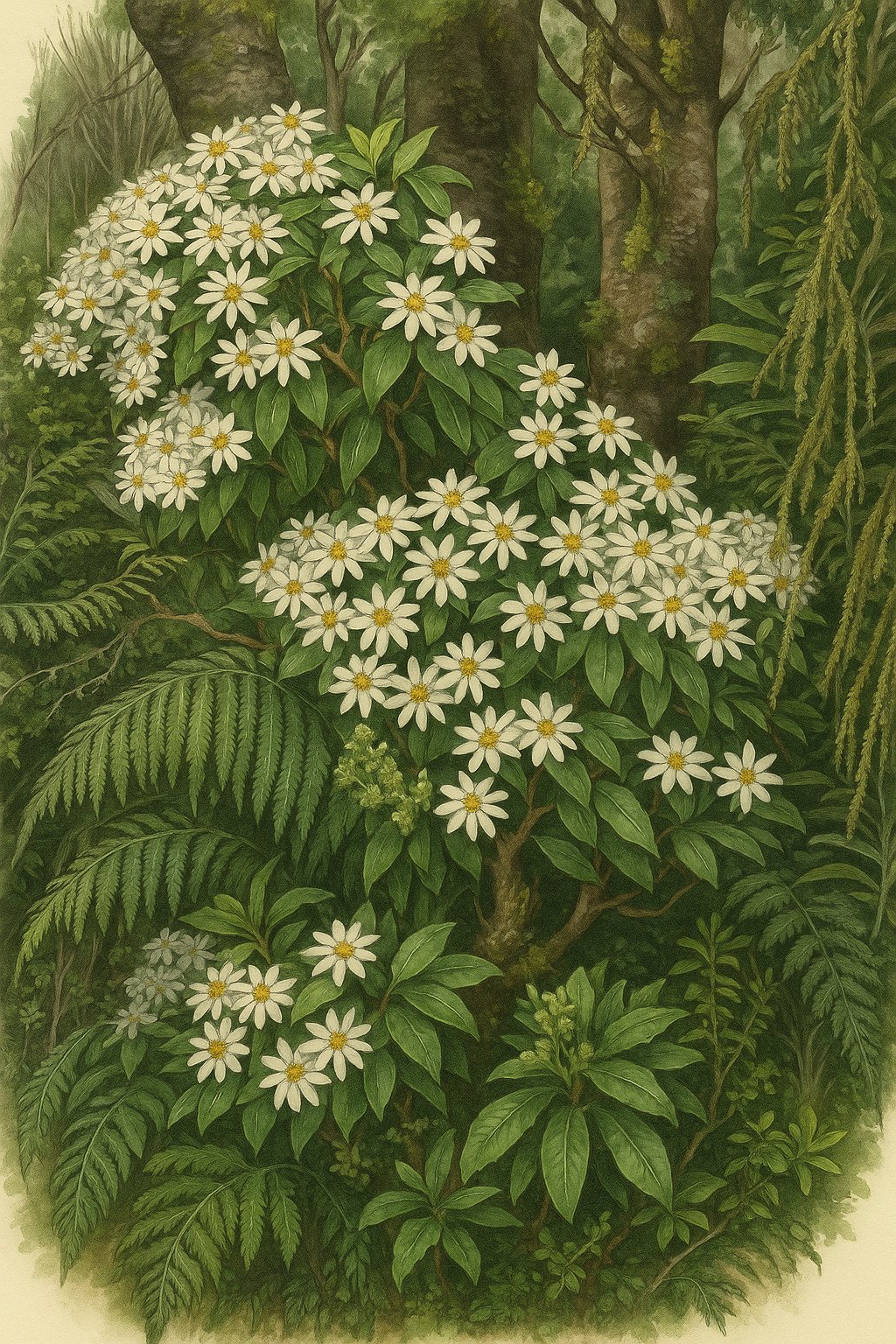

Kohurangi, Kirk’s Daisy, Oro
Botanical name: Brachyglottis kirkii var. kirkii
Synonyms: Senecio kirkii var. kirkii; Urostemon kirkii var. kirkii; Senecio neo-zeylandicus; Senecio glastifolius
Common name(s): Kohurangi, Kirk’s Daisy, Oro
About:
A distinctive fleshy-leaved daisy shrub usually growing as an epiphyte high in the forest canopy. Recognisable by its purple stems, glossy leaves and large white daisy flowers produced in dense spring clusters.
Natural habitat:
Lowland to lower montane forest canopy, epiphyte nests, mature native forest, and occasionally forest floors and riverbanks.
Growing environment:
Shade tolerant, Humus-rich soil tolerant, Frost sensitive, Wind sheltered, Free-draining soil tolerant.
Endemic distribution:
Endemic to the North Island of New Zealand where it occurs locally throughout lowland and montane forests.
Height:
Up to 1.5 m tall
Width:
Approximately 1–2 m wide
Flowering:
Spring (August–October)
Fruiting:
Spring–Summer (October–December)
Uses:
• Native forest restoration
• Epiphytic garden displays
• Woodland and shade gardens
• Rare native plant collections
• Wildlife and pollinator gardens
Appearance:
Growth habit:
Usually an epiphytic evergreen shrub forming dense rounded growths in canopy nest epiphytes, though occasionally terrestrial.
Stems and bark:
Young stems purple and brittle, becoming grey barked with age.
Leaves:
Fleshy glossy leaves, variable in shape, usually toothed toward the upper margins, pale to dark green above and lighter beneath, often tinged maroon.
Flowers:
Large white daisy flowers with yellow centres borne in dense terminal clusters.
Fruit:
Dry wind-dispersed cypselae topped with fluffy pappus hairs similar to dandelion seeds.
Ecology:
An important component of mature northern forests where it commonly grows among canopy epiphytes such as Astelia solandri and Collospermum species.
Associated habitats:
Commonly found growing on large established forest trees within old-growth forest ecosystems.
How to grow:
Best grown in moist, humus-rich but free-draining soil in part shade or bright filtered light. Benefits from sheltered conditions and protection from prolonged drought.
Propagation:
Easily grown from fresh seed or semi-hardwood cuttings, though plants can be difficult to maintain long term in cultivation.
Cultural use:
Part of the unique epiphytic flora of northern New Zealand forests and valued for its ornamental flowers and unusual canopy-growing habit.
Garden value:
Highly ornamental native shrub prized for its glossy fleshy foliage, colourful stems and large white daisy flowers which create striking spring displays in shaded native gardens.