
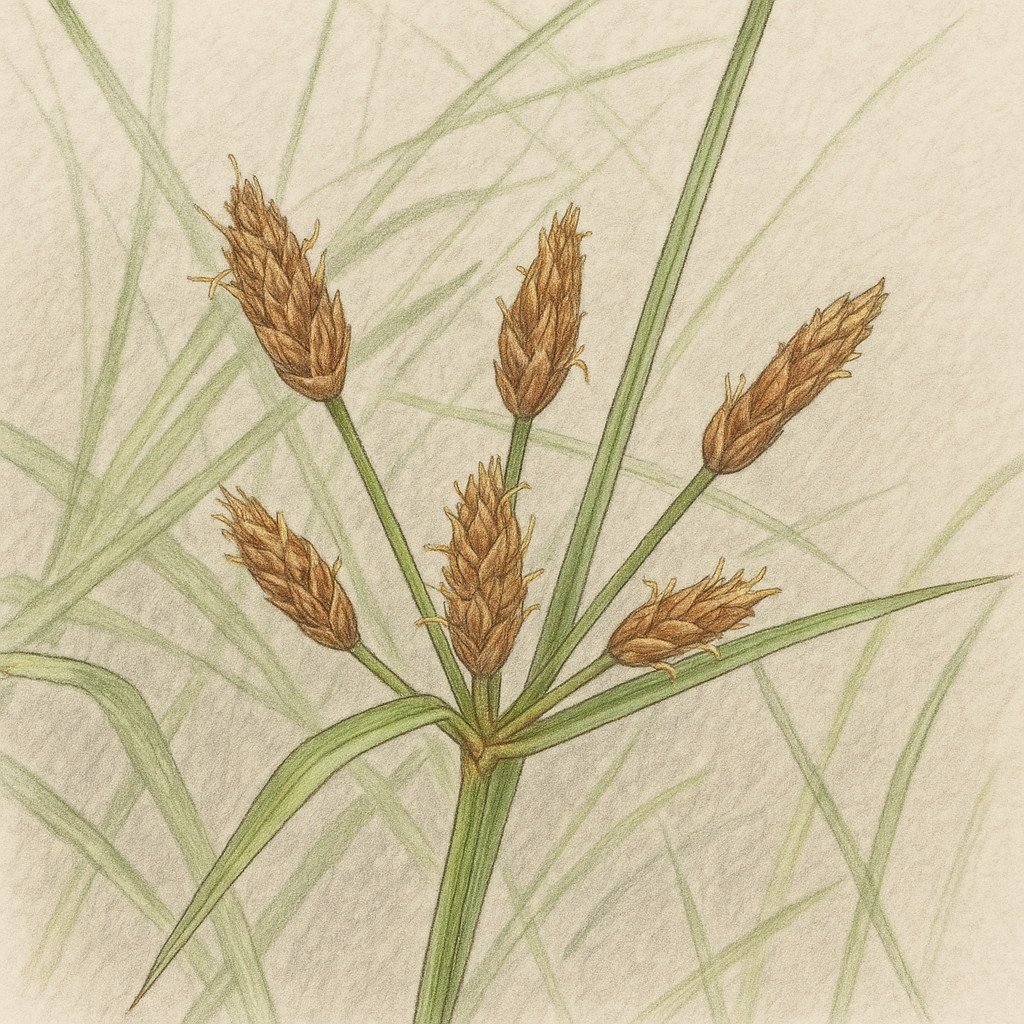
Purua Grass
Botanical name: Bolboschoenus medianus
Synonyms: Scirpus medianus
Common name(s): Purua Grass
About:
A robust rhizomatous wetland sedge native to New Zealand and Australia. This species forms dense clumps in saltmarshes, estuaries, wetlands, and lowland damp areas where it stabilises soft soils and provides habitat for wetland wildlife.
Natural habitat:
Saltmarshes, estuarine margins, tidal streams, poorly drained saline flats, swamps, freshwater lake edges, and lowland wetlands.
Growing environment:
Full sun, Wet soils, Freshwater wetlands, Brackish marshes, Pond margins, Coastal lowlands.
Endemic distribution:
Indigenous to New Zealand. Found in coastal and lowland wetland habitats, particularly around estuaries, tidal rivers, and lakes. Also native to Australia.
Height:
0.7–1.5 m tall
Width:
Forms spreading colonies via rhizomes
Flowering:
October–January
Fruiting:
December–May
Uses:
• Wetland restoration
• Estuarine revegetation
• Pond and stream margins
• Erosion control
• Wildlife habitat
• Stormwater planting
Appearance:
Growth habit:
A summer-green perennial sedge forming dense clumps from creeping underground rhizomes with rounded woody tubers.
Stems:
Upright triangular stems arising from underground tubers, ridged and smooth except near the flower heads.
Leaves:
Long folded grass-like leaves that taper to a fine point, green and leathery with rough margins near the tips.
Flowers:
Terminal umbrella-like clusters of dull reddish-brown spikelets carried on uneven rays above the foliage.
Fruit:
Small glossy grey-black nuts with bristles that aid dispersal by water and wind.
Ecology:
An important wetland species that helps stabilise muddy soils and provides habitat for aquatic birds, insects, and wetland fauna.
Associated habitats:
Commonly grows with raupō, oioi, sea rush, jointed rush, sedges, and other estuarine and freshwater wetland vegetation.
How to grow:
Thrives in permanently damp soils or shallow standing water in full sun. Suitable for ponds, wetlands, tidal streams, and marsh plantings.
Propagation:
Easily propagated from fresh seed, rooted rhizome sections, or tubers.
Cultural significance:
Part of traditional New Zealand wetland ecosystems and an important component of lowland marsh and estuarine habitats.
Garden value:
Excellent for wetland restoration, stormwater systems, pond margins, and naturalistic aquatic plantings where dense upright foliage and habitat value are desired.