

Estuary Needle Grass
Botanical name: Austrostipa stipoides
Synonyms: Dichelachne stipoides, Stipa stipoides, Stipa teretifolia
Common name(s): Estuary needle grass, coastal immorality grass, buggar grass, prickly spear-grass, coast spear-grass
About:
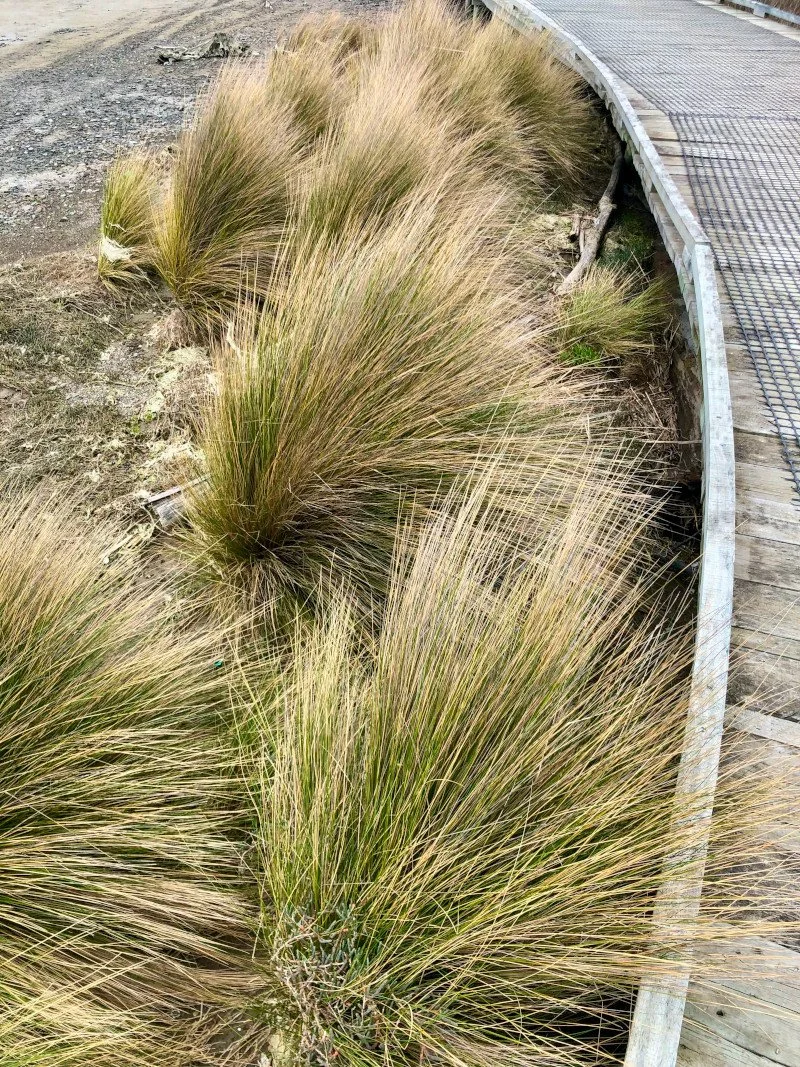
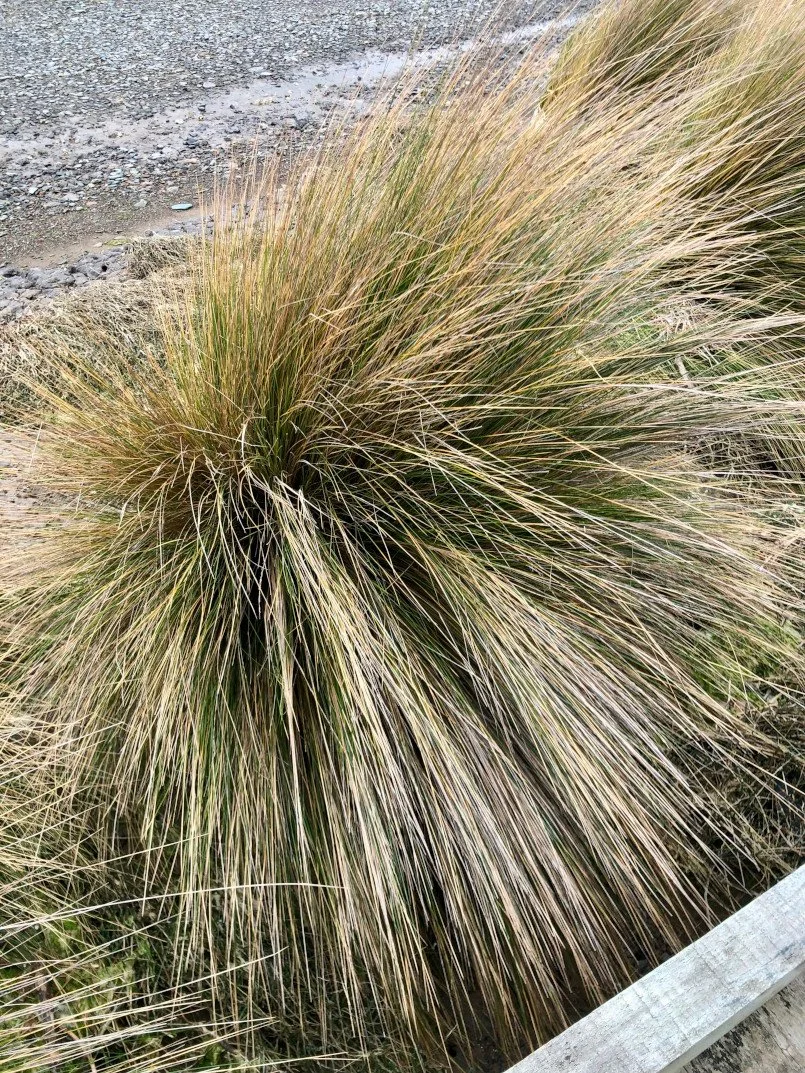
A distinctive coastal tussock grass adapted to harsh maritime environments. Forms dense flame-like clumps of narrow rolled foliage that tolerate salt spray, wind exposure, drought, and occasional seawater inundation.
Natural habitat:
Occurs naturally on rocky coastlines, shellbanks, elevated mudflats, sea cliffs, coastal dunes, salt marshes, and exposed shoreline margins.
Growing environment:
Full sun, Coastal exposure, Dry free-draining soils, Salt tolerant & Wind tolerant.
Requires open exposed sites to maintain compact upright growth.
Endemic distribution:
Indigenous to New Zealand and Australia.
In New Zealand found from Te Paki south to northern Taranaki and Ohiwa Harbour, reappearing around Cook Strait and Nelson.
Height:
Approximately 0.5–0.8 m tall
Width:
Forms spreading tussocks up to 1 m across
Flowering:
Produces airy grass flower heads above the foliage during warmer months.
Fruiting:
Produces wind-dispersed florets and seed.
Uses:
• Coastal restoration
• Erosion control
• Coastal landscaping
• Dry exposed gardens
• Habitat restoration
• Architectural planting
Appearance:
Growth habit:
A dense tussock-forming coastal grass with upright arching foliage resembling tawny coastal flames.
Leaves:
Leaves are long, tightly rolled, narrow, and sharply pointed with a smooth wiry texture. Foliage ranges from green to tawny-gold depending on exposure and season.
Flower heads:
Produces fine airy seed heads above the foliage, adding movement and texture in coastal winds.
Ecology:
An important coastal stabilising species that tolerates extreme maritime exposure including salt spray, drought, strong winds, and occasional tidal inundation.
Associated habitats:
Commonly found with salt marsh vegetation, coastal herbs, shellbank species, dune plants, and exposed rocky shoreline communities.
How to grow:
Best grown in full sun with excellent drainage and maximum exposure to coastal conditions. Performs poorly in sheltered fertile gardens where growth becomes soft and floppy.
Propagation:
Generally grown from fresh seed. Seed disperses readily by wind and establishes well in open coastal soils.
Cultural significance:
A striking native coastal grass associated with volcanic shorelines, estuaries, and exposed maritime landscapes throughout northern New Zealand.
Garden value:
An outstanding grass for harsh coastal gardens where few other species succeed. Particularly effective in naturalistic coastal plantings, dry seaside landscapes, and exposed architectural gardens where its flowing tawny foliage creates strong texture and movement.