
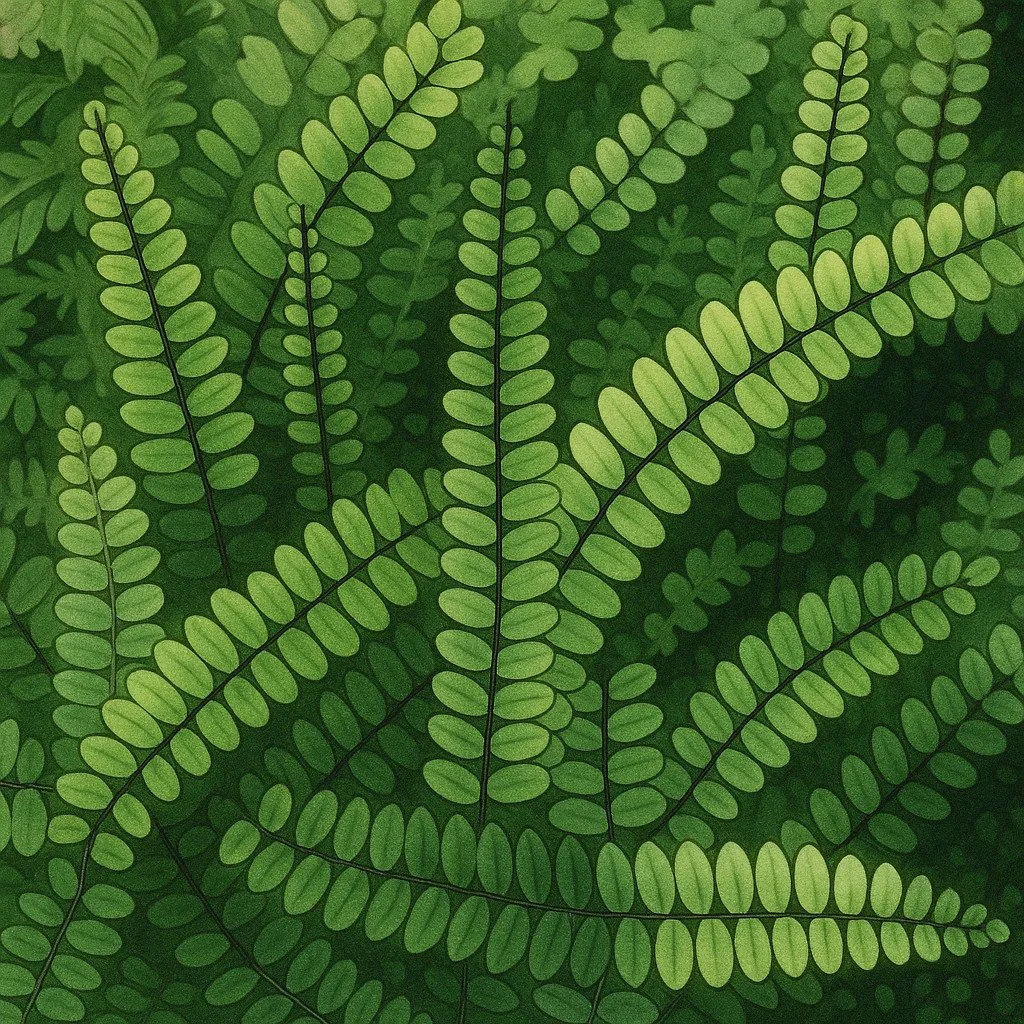
Shore Hard Fern
Botanical name:Austroblechnum banksii
Synonyms:Blechnum banksii, Lomaria banksii, Spicanta banksii
Common name(s): Shore Hard Fern
About:
A distinctive coastal fern native to New Zealand and Chile, recognised for its fleshy dark green fronds and strongly dimorphic growth habit. This species is highly adapted to salt-laden coastal environments and commonly occupies damp rocky sites near the sea.
Natural habitat:
Occurs naturally on shaded coastal cliffs, rocky overhangs, seepages, stream banks, rock crevices, and damp coastal scrub margins close to the ocean.
Growing environment:
Partial shade to full shade, Coastal exposure, Moist free-draining soils & Salt tolerant.
Thrives in humid sheltered coastal sites with reliable moisture and protection from drying inland heat.
Endemic distribution:
Indigenous to New Zealand and Chile.
Occurs throughout much of coastal New Zealand from Northland to the subantarctic islands, though often patchy and uncommon north of Auckland.
Height:
Approximately 0.1–0.5 m tall
Width:
Forms spreading rosettes approximately 0.2–0.6 m across
Flowering:
Not applicable — spore producing fern
Fruiting:
Not applicable — reproduces via spores
Uses:
• Coastal fern gardens
• Damp rock walls
• Shaded coastal plantings
• Native understory gardens
• Streamside planting
• Coastal restoration projects
Appearance:
Growth habit:
A low-growing tufted fern forming prostrate to semi-erect rosettes with separate fertile and sterile fronds.
Leaves:
Sterile fronds are dark green, fleshy, and pinnatisect with rounded pinnae, while fertile fronds are narrower, erect, and more finely divided.
Fertile fronds:
Fertile fronds arise centrally and bear continuous linear sori along the undersides of narrow pinnae.
Rhizome:
Short erect rhizomes clothed in chestnut-brown scales.
Ecology:
An important coastal fern species adapted to salt spray and humid maritime conditions where it stabilises rocky coastal habitats and contributes to coastal biodiversity.
Associated habitats:
Frequently associated with Asplenium obtusatum, Austroblechnum durum, Coprosma repens, Veronica elliptica, Phormium species, and coastal shrublands.
How to grow:
Best planted in shaded coastal positions with consistently moist but free-draining soil. Performs exceptionally well on damp rock walls, shaded banks, and coastal crevices.
Propagation:
Can be propagated from spores or by careful division of established clumps.
Garden value:
A highly attractive coastal fern valued for its lush dark green foliage, compact habit, and tolerance of maritime exposure. Particularly effective in coastal fern gardens, shaded rockeries, and humid native landscapes.