
Grey Saltbush
Botanical name:Atriplex cinerea
Common name(s): Grey Saltbush, Coast Saltbush
About:
A rare coastal saltbush indigenous to New Zealand and widespread in southern Australia. This hardy sprawling shrub is adapted to harsh saline coastal environments and is recognised for its silvery-grey foliage, reddish branchlets, and remarkable tolerance of wind, salt spray, drought, and alkaline soils.
Natural habitat:
Occurs naturally on coastal boulder beaches, shell banks, estuaries, salt marshes, barrier sand spits, and exposed coastal margins.
Growing environment:
Full sun, Coastal exposure, Free-draining sandy or gravelly soils & Salt tolerant.
Thrives in dry exposed sites with alkaline or saline soils and excellent drainage.
Endemic distribution:
Indigenous to New Zealand and Australia.
In New Zealand now naturally restricted to the Waimea Estuary area near Nelson, with historical records from Boulder Bank, D’Urville Island, Palliser Bay, and Wellington.
Height:
Approximately 0.5–1.5 m tall
Width:
Forms broad sprawling mounds up to 4 m across
Flowering:
Almost year-round
Flowers may be present from August through to June.
Fruiting:
Year-round
Fruiting commonly occurs from September through August.
Uses:
• Coastal restoration planting
• Salt marsh rehabilitation
• Erosion control
• Coastal revegetation
• Wildlife habitat planting
• Dry coastal gardens
Appearance:
Growth habit:
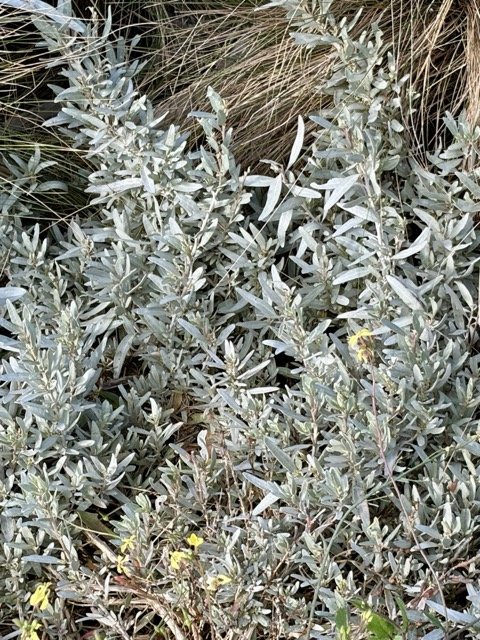
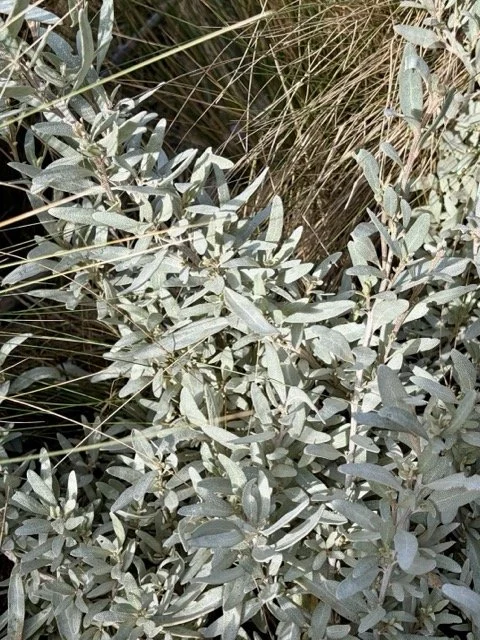
A sprawling to semi-erect woody shrub forming broad mounded colonies with freely rooting stems.
Leaves:
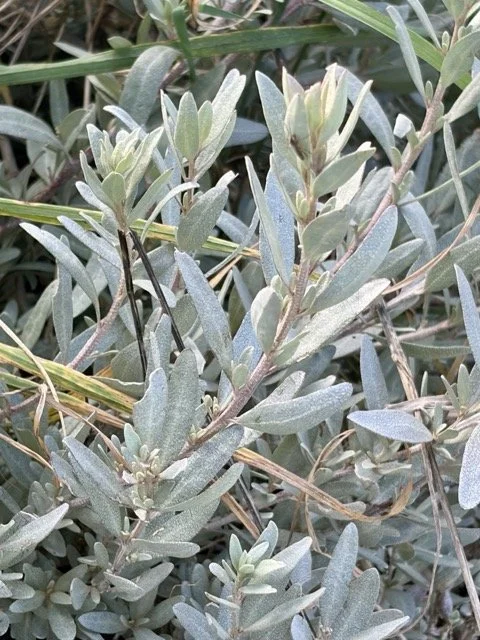
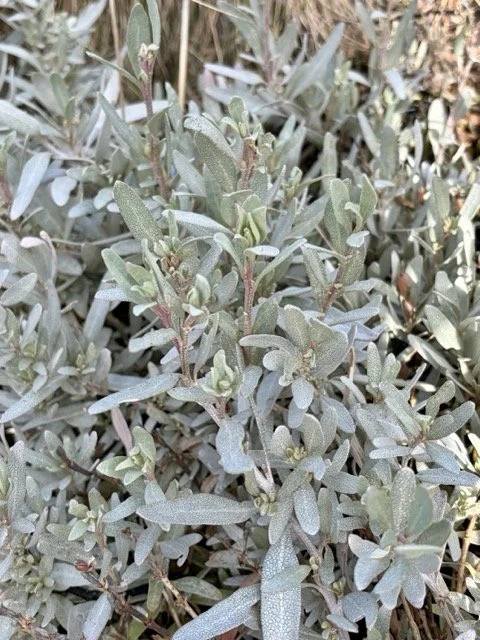
Leaves are narrow, semi-fleshy, silvery-grey to grey-green with white scurfy flecks and pale undersides.
Flowers:
Male flowers form conspicuous reddish-purple or wine-red spikes, while female flowers are small and inconspicuous within leaf axils.
Fruit:
Produces corky floating fruiting bracteoles adapted for dispersal by coastal currents.
Ecology:
An important specialist coastal species adapted to extreme saline environments where it stabilises fragile shorelines and provides habitat within salt marsh and estuarine ecosystems.
Associated habitats:
Often associated with salt marsh vegetation, shell banks, estuarine margins, coastal herbs, seabird-influenced habitats, and highly exposed shoreline systems.
How to grow:
Best planted in full sun within sandy, gravelly, or rocky free-draining coastal soils. Extremely tolerant of wind, salt spray, drought, and alkaline conditions once established.
Propagation:
Very easily propagated from cuttings or naturally layered stems. Seed and cuttings can be collected throughout the year.
Garden value:
A distinctive and highly resilient coastal native valued for its soft silver-grey foliage, spreading habit, and exceptional tolerance of extreme maritime conditions. Particularly effective in coastal restoration projects, exposed seaside gardens, and low-maintenance dry landscapes.